

Battling the Dubai Heat: Why My Herbs Kept Dying in the UAE Sun
If you’ve ever tried growing anything outdoors in Dubai, you know the struggle is real. I moved here dreaming of a little balcony oasis, fresh basil for my pasta, homegrown mint for my karak chai. Every spring, full of optimism, I’d head to the garden centre, pick out vibrant little seedlings, and meticulously plant them in their pots. And every single summer, without fail, they’d turn into crispy, brown husks within weeks, sometimes days.
It was heartbreaking. My basil would wilt before I could even get a decent harvest. The mint, usually so resilient, would look parched and sad, no matter how much I watered it. The sun, glorious for beach days, was a relentless executioner for my botanical ambitions. I tried everything – shade cloths, watering twice a day, moving pots around to catch the brief morning sun and hide from the afternoon inferno. Nothing worked. The combination of intense heat, low humidity, and scorching direct sunlight was just too much for most conventional herbs and vegetables.
I felt like a gardening failure, constantly battling an environment that simply wasn’t designed for lush greenery. But the desire for fresh, home-grown produce never faded. I realised that if I wanted to succeed, I had to stop fighting nature outside and instead create a controlled environment indoors. This led me to research indoor gardening extensively, and I picked up a few crucial insights for anyone trying to grow in the UAE:
- Embrace the indoors: The most important lesson is that consistent indoor conditions are far more forgiving than the unpredictable extremes outdoors. Air conditioning helps regulate temperature, and you can control humidity.
- Light isn’t just light: Even if your indoor space gets some natural light, it’s often not enough for herbs and vegetables. Supplemental grow lights are a game-changer, providing the specific spectrum and intensity plants need to thrive.
- Smart watering solutions: While indoor plants still need water, the evaporation rate is much lower than outdoors. Overwatering can be an issue, so look for systems that provide water efficiently and prevent root rot.
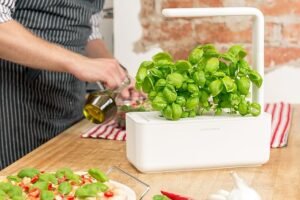
That’s when I started looking into smart indoor gardening solutions, something that could take the guesswork out of light, water, and nutrients. I needed something that promised a consistent, thriving environment, even in the heart of the desert. The idea of having fresh herbs year-round, without the constant battle against the heat, felt like a dream come true. A device like the Click & Grow Smart Garden 9 seemed to be exactly what I needed to finally break free from my cycle of dead plants.
My outdoor gardening dreams were shattered, but a new, smarter path was opening up. Could an automated system truly bring the joy of gardening to my Dubai apartment? Join me in Part 2, where I’ll unbox my new smart garden and set it up, sharing my first impressions and hopes for a greener future!
Pro Tips for Thriving Herbs in Extreme Heat
Leveraging advanced horticultural strategies can transform your herb garden from struggling to flourishing, even in the most challenging desert climates. These insights go beyond basic advice, offering experience-based solutions for the discerning gardener.
1. Dynamic Microclimate Engineering & Reflective Shading
Move beyond static shade cloth. Implement a multi-faceted shading strategy that dynamically adapts to the sun’s intensity. Utilize specialized reflective white tarps or greenhouse films on adjacent walls or fences to bounce indirect light onto your herbs, maximizing photosynthesis while significantly reducing direct, scorching sun exposure. Consider a layered approach: a high-percentage shade cloth (e.g., 70-80%) during the most intense midday hours, which can be partially or fully retracted for a lower percentage (e.g., 40-50%) during morning and late afternoon to ensure adequate light without stress. Experiment with localized evaporative cooling by installing fine-mist nozzles timed for very early morning or late evening, ensuring foliage dries before nightfall, and during peak heat, directing the mist into the air around plants rather than directly onto leaves, to create a cooler, humid micro-zone.
2. Advanced Substrate Thermal Regulation & Hydro-Retention
Your potting mix is not merely a medium for nutrients; it’s a critical thermal buffer. Formulate a custom blend incorporating 30-40% coarse perlite or pumice for superior aeration and insulation against heat transfer from container walls, combined with high-quality coco coir for its exceptional water retention and re-wetting capabilities, outperforming peat in arid environments. Implement a ‘double-potting’ technique: place your herb pot inside a larger, lighter-colored ceramic or terracotta pot, filling the gap with sand, straw, or insulating foam. This creates an air buffer that dramatically slows down the heating of the root zone. Explore subsurface irrigation methods such as buried olla pots or DIY wicking systems, which deliver water directly to the roots, minimizing surface evaporation and keeping the topsoil drier, which deters many common pests and fungal issues.
3. Root Zone Acclimatization & Mycorrhizal Symbiosis
Prepare your plants for the heat from the ground up. Before transplanting, gradually acclimatize seedlings not just to sun exposure but specifically to elevated root zone temperatures. This can involve briefly exposing their pots to warmer conditions. Crucially, inoculate your potting mix with beneficial endomycorrhizal fungi. These symbiotic fungi extend the plant’s effective root system by hundreds of times, dramatically improving water and nutrient uptake, and significantly enhancing the plant’s resilience to environmental stressors like drought and heat shock. Furthermore, strategically plant taller, heat-tolerant companion plants (e.g., certain desert sages or specific native wildflowers) on the south and west sides of your more delicate herbs. These companions act as living shade structures, protecting the soil surface and the critical root zone from direct insolation and reducing extreme temperature fluctuations.
Frequently Asked Questions: Growing Herbs in Dubai’s Heat