
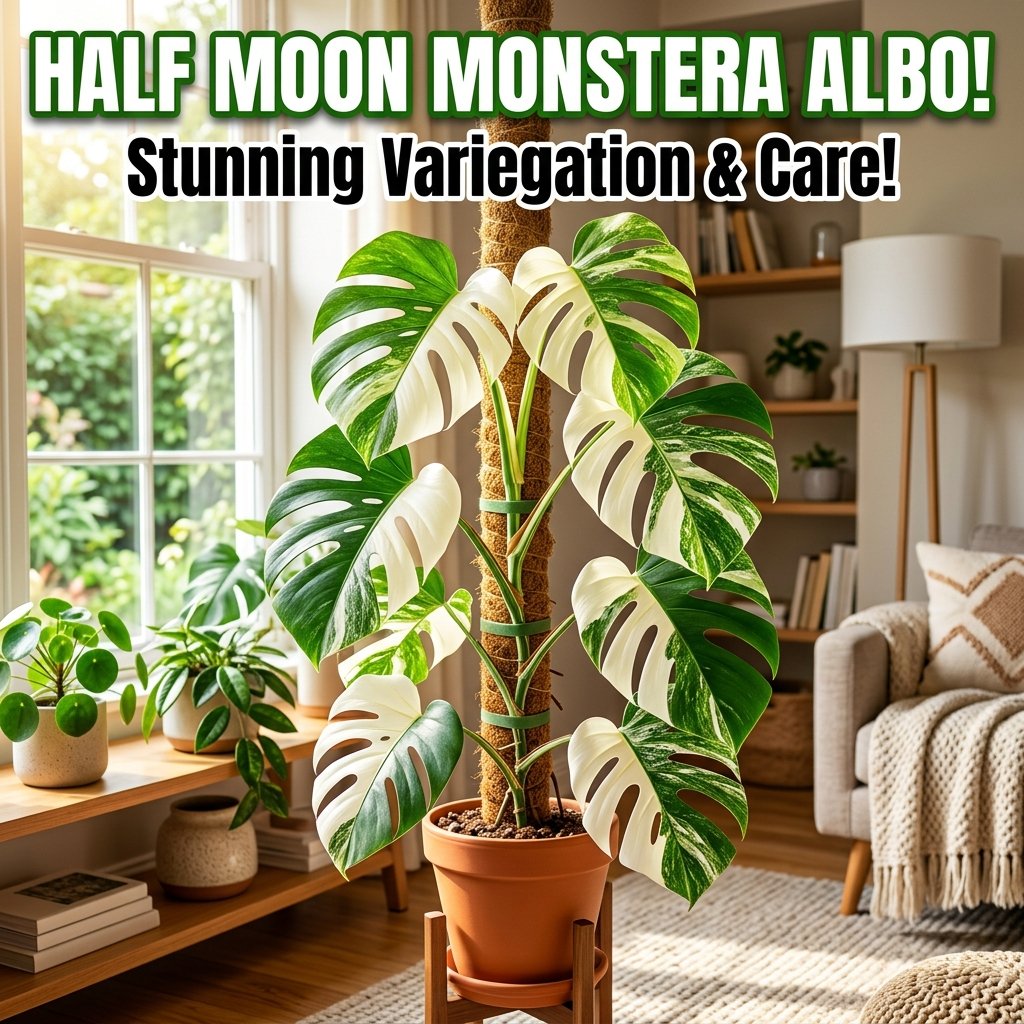

A white leaf is functionally useless to a plant. It contains no chlorophyll and cannot produce energy. Yet, houseplant collectors will pay hundreds, if not thousands, of dollars for these beautiful, genetic “mistakes.” Variegation is the undisputed king of the current plant market, but understanding how it works—and how to stop your plant from “reverting”—is a high-stakes scientific game.
What Causes Variegation?
Variegation occurs when a cell undergoes a sudden genetic mutation that breaks its ability to synthesize chlorophyll. As that cell divides, it creates a lineage of white or yellow tissue. When a plant has both normal green cells and mutated albino cells existing side-by-side, it is called a chimeric mutation.
The Three Types of Variegation
- Chimeric (Sectorial/Splash): Random, unstable mutations. (e.g., Monstera Albo). Can revert to full green or fully white.
- Genetic (Stable): Written into the plant’s DNA. Will never revert. (e.g., Thai Constellation).
- Viral: Caused by a harmless plant virus spreading through the veins.
The Chimeric Tightrope: Reverting vs. Ghosting
If you own an unstable variegated plant (like a Syngonium Albo or Philodendron Pink Princess), you are constantly balancing on a tightrope.
The Risk of Reverting (Full Green)
If the growing tip (the apical meristem) randomly generates off a cluster of purely green cells, the plant will “revert.” The subsequent leaves will be 100% green. If this happens, your rare plant has lost its value. You MUST take sterilized pruning shears and chop the plant back strictly below the green node to force a new growth point from a variegated section of the stem.
The Danger of Ghosting (Full White)
Conversely, if the growing tip originates from pure white cells, it will produce a “Ghost” leaf. While stunning, a fully white leaf cannot photosynthesize. If a plant pushes two or three ghost leaves in a row, it will starve to death and rot. You must cut it back immediately to a balanced node.
How to Maintain Peak Variegation
- Maximum Light: Because variegated plants have 50% less chlorophyll, they require intensely bright, indirect light to survive. Poor lighting accelerates reverting as the plant desperately tries to generate more green cells to stay alive.
- Silica Supplements: The white sections of a leaf are extremely fragile and prone to melting or browning. Adding liquid silica to your watering routine fortifies the cellular walls of the albino tissue, keeping the white crisp and pristine.
Final Thoughts
Owning a highly variegated chimera is not a passive hobby; it requires active curation. You are essentially sculpting the genetic expression of a living organism with a pair of scissors.
Frequently Asked Questions
What are the best conditions for this plant?
Most houseplants thrive in bright, indirect light with temperatures between 65-80F (18-27C). Ensure good drainage and water when the top inch of soil feels dry.
How often should I water?
Watering frequency depends on the plant species, pot size, and environment. A general rule is to check the soil moisture before watering. Overwatering is the most common cause of houseplant death.
What soil mix works best?
A well-draining mix of peat moss, perlite, and orchid bark works well for most tropical houseplants. Succulents prefer a grittier mix with more sand and perlite.
Quick Care Reference
| Factor | Requirement | Notes |
|---|---|---|
| Light | Bright indirect | Avoid direct afternoon sun |
| Water | When top inch dry | Reduce in winter |
| Humidity | 50-70% | Mist or use pebble tray |
| Temperature | 65-80F (18-27C) | Avoid cold drafts |
| Soil | Well-draining mix | Peat, perlite, bark |
| Fertilizer | Monthly (spring-summer) | Half-strength balanced |