
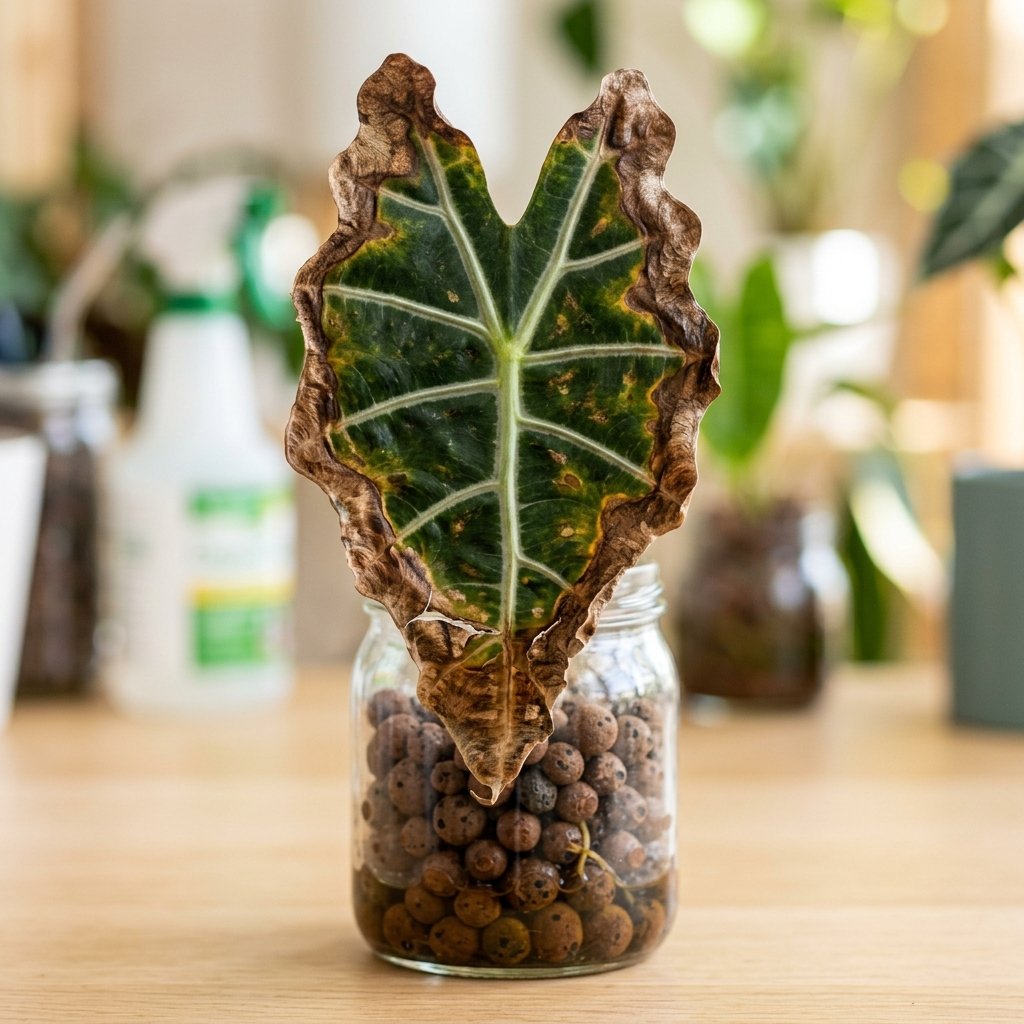

Transitioning tropical plants to semi-hydroponics (LECA or Pon) is the biggest trend in the indoor jungle community. However, as thousands of hobbyists migrate their sensitive Alocasias into water, a silent killer is emerging: Hydroponic Nutrient Burn. If your Alocasia leaves are turning yellow, developing crispy brown halos, and rapidly dropping off, you are likely poisoning your plant.
The Science of Osmotic Shock
In traditional soil, fertilizers are buffered by organic matter. In semi-hydroponics, the roots are freely suspended in pure water laced with chemical salts. If the concentration of fertilizer salts in the water becomes higher than the concentration of salts inside the plant’s roots, a terrifying process called reverse osmosis occurs. The water is physically ripped OUT of the plant structure and pulled back into the reservoir.
How to Prevent Nutrient Burn
- The 1/4 Strength Rule: Never mix hydroponic nutrients at the dosage recommended on the bottle. Always dilute it to 25% strength.
- The Weekly Flush: Every single week, you must flush the LECA or Pon structure with pure tap water to dissolve and wash away crystallized salts from the previous week.
Diagnosing the Burn
How do you know if it is nutrient burn vs. a natural old leaf dying? Nutrient burn manifests as a distinct, papery-brown crispy edge that moves uniformly inward toward the center of the leaf, often accompanied by a distinct yellow “halo” separating the dead tissue from the green tissue. An old dying leaf simply turns uniformly yellow and droops.
The Emergency Protocol
If you suspect nutrient burn, you must act instantly to save the root system. Remove the plant from the LECA immediately. Submerge the bare roots in a bucket of lukewarm, pure distilled water for three hours to leach the salts out of the cellular walls. Then, return the plant to the LECA but use ONLY plain water for the next 4 weeks until it recovers.
Frequently Asked Questions
What are the best conditions for this plant?
Most houseplants thrive in bright, indirect light with temperatures between 65-80F (18-27C). Ensure good drainage and water when the top inch of soil feels dry.
How often should I water?
Watering frequency depends on the plant species, pot size, and environment. A general rule is to check the soil moisture before watering. Overwatering is the most common cause of houseplant death.
What soil mix works best?
A well-draining mix of peat moss, perlite, and orchid bark works well for most tropical houseplants. Succulents prefer a grittier mix with more sand and perlite.
Quick Care Reference
| Factor | Requirement | Notes |
|---|---|---|
| Light | Bright indirect | Avoid direct afternoon sun |
| Water | When top inch dry | Reduce in winter |
| Humidity | 50-70% | Mist or use pebble tray |
| Temperature | 65-80F (18-27C) | Avoid cold drafts |
| Soil | Well-draining mix | Peat, perlite, bark |
| Fertilizer | Monthly (spring-summer) | Half-strength balanced |