
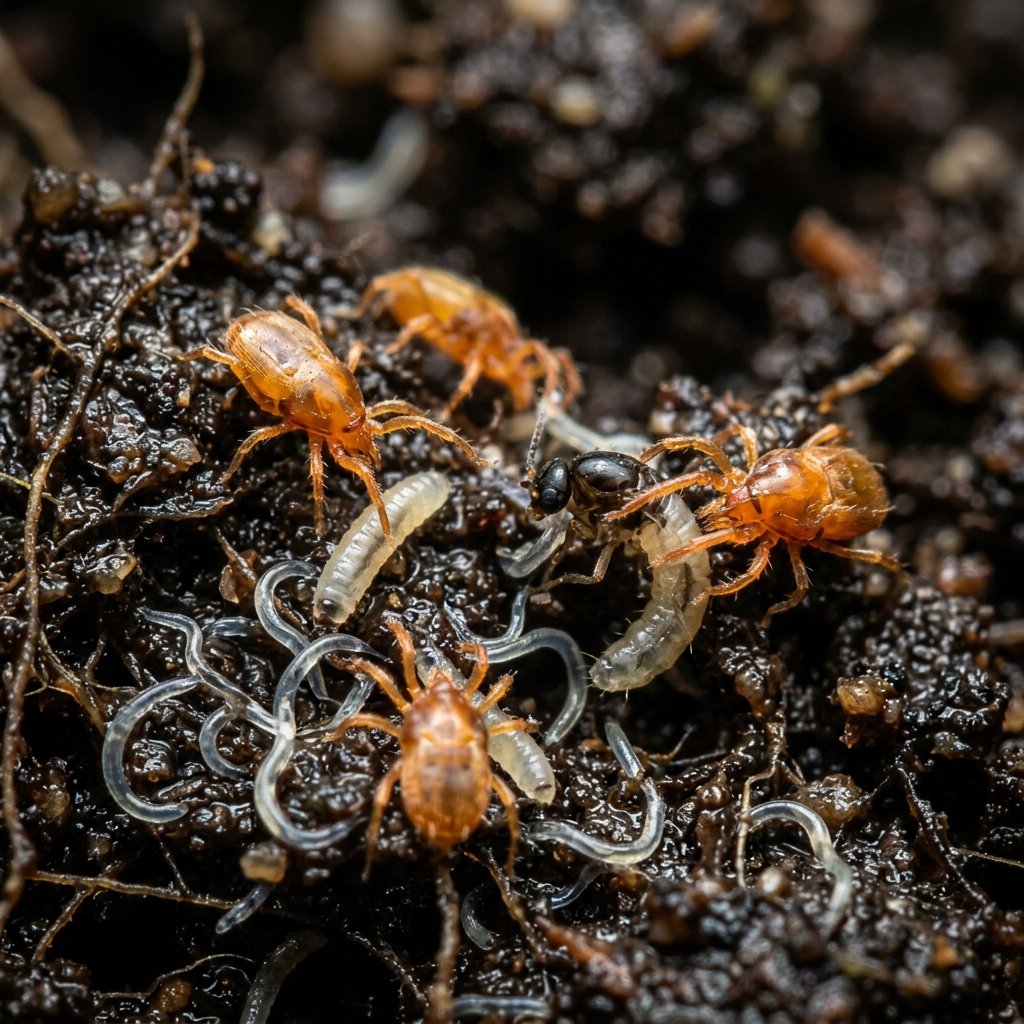

Fungus gnats are the psychological tormentors of the houseplant hobby. You buy yellow sticky traps. You cover the soil in sand. You spray toxic neem oil. Yet, two weeks later, a cloud of gnats still flies into your face when you water your plants. If you want to eradicate them permanently, you must stop treating the adults and wage biological warfare on the larvae using BTI (Mosquito Dunks).
What is BTI?
BTI (*Bacillus thuringiensis subspecies israelensis*) is a naturally occurring soil bacterium. It is completely safe for humans, pets, bees, and the plants themselves. When the bacteria is consumed by the larvae of a fungus gnat or mosquito, it produces a crystalline toxin in their stomach that destroys their digestive tract, killing them in minutes.
How the Life Cycle Defeats Normal Methods
- Adult gnats live for 5 days. Sticky traps only kill the adults.
- While the adults are stuck on the trap, there are 300 microscopic larvae living three inches deep in your soil, eating the roots of your plant. Neem oil cannot reach them.
- To win the war, you must poison the water they live in.
The “Mosquito Dunk Tea” Method
Go to the hardware store and buy a pack of “Mosquito Dunks” (brown rings of pressed sawdust injected with dormant BTI spores). Do not put the dry chunks on top of the soil.
- Steep the Tea: Break off a quarter of a dunk and let it soak in your full watering can for 24 hours. This wakes up the bacteria and floods the water with billions of microscopic assassins.
- The Saturation: Use this BTI-infused water to completely drench every single plant in your house. The bacteria will penetrate deep into the wet soil matrix.
- The Execution: When the larvae hatch and attempt to feed on the organic matter in the soil, they will ingest the BTI and die immediately. Execute this protocol for four consecutive waterings (roughly one month) to completely break the 28-day generational life cycle. You will never see a gnat again.
Frequently Asked Questions
What are the best conditions for this plant?
Most houseplants thrive in bright, indirect light with temperatures between 65-80F (18-27C). Ensure good drainage and water when the top inch of soil feels dry.
How often should I water?
Watering frequency depends on the plant species, pot size, and environment. A general rule is to check the soil moisture before watering. Overwatering is the most common cause of houseplant death.
What soil mix works best?
A well-draining mix of peat moss, perlite, and orchid bark works well for most tropical houseplants. Succulents prefer a grittier mix with more sand and perlite.
Quick Care Reference
| Factor | Requirement | Notes |
|---|---|---|
| Light | Bright indirect | Avoid direct afternoon sun |
| Water | When top inch dry | Reduce in winter |
| Humidity | 50-70% | Mist or use pebble tray |
| Temperature | 65-80F (18-27C) | Avoid cold drafts |
| Soil | Well-draining mix | Peat, perlite, bark |
| Fertilizer | Monthly (spring-summer) | Half-strength balanced |