
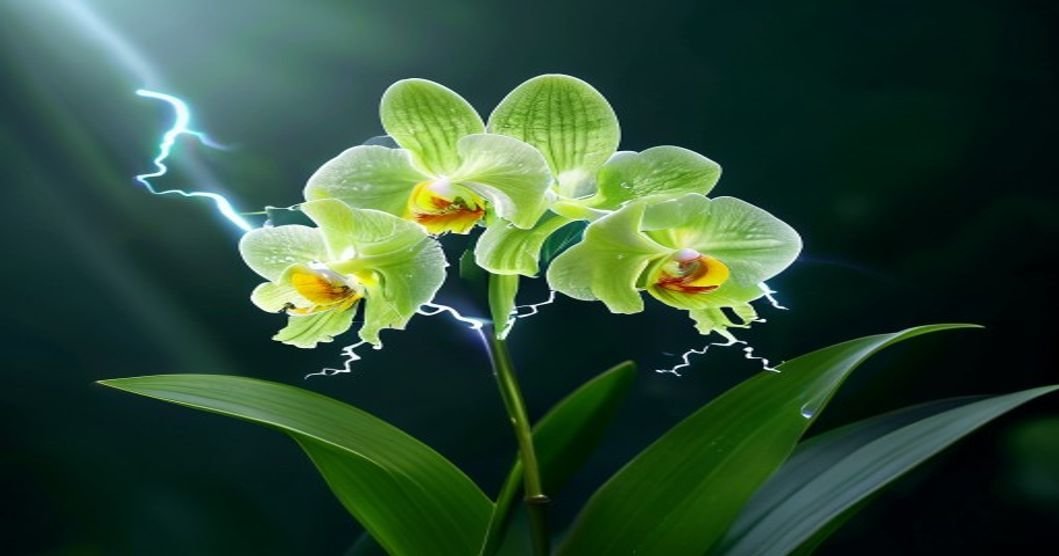

When you think of an orchid, you picture the tall, structural flowers of a Phalaenopsis in a grocery store. But deep within the dense, humid jungles of Southeast Asia grows an orchid that cares absolutely nothing about flowers. The Macodes Petola (Jewel Orchid) is grown entirely for its terrifyingly beautiful foliage: dark, velvety leaves glowing with neon-green veins that look precisely like frozen lightning bolts.
The Jewel Orchid Paradox
Unlike standard orchids that are epiphytes (growing on tree bark high in the air), Jewel Orchids are terrestrial. They crawl across the rotting, dark, saturated leaf litter on the jungle floor. If you try to grow a Macodes Petola in standard chunky orchid bark, it will dry up and die in days.
The Perfect Habitat: The Glass Cloche
Jewel orchids demand a punishing level of humidity—typically 80% to 90%. They are virtually impossible to keep alive on a standard bookshelf unless you live in the tropics. The secret to success is isolation.
- Plant your Macodes Petola in shallow, live Sphagnum moss.
- Place the entire pot inside a glass cloche or terrarium dome.
- The dome instantly creates a permanent 95% humidity microclimate.
The Lighting Danger
Because they evolved on the darkest depths of the jungle floor, Macodes Petola cannot handle light. Exposing them to direct sunlight will scorch their delicate velvet leaves and aggressively bleach the lightning-bolt veins until they fade to a dull yellow. They thrive under deep shade or the weakest possible LED grow lights.
Frequently Asked Questions
What are the best conditions for this plant?
Most houseplants thrive in bright, indirect light with temperatures between 65-80F (18-27C). Ensure good drainage and water when the top inch of soil feels dry.
How often should I water?
Watering frequency depends on the plant species, pot size, and environment. A general rule is to check the soil moisture before watering. Overwatering is the most common cause of houseplant death.
What soil mix works best?
A well-draining mix of peat moss, perlite, and orchid bark works well for most tropical houseplants. Succulents prefer a grittier mix with more sand and perlite.
Quick Care Reference
| Factor | Requirement | Notes |
|---|---|---|
| Light | Bright indirect | Avoid direct afternoon sun |
| Water | When top inch dry | Reduce in winter |
| Humidity | 50-70% | Mist or use pebble tray |
| Temperature | 65-80F (18-27C) | Avoid cold drafts |
| Soil | Well-draining mix | Peat, perlite, bark |
| Fertilizer | Monthly (spring-summer) | Half-strength balanced |