
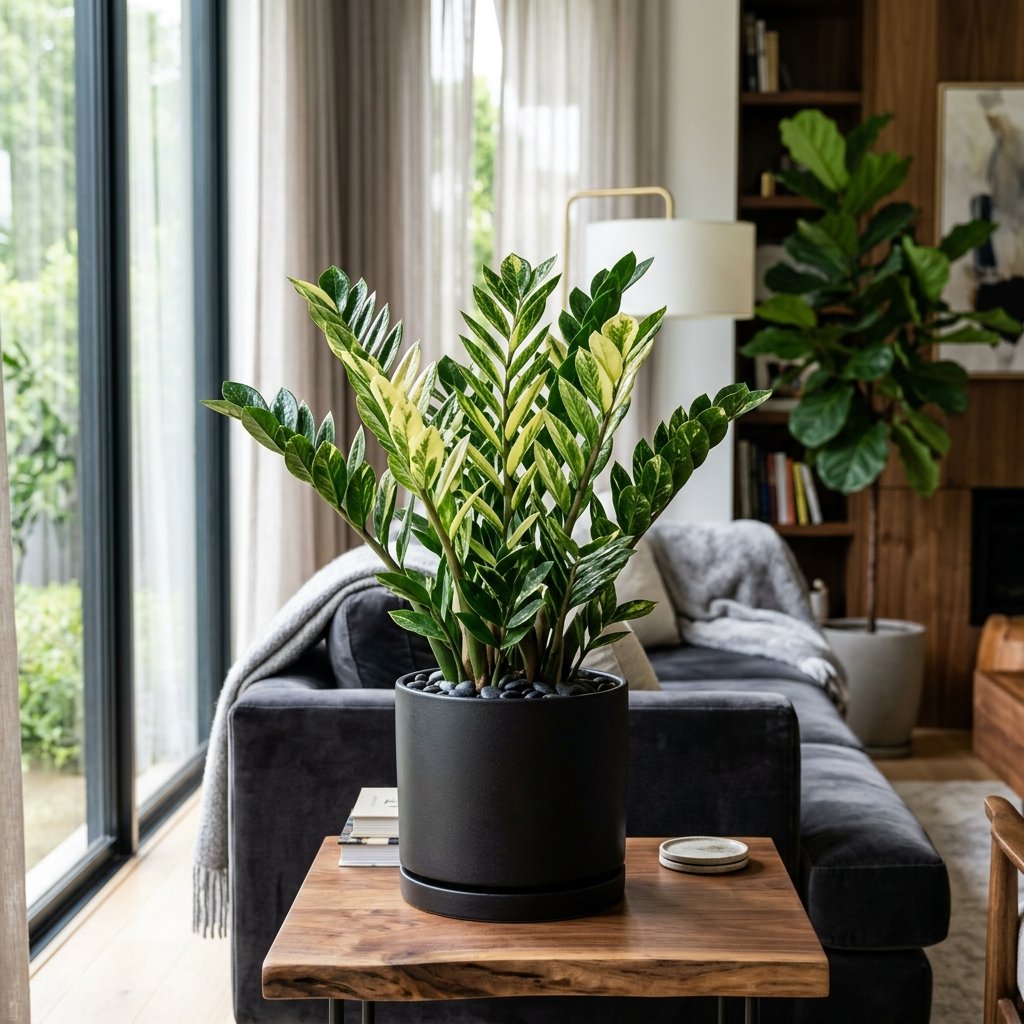

The Syngonium Milk Confetti looks exactly like mint chocolate chip ice cream—a stunning milky green base speckled with bright pink splashes. But many owners watch in horror as the older leaves suddenly bleach completely white, turn translucent, and turn to mush. What causes a stable, healthy aroid to suddenly disintegrate?
The Phototoxicity Trap
Syngoniums (Arrowhead vines) evolved to grow deep on the jungle floor, bathed in extreme shade. They possess extremely thin, delicate cuticles. When you take a highly variegated Syngonium (which already lacks protective chlorophyll) and blast it with intense LED grow lights or direct sun to “bring out the pink colors,” you are literally cooking it alive.
Identifying Light Bleaching
- Unlike nutrient deficiency (where the leaf turns yellow), light bleaching occurs when the sheer volume of photons destroys the chloroplasts. The leaf turns a sickly, translucent white.
- Because the tissue is dead, opportunistic fungi immediately attack it, turning the paper-white leaf into a wet, rotting mess in 48 hours.
The Secret to Pink Splashes
Unlike a Ficus Tineke that requires intense sun-stress to turn pink, the pink splashes on a Milk Confetti are genetically hardcoded. You do NOT have to blast it with light to keep the color. Syngoniums perform their absolute best in medium, soft, indirect light, nestled behind other plants in the canopy. Keep them warm, keep them slightly shaded, and the milky green base will remain stable while the pink splashes naturally express themselves.
What’s Your Next Step?
You have successfully diagnosed the issue with your Syngonium. Your intervention was critical. Now, consider the next operational phase to optimize your collection’s health and value.
- <a href="https://plantsmag.com/the-great-perlite-breakdown-when-soil-gets-too-old-to-filter/" style
Frequently Asked Questions
What are the best conditions for this plant?
Most houseplants thrive in bright, indirect light with temperatures between 65-80F (18-27C). Ensure good drainage and water when the top inch of soil feels dry.
How often should I water?
Watering frequency depends on the plant species, pot size, and environment. A general rule is to check the soil moisture before watering. Overwatering is the most common cause of houseplant death.
What soil mix works best?
A well-draining mix of peat moss, perlite, and orchid bark works well for most tropical houseplants. Succulents prefer a grittier mix with more sand and perlite.
Quick Care Reference
Factor Requirement Notes Light Bright indirect Avoid direct afternoon sun Water When top inch dry Reduce in winter Humidity 50-70% Mist or use pebble tray Temperature 65-80F (18-27C) Avoid cold drafts Soil Well-draining mix Peat, perlite, bark Fertilizer Monthly (spring-summer) Half-strength balanced