
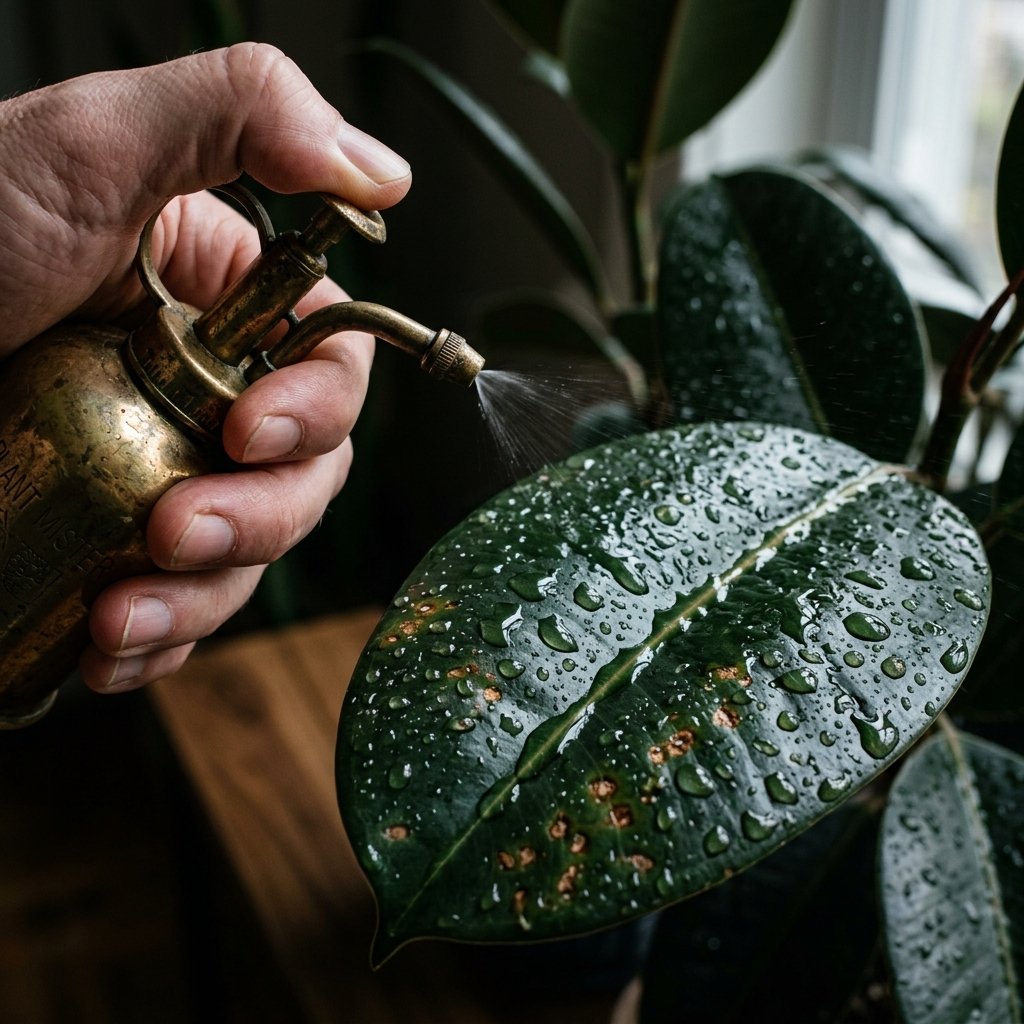

The Peace Lily (Spathiphyllum) is famous for being incredibly dramatic. If you forget to water it for one extra day, the entire plant collapses against the floor, looking completely dead. You panic, water it, and 4 hours later, it is perfectly upright again. While this feels like a helpful “alarm system,” constantly letting your Peace Lily crash actually destroys its internal vascular system.
The Danger of the Wilting Cycle
When a Peace Lily droops, it isn’t just being dramatic; it is experiencing severe cellular trauma. The turgor pressure (water pressure inside the cells) has dropped to zero. When this happens, the microscopic root hairs in the soil rapidly dry out and die.
When you water the plant, the leaves stand back up, but the root system has permanently lost 10% of its feeding capacity. If you let the plant dramatically droop every single week, the root system slowly collapses, the plant stops flowering, and the tips of all the leaves develop large, black necrotic spots.
Breaking the Dependency
You can actually “train” a Peace Lily to be less dramatic by altering its soil structure and fixing your watering habits.
- Bottom-Watering: When the leaves start to feel slightly soft (BEFORE they droop), place the pot in a bowl of water for 45 minutes. This forces the roots to grow deep down toward the bottom of the pot, rather than staying in the top inch of soil that dries out first.
- The Substrate: Add a heavy handful of Coco Coir to the potting soil. Coco Coir acts as a moisture battery, holding water longer than peat moss and slowly releasing it, providing a critical buffer zone that prevents the sudden, catastrophic droop.
What’s Your Next Step?
You have successfully calibrated your Peace Lily’s drought response. Now, optimize its environment for maximum resilience and growth. Your next decision determines its recovery speed and overall health.
- Are you aware of the simple household item that can accelerate your plant’s post-droop recovery by over 70%?
Frequently Asked Questions
What are the best conditions for this plant?
Most houseplants thrive in bright, indirect light with temperatures between 65-80F (18-27C). Ensure good drainage and water when the top inch of soil feels dry.
How often should I water?
Watering frequency depends on the plant species, pot size, and environment. A general rule is to check the soil moisture before watering. Overwatering is the most common cause of houseplant death.
What soil mix works best?
A well-draining mix of peat moss, perlite, and orchid bark works well for most tropical houseplants. Succulents prefer a grittier mix with more sand and perlite.
Quick Care Reference
Factor Requirement Notes Light Bright indirect Avoid direct afternoon sun Water When top inch dry Reduce in winter Humidity 50-70% Mist or use pebble tray Temperature 65-80F (18-27C) Avoid cold drafts Soil Well-draining mix Peat, perlite, bark Fertilizer Monthly (spring-summer) Half-strength balanced