
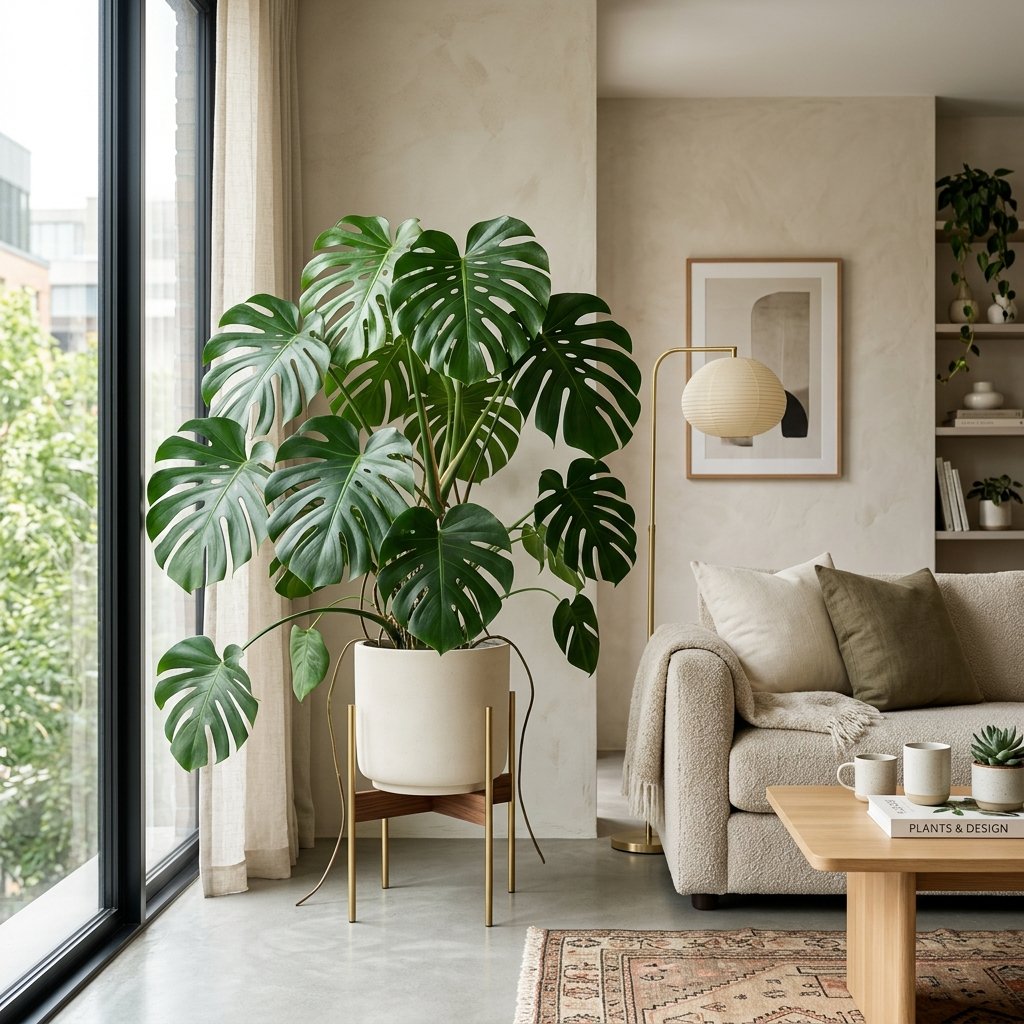

🌿 Quick Care Facts: Monstera Deliciosa
- Light: Bright, indirect sunlight. Can tolerate medium light but will grow slower.
- Water: Allow the top 2-3 inches of soil to dry out between waterings.
- Soil: A chunky, well-draining aroid mix (orchid bark, perlite, and potting soil).
- Toxicity: Toxic to cats, dogs, and humans if ingested.
Introduction to the Swiss Cheese Plant
The Monstera deliciosa is undoubtedly the reigning monarch of the houseplant world. Renowned for its massive, glossy green leaves adorned with natural holes (called fenestrations), this tropical vine brings an instant jungle vibe to any interior space. Native to the rainforests of Central America, it’s not only a stunning architectural plant but also surprisingly forgiving for beginners.
Whether you’re a seasoned plant parent or just brought home your first Monstera, understanding its native environment is the secret to thriving indoor growth. In the wild, they use their aerial roots to climb up the trunks of giant trees, reaching for the canopy light. Replicating this support system indoors is crucial for achieving those massive, iconic fenestrated leaves.
Light Requirements: The Key to Fenestrations
If your Monstera’s leaves are small and lack splits, lighting is likely the culprit. While they are often sold as “low light” plants, that is a myth. To thrive and produce its signature “Swiss cheese” holes, your Monstera needs bright, indirect light.
- Ideal placements: Near an east or west-facing window where it receives plenty of ambient daylight but is shielded from harsh, direct midday rays.
- Direct sun warning: Too much direct sunlight will scorch the leaves, leaving permanent brown, crispy patches.
- Low light reality: In a dark corner, a Monstera will survive, but growth will stagnate, the vines will become leggy, and new leaves will remain solid.
Struggling with Watering?
The Monstera is highly susceptible to root rot if overwatered. Let our algorithm do the heavy lifting.
Watering Your Monstera Deliciosa
Mastering the watering cadence is step two of Monstera care. They prefer a “soak and dry” approach. You should thoroughly saturate the soil until water runs out of the drainage holes, and then entirely refrain from watering until the top 2 to 3 inches of the soil feel completely dry to the touch.
Signs of Overwatering: Yellowing lower leaves, mushy black stems, a foul odor emanating from the soil, and fungus gnats hovering around the pot. When in doubt, it is always safer to wait a few more days.
Signs of Underwatering: Drooping stems, crispy brown leaf edges, and potting soil that has pulled away from the edges of the pot.
Choosing the Perfect Potting Soil
Standard potting soil is an absolute nightmare for a Monstera. It is too dense and retains too much moisture, suffocating the thick, fleshy roots. You must recreate the loose, airy soil of the jungle floor. An ideal “Aroid Mix” consists of:
- 40% Premium Potting Soil
- 30% Orchid Bark (provides aeration and mimics the rotting wood they climb in nature)
- 20% Perlite or Pumice (for drainage)
- 10% Horticultural Charcoal or Worm Castings (for nutrients and filtering)
Common Pests and Troubleshooting
Even the healthiest Monsteras can occasionally face challenges, particularly with pests like thrips, spider mites, or mealybugs.
- Thrips: Look for tiny, slender black or white bugs and silvery damage on the leaves. Immediate isolation and treatment with Neem Oil or Captain Jack’s Dead Bug Brew are crucial.
- Spider Mites: indicated by fine webbing near the stems and tiny yellow speckles on the foliage. They thrive in dry air, so increasing humidity helps.
- Fungal Leaf Spots: Brown circles featuring a yellow halo are classic signs of a fungal or bacterial infection, usually caused by wet leaves and poor airflow.
Is your Monstera looking sick?
Don’t panic! Take a photo of the affected leaf and let our AI diagnose the exact problem instantly.
Frequently Asked Questions
Should I mist my Monstera?
Misting only increases humidity for a few minutes and significantly increases the risk of fungal infections. Instead, use a humidifier or a pebble tray to maintain ambient humidity between 50% and 60%.
Why are there brown spots on my Monstera leaves?
It depends! Crispy brown edges usually indicate low humidity or underwatering. A dark brown spot surrounded by a yellow halo is a fungal infection (usually from overwatering). Sunburn shows up as large, pale brown, papery patches.
What’s Your Next Step?
You have successfully assimilated the data required to cultivate a thriving Monstera Deliciosa. Your next action determines your trajectory as a plant owner. A choice is now required.
- Your Monstera has conquered the light, but what about the 78% of indoor spaces considered ‘low-light’? Are you prepared to master the one plant species that is biologically engineered to thrive in the dark where all others fail?
- You’ve invested in one plant, but what if I told you a simple 3-step biological process could turn a single $5 leaf into a plant collection valued at over $150 in 12 months, effectively generating a 2900% return on your initial investment?
Frequently Asked Questions
What are the best conditions for this plant?
Most houseplants thrive in bright, indirect light with temperatures between 65-80F (18-27C). Ensure good drainage and water when the top inch of soil feels dry.
How often should I water?
Watering frequency depends on the plant species, pot size, and environment. A general rule is to check the soil moisture before watering. Overwatering is the most common cause of houseplant death.
What soil mix works best?
A well-draining mix of peat moss, perlite, and orchid bark works well for most tropical houseplants. Succulents prefer a grittier mix with more sand and perlite.
Quick Care Reference
| Factor | Requirement | Notes |
|---|---|---|
| Light | Bright indirect | Avoid direct afternoon sun |
| Water | When top inch dry | Reduce in winter |
| Humidity | 50-70% | Mist or use pebble tray |
| Temperature | 65-80F (18-27C) | Avoid cold drafts |
| Soil | Well-draining mix | Peat, perlite, bark |
| Fertilizer | Monthly (spring-summer) | Half-strength balanced |