
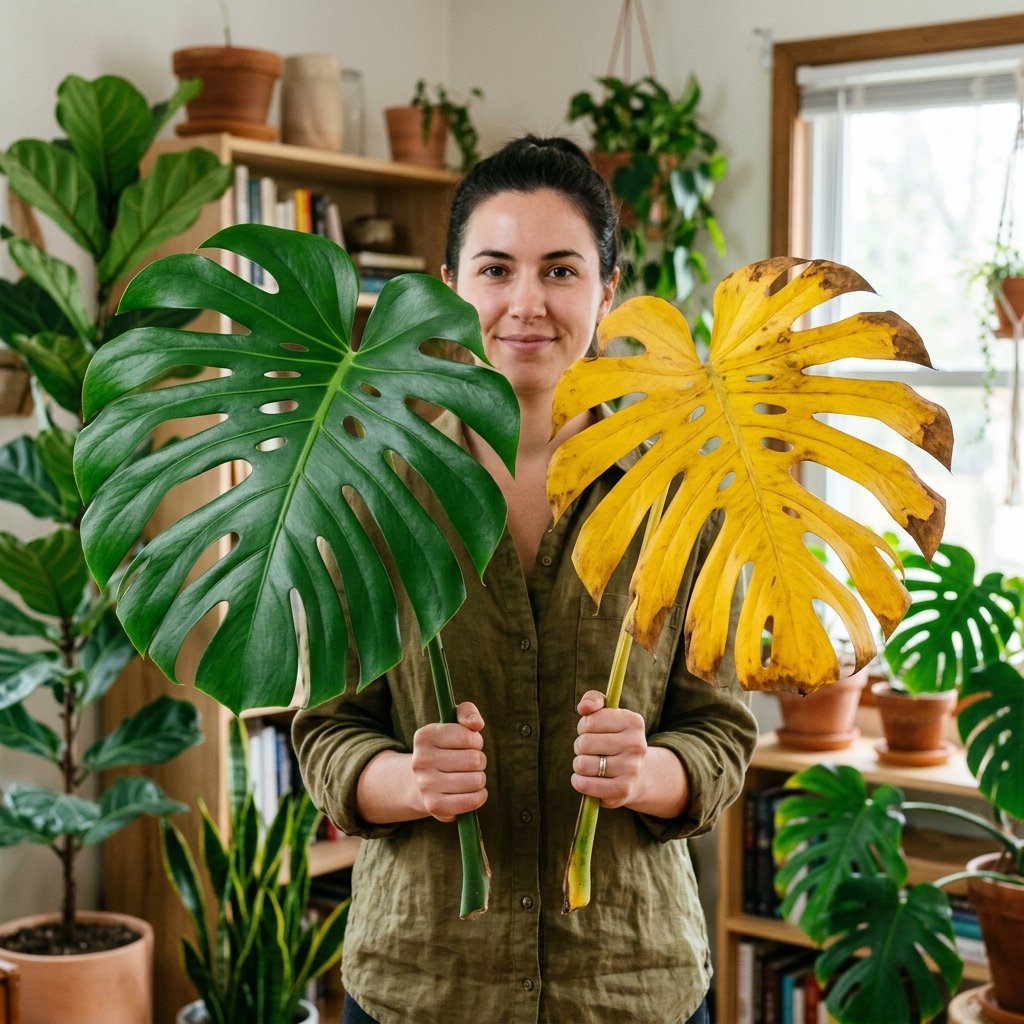

It is the most panicked question posted on every houseplant forum: “Help! The bottom leaf of my Monstera is turning yellow! What do I do?” The problem is that a yellow leaf is not a disease; it is a symptom. And remarkably, plants use the exact same symptom (yellowing) to signal three completely opposite problems.
Decoding the Yellow
A leaf turns yellow (chlorosis) when the plant actively breaks down the green chlorophyll inside the leaf. You must look at how the leaf is yellowing to find the killer.
The Three Types of Yellow
- Overwatering (The Mushy Yellow): The entire leaf turns a pale, sickly yellow and feels soft, limp, and sweaty. The soil is wet. This means the roots are suffering from anaerobic root rot and can no longer pump oxygen upwards. Stop watering immediately.
- Underwatering (The Crispy Yellow): The leaf turns yellow but the edges are brown, dry, and crumble to dust when you touch them. The soil is bone dry. The plant is sacrificing its oldest leaves to send the remaining water to the newest growth at the top.
- Nitrogen Deficiency (The Faded Yellow): The plant is growing perfectly fine, but the absolute oldest leaves at the very bottom slowly fade from green to yellow, while remaining perfectly firm. The plant has literally sucked the mobile nitrogen out of the old leaf to build the new leaf at the top. It is time to use a high-quality, balanced liquid fertilizer.
If you see strange spots or rings accompanying the yellow, immediately take a photo and upload it to our AI Disease Finder to check for viral or fungal infections.
What’s Your Next Step?
You have now analyzed the primary causes of chlorosis. The next logical step is to upgrade your diagnostic and preventative protocols. Your plant’s health depends on proactive, not reactive, measures.
- <a href="https://plantsmag.com/variegated-string-of-hearts-
Frequently Asked Questions
What are the best conditions for this plant?
Most houseplants thrive in bright, indirect light with temperatures between 65-80F (18-27C). Ensure good drainage and water when the top inch of soil feels dry.
How often should I water?
Watering frequency depends on the plant species, pot size, and environment. A general rule is to check the soil moisture before watering. Overwatering is the most common cause of houseplant death.
What soil mix works best?
A well-draining mix of peat moss, perlite, and orchid bark works well for most tropical houseplants. Succulents prefer a grittier mix with more sand and perlite.
Quick Care Reference
Factor Requirement Notes Light Bright indirect Avoid direct afternoon sun Water When top inch dry Reduce in winter Humidity 50-70% Mist or use pebble tray Temperature 65-80F (18-27C) Avoid cold drafts Soil Well-draining mix Peat, perlite, bark Fertilizer Monthly (spring-summer) Half-strength balanced