
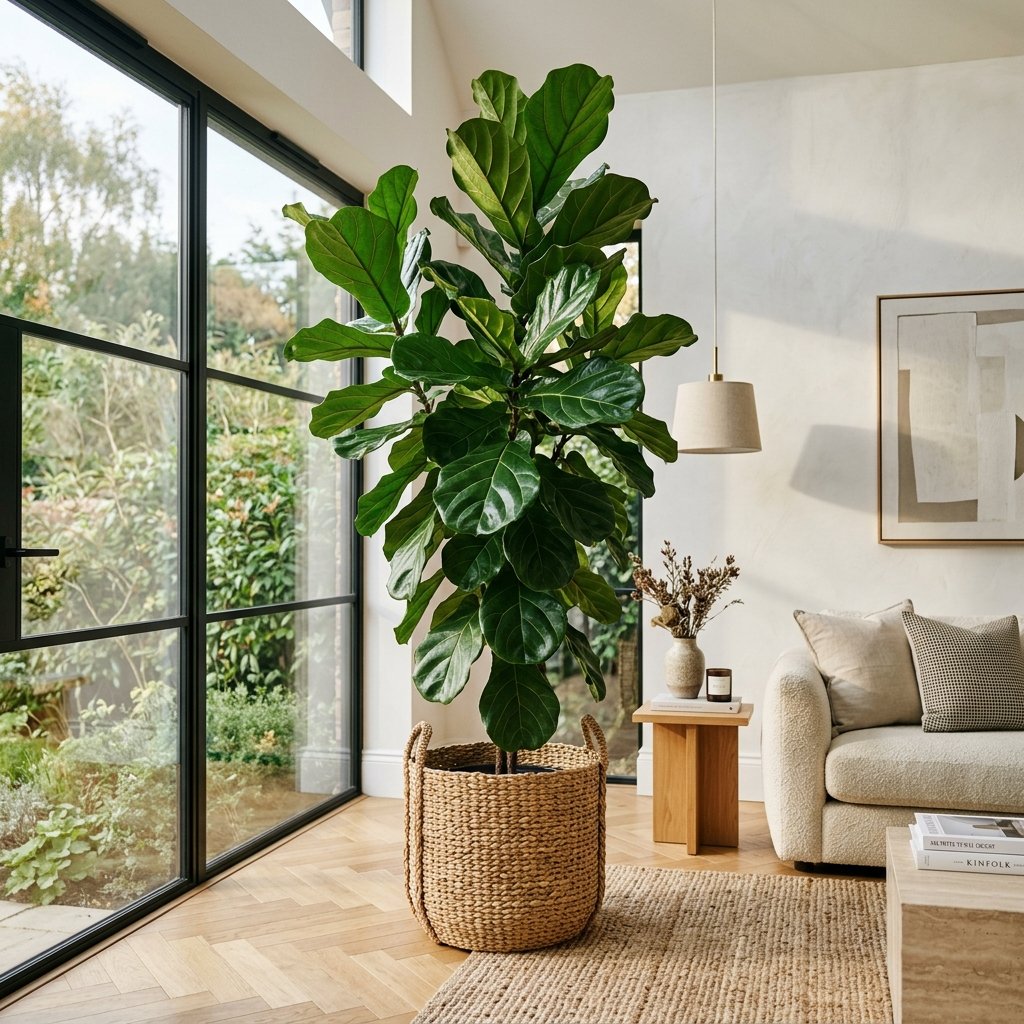

🌿 Quick Care Facts: Fiddle Leaf Fig
- Light: Extremely bright, indirect light; tolerates some direct morning sun.
- Water: Allow the top 2-3 inches to dry out; extremely sensitive to both over and underwatering.
- Humidity: High (above 50%), dislikes dry drafts from heating or AC vents.
- Toxicity: Toxic to cats and dogs.
The Dramatic Diva of the Plant World
Few plants have dominated interior design trends quite like the Fiddle Leaf Fig (Ficus lyrata). With its sweeping, violin-shaped leaves and impressive tree-like stature, it commands attention in any room. However, this West African rainforest native has also earned a notorious reputation as an unforgiving diva. A slight draft, a shift in its position, or a missed watering can trigger a dramatic display of dropped leaves.
But fear not! Success with a Fiddle Leaf Fig is simply a matter of consistency. Once you understand the strict parameters of its native environment, keeping this majestic tree thriving indoors becomes a manageable and highly rewarding endeavor.
The Golden Rule: Give It Light!
A staggering 90% of Fiddle Leaf Fig failures can be traced back to insufficient lighting. In their natural habitat, they are massive canopy trees basking in the tropical sun. Indoors, they require the brightest spot you can offer them. Directly in front of a massive east or south-facing window is ideal.
If your tree begins dropping leaves, stretching toward the window, or refusing to push out new growth, it is begging for more light. Do not put a Ficus lyrata in a dim corner; it will slowly decline and eventually die.
The Tricky Dance of Watering
Consistent, deep watering is required, but they despise “wet feet.” You should thoroughly drench the soil until water escapes the drainage holes, but then you must wait until the top few inches of the soil feel powdery dry before watering again. Using a moisture meter is highly recommended for this plant, as guessing often leads to brown spots.
Take the Guesswork Out
Fiddle Leaf Figs will drop leaves if you are off by just a few days. Don’t risk it.
Cleaning the Leaves
Those massive, gorgeous leaves act like dust magnets. Because they rely heavily on photosynthesis to sustain their massive size, a layer of dust can severely hamper their energy production. Once a month, take a damp microfiber cloth and gently wipe down the tops and bottoms of the leaves. This is also an excellent time to inspect for pests like spider mites, which love the dry, dusty conditions on dirty leaves.
Brown Edges? Yellowing? Red Spots?
Fiddle Leaf Figs have very specific ways of telling you they are unhappy. If you see spots or discoloration, let our AI analyze it.
Dealing with Edema (Red Spots on New Leaves)
If you notice tiny reddish-brown freckles covering the brand new, tender leaves of your Fiddle Leaf Fig, you are likely witnessing Edema. This is not a pest or a disease, but rather a physiological condition caused by inconsistent watering. When the plant suddenly takes up more water than it can transpire, the plant cells burst, creating small red scars. The good news? As the leaf matures and thickens, these spots naturally fade and usually disappear.
Frequently Asked Questions
What are the best conditions for this plant?
Most houseplants thrive in bright, indirect light with temperatures between 65-80F (18-27C). Ensure good drainage and water when the top inch of soil feels dry.
How often should I water?
Watering frequency depends on the plant species, pot size, and environment. A general rule is to check the soil moisture before watering. Overwatering is the most common cause of houseplant death.
What soil mix works best?
A well-draining mix of peat moss, perlite, and orchid bark works well for most tropical houseplants. Succulents prefer a grittier mix with more sand and perlite.
Quick Care Reference
| Factor | Requirement | Notes |
|---|---|---|
| Light | Bright indirect | Avoid direct afternoon sun |
| Water | When top inch dry | Reduce in winter |
| Humidity | 50-70% | Mist or use pebble tray |
| Temperature | 65-80F (18-27C) | Avoid cold drafts |
| Soil | Well-draining mix | Peat, perlite, bark |
| Fertilizer | Monthly (spring-summer) | Half-strength balanced |