

You flip over your Snake Plant nursery pot and see a single white root poking out of a drainage hole. Panic sets in. You immediately rush to the store, buy a massive decorative ceramic pot, and transplant it. A month later, the plant is dead from Root Rot. You misinterpreted a sign of health for a cry for help.
Understanding the Confined Jungle
In the wild, roots have unlimited space to spread horizontally. In a pot, they are forced to circle. However, many of our favorite houseplants (especially Epiphytes like Hoyas, Orchids, and Monsteras) actually prefer to be tightly confined. When an epiphyte’s roots hit the plastic wall of a pot, it signals to the plant that it is securely anchored, triggering rapid upward foliage growth.
When Is It Actually Time?
Seeing a few roots at the bottom of the pot does not mean it is time to repot. It simply means the root system was thirsty and reached down for the bottom layer of moisture.
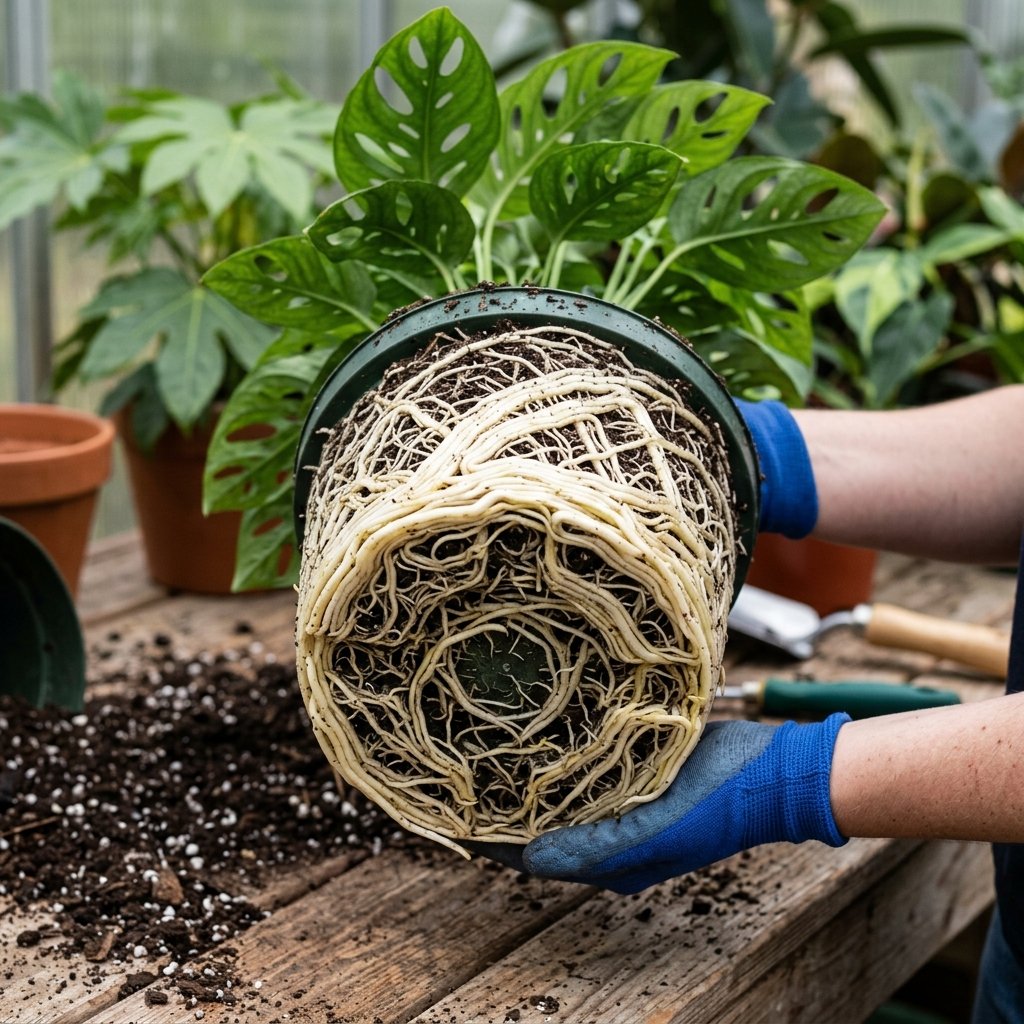
- Pot-Bound vs Root-Bound: “Root-bound” is healthy; the roots fill the pot nicely. “Pot-bound” means the root mass has become so incredibly dense that there is physically more white biological matter in the container than there is dirt.
- The Hydrophobic Test: You only need to repot when the roots have displaced so much soil that watering becomes impossible. If you water the plant and it instantly flows out the bottom, and the plant wilts three days later because there is no soil left to hold moisture, then it is time to size up.
- The 2-Inch Rule: When you finally do repot, never jump from a 6-inch pot to a 10-inch pot. Always increase the diameter by a maximum of two inches to prevent accidental drowning. Need to calculate your new watering frequency after a repot? Use our Smart Watering Calculator.
What’s Your Next Step?
<p
Frequently Asked Questions
What are the best conditions for this plant?
Most houseplants thrive in bright, indirect light with temperatures between 65-80F (18-27C). Ensure good drainage and water when the top inch of soil feels dry.
How often should I water?
Watering frequency depends on the plant species, pot size, and environment. A general rule is to check the soil moisture before watering. Overwatering is the most common cause of houseplant death.
What soil mix works best?
A well-draining mix of peat moss, perlite, and orchid bark works well for most tropical houseplants. Succulents prefer a grittier mix with more sand and perlite.
Quick Care Reference
| Factor | Requirement | Notes |
|---|---|---|
| Light | Bright indirect | Avoid direct afternoon sun |
| Water | When top inch dry | Reduce in winter |
| Humidity | 50-70% | Mist or use pebble tray |
| Temperature | 65-80F (18-27C) | Avoid cold drafts |
| Soil | Well-draining mix | Peat, perlite, bark |
| Fertilizer | Monthly (spring-summer) | Half-strength balanced |
Pro Tips from a Master Botanist
Beyond the basic indicators, seasoned plant enthusiasts and botanists employ nuanced observations to determine the optimal repotting time. Here are some advanced, experience-based insights:
The “Lift Test” Nuance: Beyond Drainage Holes
While roots emerging from drainage holes are a clear sign, a truly advanced assessment involves the “lift test.” Carefully invert your plant (supporting the soil with your hand) and gently slide it out of its pot. Observe the root ball. A genuinely root-bound plant will have a dense, matted root system that holds the exact shape of the pot, with very little loose soil visible. You might even see roots forming a tight, impenetrable web. If the roots are merely visible but still surrounded by a good amount of soil, it’s pot-bound but not critically root-bound, suggesting you might have a little more time, especially for slow growers.
Species-Specific Tolerance & Growth Habits
The urgency to repot varies dramatically by species. Succulents, cacti, Sansevierias (snake plants), and ZZ plants thrive on a degree of root restriction and can be happy pot-bound for years, often blooming best when slightly stressed this way. Conversely, fast-growing, thirsty plants like Ficus lyrata (fiddle-leaf fig), many herbs, or tropical foliage plants will quickly suffer if their root growth is stifled. Understanding your plant’s natural growth rate and preference is paramount; some plants, like orchids, even prefer specialized pots that encourage air circulation around their roots, making traditional “root-bound” indicators less relevant.
“Potting Up” vs. “Potting On”: A Strategic Distinction
For mature plants that have reached their desired size or for those that prefer being pot-bound, the goal isn’t always to increase pot size (“potting up”). Instead, consider “potting on.” This involves carefully removing the plant, gently pruning back some of the outer circling roots (often 10-20% of the root mass), and replacing the old, depleted soil with fresh, nutrient-rich potting mix in the *same* pot size. This rejuvenates the plant, provides fresh nutrients, and prevents soil compaction without forcing it into a larger container it doesn’t need or want, maintaining its current size and vigor.
Frequently Asked Questions About Repotting