
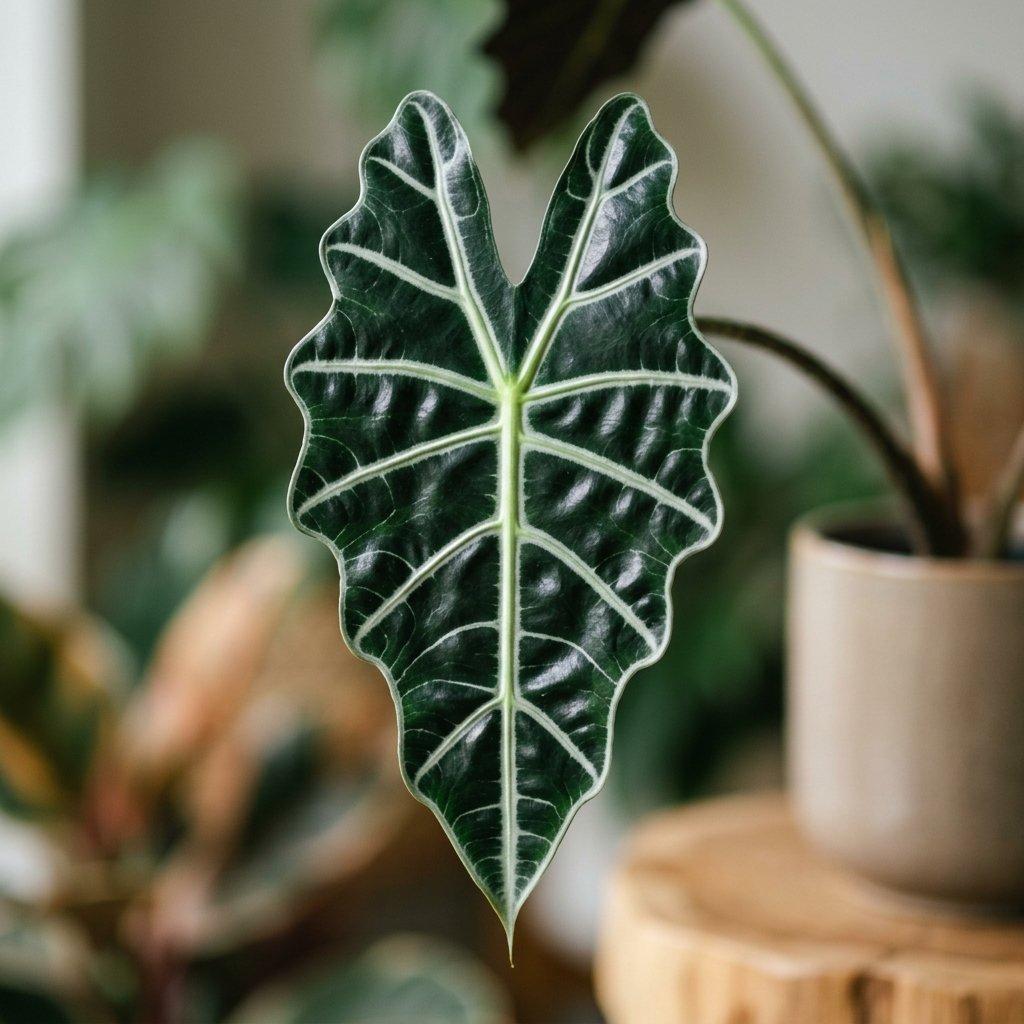

It’s a scene that strikes fear into the heart of any plant parent. Your stunning Alocasia Polly, the dramatic centerpiece of your indoor jungle with its glossy, arrow-shaped leaves and contrasting silvery veins, is suddenly… failing. One by one, those magnificent leaves are yellowing, drooping, and dying back. The immediate reaction is pure panic, followed by a frantic mental checklist: “Did I overwater? Underwater? Is it a pest? Is it dying?!”
As the days grow shorter and a chill enters the air, this dramatic decline becomes an all-too-common sight for owners of the African Mask Plant. The internet floods with desperate queries, and the diagnosis often boils down to two very different, yet visually similar, culprits. This is the great seasonal mystery for Alocasia lovers: are you witnessing the natural, harmless process of winter dormancy, or the silent, deadly advance of root rot?
Telling them apart is the single most critical skill you can develop as an Alocasia owner. One requires patience and reduced care, while the other demands immediate, emergency intervention. Getting it wrong can mean the difference between a temporary slumber and a permanent end for your beloved plant. But don’t worry. You’ve come to the right place. In this comprehensive deep-dive, we will demystify why your Alocasia Polly is losing leaves and empower you with the knowledge to accurately diagnose the problem. We’ll guide you through a gentle root inspection, detail life-saving rehab techniques, and explain why you should never, ever give up on a seemingly “dead” Alocasia. Let’s solve this mystery together.
Understanding the Alocasia Life Cycle: It’s Not Dying, It’s Sleeping
Before we jump into emergency procedures, it’s vital to understand the fundamental biology of your Alocasia. These plants are not like your average Pothos or Snake Plant. They have a distinct life cycle rooted in their tropical origins, a cycle that includes a period of rest. Misunderstanding this natural rhythm is the number one cause of unintentional plant homicide among Alocasia owners.
What is Plant Dormancy?
Think of dormancy as a form of hibernation for plants. It’s a brilliant survival strategy hardwired into their DNA. In their native habitats in Southeast Asia, Alocasias experience seasonal changes, such as a dry season or cooler temperatures, where conditions are not ideal for growth. Instead of wasting precious energy trying to sustain lush foliage, the plant makes a strategic decision to retreat.
It slows down its metabolism, stops producing new leaves, and begins to redirect all its energy and nutrients from the existing leaves downward into its hidden power source: the corm. This is why the leaves yellow and die back. The plant is essentially reabsorbing the resources from its leaves to store for later. For houseplants, this process is typically triggered by environmental cues like the shorter daylight hours and cooler ambient temperatures of fall and winter.
The Secret Weapon: The Alocasia Corm
The key to all of this is the corm. While many people use the terms corm, bulb, and tuber interchangeably, Alocasias grow from a corm. A corm is a swollen, underground plant stem that acts as a storage organ. It’s a starchy, nutrient-packed battery that holds the blueprint and the fuel for the entire plant.
When an Alocasia Polly goes dormant, it may lose some, or even all, of its leaves. To the untrained eye, the plant looks dead. But beneath the soil, the firm, healthy corm is very much alive. It’s in a state of suspended animation, patiently waiting for the signals—longer days, more warmth, more moisture—that indicate it’s safe to start growing again. Understanding the resilience of the corm is the foundation of Alocasia confidence. The leaves are temporary and expendable; the corm is the heart of the plant.
Signs of Natural Winter Dormancy in Alocasia Polly
So, how can you tell if your Alocasia Polly losing leaves is just part of this natural process? Dormancy has a distinct set of characteristics. It’s a graceful, orderly retreat, not a chaotic collapse.
- It’s a Gradual Process: Dormancy doesn’t happen overnight. You’ll first notice a significant slowdown in growth as autumn approaches. No new leaves will be unfurling.
- Oldest Leaves Go First: The plant will typically sacrifice its oldest, outermost leaves first. They will begin to yellow at the edges and slowly fade completely. The newer, central leaves are often the last to go, if they go at all.
- It’s a “Clean” Decline: The yellowing leaf and its stem (the petiole) will eventually wither, but they generally remain firm until they are completely dried out. You won’t find any mushiness or foul smells.
- The Main Stem is Solid: The base of the plant, where the stems emerge from the soil, will remain firm and healthy-looking. Give it a gentle squeeze; it should feel solid.
- The Timing is Right: This process almost always coincides with the changing seasons. If your plant has been happy all spring and summer and starts this slow decline in October or November, dormancy is a very likely suspect.
Decoding the Distress Signals: Is It Root Rot?
Now, let’s talk about the more sinister possibility. Root rot is not a strategic retreat; it is a full-blown disease. It is an infection of the root system that, if left unchecked, will absolutely kill the plant, corm and all. It is the antithesis of dormancy, characterized by a rapid, sickly decay.
What Causes Root Rot in Alocasia?
The primary culprit behind root rot is almost always a combination of two factors: too much water and not enough oxygen. Alocasias, despite loving humidity, are exceptionally prone to this issue. Their roots need to breathe. When the soil is consistently waterlogged—either from watering too frequently, using a dense, non-aerated soil mix, or having a pot without proper drainage—the air pockets in the soil fill with water.
This creates an anaerobic (oxygen-free) environment. The roots essentially begin to suffocate and die. This dead and decaying organic matter becomes the perfect breeding ground for opportunistic waterborne fungi and bacteria (like Pythium and Phytophthora). These pathogens then feast on the dying roots, spreading the infection to healthy tissue and working their way up into the corm and stem of the plant. Mastering the art of watering your houseplants is the first and most crucial line of defense against this devastating condition.
Symptoms of Root Rot in Alocasia Polly
The signs of root rot are alarming and should be treated as an emergency. They paint a very different picture than the graceful decline of dormancy.
- Rapid, Widespread Yellowing: Unlike dormancy’s slow, methodical leaf drop, root rot often causes multiple leaves—both old and new—to start yellowing and drooping simultaneously.
- Wilted Leaves Despite Wet Soil: This is a classic, confusing symptom. The plant looks thirsty and wilted, so you give it more water, unknowingly making the problem worse. The leaves are wilting because the rotting roots can no longer absorb water to send to them.
- Mushy Stems at the Base: This is the most definitive sign. Gently squeeze the base of the plant’s stems right at the soil line. If they feel soft, squishy, or hollow, you have a serious problem. The rot has moved from the roots into the base of the plant.
- A Foul Odor: Healthy soil smells earthy and fresh. Soil harboring root rot will often have a distinct, unpleasant smell, like a swamp or decaying vegetables. If your nose wrinkles when you get close to the pot, be suspicious.
- Brown or Black Spots: Sometimes, the leaves will develop dark brown or black spots, often with a yellowish halo, which can be a sign of a fungal or bacterial infection taking hold.
Dormancy vs. Root Rot: A Side-by-Side Comparison
To make it crystal clear, let’s put the symptoms head-to-head. If you’re still struggling to decide what’s causing your Alocasia Polly to lose its leaves, use this checklist.
- Pace of Decline:
- Dormancy: Slow and gradual, over weeks or months.
- Root Rot: Rapid, often over a matter of days.
- Leaf Pattern:
- Dormancy: Oldest, outer leaves yellow first.
- Root Rot: Indiscriminate; affects old and new leaves at the same time.
- Stem Condition:
- Dormancy: Stems and base of the plant remain firm.
- Root Rot: Base of the stems becomes soft, mushy, and often discolored.
- Soil Smell:
- Dormancy: Normal, earthy soil smell.
- Root Rot: Sour, swampy, or rotten odor.
If your plant is exhibiting signs from the “Root Rot” column, you must take action immediately. For a more exhaustive look at this common ailment across different plant species, you can always consult our complete guide on preventing and treating root rot. If you’re still unsure after comparing the symptoms, it’s time to investigate further. And for a quick, tech-assisted opinion, snap a photo of the affected leaves and stems and upload it to our powerful AI Disease Finder for an instant analysis.
Playing Plant Detective: A Gentle Root Inspection Guide
When the visual clues above ground are ambiguous, the only way to get a definitive answer is to go below ground and look at the roots. Many plant owners are terrified of this step, fearing they’ll harm their plant further. But a gentle inspection is far less damaging than allowing root rot to fester. If you suspect rot, you have nothing to lose and everything to gain.
Step-by-Step Root Inspection
Follow these steps to safely unpot your plant and examine its root system without causing unnecessary stress.
- Prepare Your Station: Lay down some newspaper or a plastic sheet on a table or the floor. It’s going to get a little messy. Have your tools ready: clean hands, and possibly a small trowel or chopstick.
- Gently Remove the Plant: Do not pull the plant out by its stems! This is the most common mistake. Instead, turn the pot on its side and gently roll and squeeze it to loosen the soil from the pot walls. Place your hand over the top of the soil, with the plant’s stem between your fingers, and tip the pot upside down. The entire root ball should slide out into your hand. If it’s stuck, a few firm taps on the bottom of the pot should dislodge it.
- Initial Examination: With the root ball out, take a moment to observe. Is the soil sopping wet and muddy? Does it smell foul? These are your first clues.
- Expose the Roots: Gently begin to massage the root ball, allowing the loose soil to fall away. Be careful not to tear the roots. You don’t need to remove all the soil, just enough to get a clear view of the root system, especially around the bottom and center of the root ball where moisture tends to collect.
- Identify Healthy vs. Rotten Roots: Now for the moment of truth. You need to know what you’re looking for.
- Healthy Alocasia Roots: They should be firm, plump, and typically a creamy white or light tan color. They will feel robust and strong. If you tug on one gently, it will have some resistance.
- Rotten Roots: These are the enemy. They will be dark brown or black. They will feel mushy, slimy, and weak. If you gently tug on a rotten root, the outer sheath will often slide right off, leaving a thin, stringy inner core. They break apart with almost no effort. And, of course, they will contribute to the foul smell.
Once you’ve seen the roots, you will have your answer. If you find a network of firm, white roots and a solid corm, you can breathe a sigh of relief. Your Alocasia Polly is simply going dormant. You can gently place it back in its pot, top it up with a little fresh soil, and proceed with dormancy care. But if you’ve found a mess of brown, mushy roots, it’s time to perform emergency surgery.
From Crisis to Corm: The Ultimate Sphagnum Moss Rehab Guide
Discovering root rot can be disheartening, but it’s not a death sentence if you act fast. We’re now moving into the Alocasia ER. The goal is to remove all the infected tissue and provide the remaining healthy corm and roots with a sterile, airy environment to recover and regrow. The best medium for this intensive care unit is long-fiber sphagnum moss.
Step 1: The Amputation (Trimming the Rot)
This is the most critical step. You must be ruthless. Grab a pair of clean, sharp scissors or pruning shears (sterilize them first by wiping the blades with rubbing alcohol).
- Rinse the entire root ball under lukewarm water to wash away the old soil and get a clear view of the infection.
- Systematically trim off every single piece of black, brown, or mushy root. If you’re unsure if a root is healthy, give it a gentle tug. If it’s weak or the sheath slides off, it’s rotten. Cut it off.
- Follow the rot up. Continue cutting until you see healthy, white root tissue. It’s better to cut a little bit of healthy tissue than to leave any rot behind.
- Examine the corm itself. If there are any soft, mushy spots on the corm, you must carefully scrape or cut them away until you are left with only firm, healthy tissue.
- Don’t be surprised if you have to remove all the roots. Sometimes, all you can save is the corm itself, and that’s okay!
Step 2: Preparing the Moss ICU
Sphagnum moss is a miracle medium for plant rehab. It holds just the right amount of moisture without becoming waterlogged, provides excellent aeration for new roots, and has natural antiseptic properties that help prevent further infection.
- Take a handful of dry, long-fiber sphagnum moss and place it in a bowl of water. Let it fully rehydrate for about 20 minutes.
- Once it’s saturated, grab the moss and squeeze out all the excess water. You want it to be damp and fluffy, like a well-wrung-out sponge. It should not be dripping at all. This is crucial—soggy moss will just cause more rot.
Step 3: The Incubation
Now you’ll create a “hospital” for your patient.
- Choose a clear container, like a plastic cup or a small takeout container. A clear container is ideal because it allows you to monitor for new root growth without disturbing the plant.
- Fill the container loosely with your prepared damp sphagnum moss.
- Nestle the cleaned corm (with any remaining healthy roots) into the moss. Ensure the base of the corm is making good contact with the moss, but don’t bury it too deeply.
- To create a high-humidity environment that Alocasias love, you can place the cup inside a larger clear plastic bag or cover it with a plastic cloche. Just be sure to open it for a few minutes every day to allow for fresh air exchange.
Step 4: Patience and Monitoring
Place your Alocasia ICU in a location that receives bright, indirect light. Warmth is also key, as it encourages root growth. A spot near a window (but not in direct sun) or under a grow light is perfect. Now, the hardest part: waiting.
- It can take several weeks, or even a couple of months, to see new growth. Be patient.
- Check the moss every few days. If it feels like it’s starting to dry out, give it a light misting with a spray bottle. Do not let it get soggy.
- The magic moment is when you see the first new, bright white roots emerging from the corm and pushing their way through the moss. This is a sign of success!
- Wait until you have a decent network of new roots, at least 1-2 inches long, before you even think about potting it back into soil. Rushing this step can cause a relapse.
Essential Tools for Your Alocasia Rescue Kit
Being prepared can make all the difference when you’re faced with a plant emergency. Here are a few products we recommend having on hand for any Alocasia owner.
- Premium Long-Fiber Sphagnum Moss: Don’t skimp on quality. A good, clean sphagnum moss is essential for successful rehabilitation.
- Chunky Aroid Potting Mix: When your Alocasia is ready to graduate from the moss ICU, it needs a well-draining, airy soil. Look for a mix containing orchid bark, perlite, coco coir, and charcoal.
- Systemic Houseplant Insect Control Granules: A recovering plant is a vulnerable plant. Adding systemic granules to the soil upon repotting provides long-lasting protection against common pests like spider mites and thrips while your Alocasia gets back on its feet.
- Small Clear Humidity Dome/Cloche: Perfect for creating that high-humidity microclimate that will speed up recovery and encourage new leaf growth.
The Golden Rule of Alocasia Care: Never Give Up on a Corm
This brings us to one of the most important lessons in Alocasia care, a mantra you should repeat to yourself whenever you have a pot of what looks like bare soil: never give up on a firm corm. Even if you’ve had to cut away every single leaf and every single root, as long as that central corm is firm and free of rot, it contains the potential for a brand new plant.
Caring for a Dormant Corm in Soil
If your root inspection revealed healthy roots and you’ve determined your Alocasia Polly is just dormant, or if you’ve successfully rehabbed a corm and potted it back up, the care is simple.
- Drastically Reduce Water: This is the most important rule. A plant with no leaves is not using water (a process called transpiration). Watering a dormant corm as you would a fully-leafed plant is a guaranteed path to root rot. Let the soil dry out almost completely. Water very sparingly—maybe a small amount once a month, just enough to keep the roots from desiccating entirely.
- Provide Warmth: Keep the pot in a relatively warm spot. Cold, wet soil is a recipe for rot.
- Wait for the Signal: As spring approaches, the combination of longer daylight hours and warmer temperatures will signal the corm to wake up. You can
The 2026 Comprehensive Masterclass: Botanical Deep Dive
To truly understand the nuances of the concepts discussed above, we must transition from basic houseplant care to advanced botanical mechanics. Elite plant collectors do not rely on guesswork; they rely on environmental control, photobiology, and soil chemistry. In this masterclass section, we will systematically unpack the advanced science necessary to maintain a hyper-optimized indoor jungle.
Part 1: The Physics of Lighting and Photobiology
Lighting is the fundamental engine of biological growth. Without adequate Daily Light Integral (DLI) and Photosynthetic Photon Flux Density (PPFD), any adjustments made to watering or fertilizing are entirely useless. When you place a plant in a corner, you are not just dimming its environment; you are actively starving it.
Understanding PAR and PPFD
Photosynthetically Active Radiation (PAR) designates the spectral range (wave band) of solar radiation from 400 to 700 nanometers that photosynthetic organisms are able to use in the process of photosynthesis. PPFD measures the amount of PAR that actually arrives at the plant. It is measured in micromoles per square meter per second (μmol/m²/s).
- Low-Light Plants (e.g., Snake Plants, ZZ Plants): Require a PPFD of 20 to 50 μmol/m²/s. While they survive here, they will rarely trigger massive new growth.
- Medium-Light Plants (e.g., Calatheas, Philodendrons): Require a PPFD of 50 to 150 μmol/m²/s. At this range, they begin to express deeper variegation colors and stronger petiole rigidity.
- High-Light Plants (e.g., Monsteras, Ficus, Cacti): Require a baseline of 200 to 400+ μmol/m²/s to exhibit maximum fenestration (leaf holes) and secondary branching.
Part 2: Soil Chemistry, CEC, and Hydrophobicity
Your potting mix is not just a physical anchor for your plant; it is a bio-active chemical reactor. The most critical metric in any soil mix is its Cation Exchange Capacity (CEC).
Cation Exchange Capacity Explained
CEC is the measure of a soil’s ability to hold and release various elements and compounds through electrical charges. Highly organic materials like Peat Moss and Coco Coir have a very high CEC, meaning they grab onto fertilizer molecules (like Nitrates and Phosphates) and hold them so the roots can slowly feed over time. This is why placing a plant purely in gravel (which has a CEC of nearly zero) requires constant, daily nutrient flushing (hydroponics).
The Hydrophobic Death Trap
When high-CEC soils, particularly peat moss, dry out entirely, they undergo a mechanical failure known as hydrophobicity. The organic fibers shrink and lock tightly together. When water is introduced, the surface tension is too high to penetrate the locked fibers. The water channels directly down the sides of the pot. To break the hydrophobic barrier, you must use a surfactant (like a mild dish soap solution) or submerge the pot entirely for 45 minutes to force capillary hydration upward against gravity.
Part 3: Advanced Hydration Dynamics (Capillary Action)
Water does not simply flow downward. In the micro-environment of a plant pot, capillary action often overcomes gravity.
The Perched Water Table (PWT): No matter how much drainage you place at the bottom of a container, the lowest contiguous section of soil will always remain identically saturated. This is physics. If you put 3 inches of rocks at the bottom of a pot, you do not improve drainage; you merely push the soggy PWT three inches higher into the root mass, radically increasing the risk of Pythium (root rot). This is why nursery pots with numerous drainage holes placed directly on a porous surface are the only empirically sound container choice.
Part 4: The Pathogen War (Fungal vs Bacterial)
When a plant fails, the visual symptom (yellowing, dropping leaves) is merely the final stage of a prolonged microscopic war.
Anaerobic Pathogens
When a soil is over-hydrated, oxygen molecules are physically displaced by water molecules. Roots require oxygen to respire. As roots suffocate, the cells burst and die. This dead tissue becomes an immediate food source for anaerobic bacteria—bacteria that thrive strictly in zero-oxygen environments. The bacteria consume the dead roots, creating a sulfurous, rotting odor. To combat this, elite growers use Hydrogen Peroxide (H2O2) drenches. The extra, highly unstable oxygen atom in H2O2 detonates on contact, forcefully oxidating the anaerobic bacteria and re-oxygenating the root zone.
Part 5: Comprehensive Houseplant Glossary of Terms
To ensure absolute clarity for our readers, we have compiled an exhaustive glossary of the terms heavily utilized within the professional botanical sphere:
- Aroid: A common name for plants in the Araceae family, characterized by a spathe and spadix inflorescence (e.g., Philodendrons, Monsteras).
- Chlorosis: The yellowing of leaf tissue due to a lack of chlorophyll, often caused by nutrient deficiencies or root suffocation.
- Etiolation: The stretching and weakening of stems as a plant aggressively reaches toward a distant light source.
- Fenestration: The natural occurrence of holes or deep splits in the leaves of mature plants, designed to allow wind and light to pass through to the lower canopy.
- Node: The vital junction on a stem where leaves, aerial roots, and new growth points (eyes) emerge. A cutting without a node will never grow a new plant.
- Variegation: A genetic (chimeric) or viral mutation resulting in distinct zones of differently colored tissue (typically white or yellow) due to an absence of chlorophyll in those areas.
- Transpiration: The biological process by which a plant absorbs water through its roots and subsequently releases it as vapor through micro-pores (stomata) on its leaves.
Conclusion: The 2026 Shift in Plant Ownership
The era of buying a plant and hoping for the best is over. Modern houseplant ownership requires a foundational understanding of physics, chemistry, and biology. By tracking your PPFD, balancing your soil’s CEC, and actively managing the Perched Water Table, you ensure your indoor jungle moves from simple survival to massive, aggressive growth.
What’s Your Next Step?
You have successfully diagnosed your Alocasia. Your next action determines its survival and long-term health. Choose your next optimization protocol:
- <a href="https://plantsmag
Frequently Asked Questions
What are the best conditions for this plant?
Most houseplants thrive in bright, indirect light with temperatures between 65-80F (18-27C). Ensure good drainage and water when the top inch of soil feels dry.
How often should I water?
Watering frequency depends on the plant species, pot size, and environment. A general rule is to check the soil moisture before watering. Overwatering is the most common cause of houseplant death.
What soil mix works best?
A well-draining mix of peat moss, perlite, and orchid bark works well for most tropical houseplants. Succulents prefer a grittier mix with more sand and perlite.
Quick Care Reference
Factor Requirement Notes Light Bright indirect Avoid direct afternoon sun Water When top inch dry Reduce in winter Humidity 50-70% Mist or use pebble tray Temperature 65-80F (18-27C) Avoid cold drafts Soil Well-draining mix Peat, perlite, bark Fertilizer Monthly (spring-summer) Half-strength balanced