
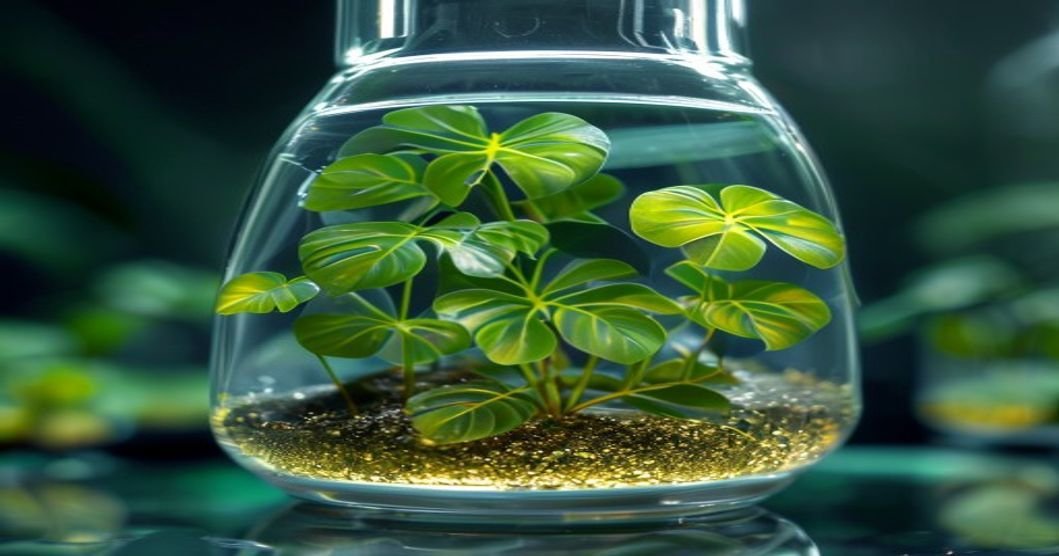

Remember 2021? A single, sparsely-rooted cutting of a Monstera Albo could fetch the price of a used car. A ‘Thai Constellation’ was a mythical beast, spoken of in hushed tones on Reddit forums. The rare plant market was a speculative bubble of epic proportions, fueled by pandemic-era hobbies and Instagram aesthetics. But fast forward to today, and the landscape is virtually unrecognizable. That once-unattainable Monstera Thai Constellation is now a staple at big-box garden centers, often for under $50. What happened? The answer is a scientific revolution that has been quietly brewing in laboratories for decades: plant tissue culture. This is the story of the tissue culture crash, a market correction so profound that it has democratized the hobby, baffled veteran collectors, and set the stage for a completely new era of plant ownership. In this comprehensive deep-dive, we’ll explore how rare Monsteras became cheap, demystify the science behind this propagation miracle, provide a step-by-step guide to acclimating these delicate lab-grown babies, and predict why this changes everything for the houseplant world in 2026 and beyond.
What Was the Great Houseplant Boom?
To understand the crash, we must first understand the dizzying heights from which prices fell. The period from roughly 2019 to 2022 saw an unprecedented surge in demand for houseplants, particularly rare aroids. Confined to their homes, people sought to bring nature indoors, creating lush, green sanctuaries. Social media platforms like Instagram and TikTok became digital greenhouses, showcasing stunningly variegated plants and turning certain species into must-have status symbols.
The Allure of Rarity: Why a Monstera Albo Could Cost Thousands
The economic principle was simple: sky-high demand coupled with extremely limited supply. Variegated plants like the Monstera deliciosa ‘Albo Variegata’ or the Philodendron ‘Pink Princess’ (before its own TC boom) were difficult to propagate. Variegation is an unstable genetic mutation; it can’t be grown from seed, and cuttings don’t always carry the desirable traits. Propagating a large, highly-variegated mother plant was a slow, painstaking process. A grower might only get a handful of viable, attractive cuttings per year. This inherent scarcity created a collector’s market where prices were dictated by bidding wars and FOMO (fear of missing out). A single leaf cutting could sell for hundreds of dollars, and a mature plant could easily command a five-figure price tag. It was the wild west of the plant world, and for a time, it seemed the prices would only climb higher.
Enter the Game Changer: The Dawn of Mass-Produced Rarity
While hobbyists were trading cuttings on Facebook Marketplace, commercial labs were perfecting a technique that would render this entire economic model obsolete. Plant tissue culture, or micropropagation, offered a way to bypass the slow, unpredictable nature of traditional propagation. It promised the ability to create thousands, even millions, of genetically identical clones from a single, tiny piece of plant tissue. The “rare” plant bubble had a fatal flaw: its rarity was based on logistical difficulty, not true scarcity. And technology was about to solve that logistical problem on an industrial scale.
Unlocking Nature’s Blueprint: A Deep Dive into Tissue Culture (TC)
So, what is this seemingly magical process that can turn a single leaf into an army of identical plants? Tissue culture is a form of micropropagation where very small pieces of plant tissue (called explants) are grown in a sterile, lab-controlled environment on a nutrient-rich medium. It’s the botanical equivalent of cloning, allowing for the rapid multiplication of a plant with specific, desirable traits, like the gorgeous, stable variegation of a Monstera ‘Thai Constellation’.
From Lab to Living Room: The Step-by-Step TC Process Explained
The journey of a TC plant is one of precision and patience, moving through several distinct stages:
- Stage 0: Stock Plant Selection. It all begins with a perfect “mother plant.” Scientists select a specimen with the most desirable traits—vibrant variegation, strong growth, and disease-free tissue.
- Stage I: Initiation. A small piece of tissue, often from a growth point (an apical meristem), is carefully excised from the mother plant. This explant is then sterilized to remove any bacteria or fungi and placed into a sterile container (like a test tube or flask) with a nutrient-rich gel called agar.
- Stage II: Multiplication. The agar contains a cocktail of nutrients, vitamins, and, crucially, plant hormones. Cytokinins are added to encourage the cells to divide and multiply rapidly, forming a clump of tissue called a callus, or more often, to produce a proliferation of tiny shoots. This is where the magic of scale happens; this cluster can be divided and sub-cultured many times over, exponentially increasing the number of potential plants.
- Stage III: Rooting. Once enough shoots have been produced, they are transferred to a different agar medium. This new formula has a different hormonal balance, typically with more auxins, which encourages the tiny plantlets to develop roots.
- Stage IV: Acclimation. The final, and most delicate, stage. The plantlets are removed from their sterile, 100% humidity environment and carefully transferred to a substrate like soil or moss. This is a huge shock to their system, and it’s the step where many hobbyists first encounter challenges. We’ll cover this in-depth later.
Meristems, Hormones, and Agar: The Building Blocks of a TC Plant
The science hinges on a concept called totipotency—the ability of a single plant cell to differentiate and grow into a complete, whole plant. The key is providing the right environment and chemical signals.
- Meristematic Tissue: This is the “stem cell” equivalent for plants. Found in growing tips and nodes, these cells are undifferentiated and actively dividing, making them ideal for initiating a culture. They are also often virus-free, even if the rest of the plant is infected, which is a huge advantage for creating clean stock.
- Growth Hormones (Regulators): Auxins and cytokinins are the two primary hormones manipulated in TC. In simple terms, cytokinins promote shoot development, while auxins promote root development. By carefully adjusting the ratio of these hormones in the agar, scientists can steer the plant tissue’s growth at each stage.
- Agar Medium: This sterile, gelatinous substance is the plantlet’s entire world. It’s not just a physical support; it’s a complete life-support system, delivering water, macronutrients (nitrogen, phosphorus, potassium), micronutrients (iron, manganese), sugar (since the plantlet can’t photosynthesize effectively yet), and the all-important growth hormones.
Why TC is Different from Traditional Propagation
A standard cutting from a mother plant is essentially a miniature, fully-formed plant. It has a stem, leaves, and nodes with the ability to grow roots. It’s already adapted to life in the open air, with a waxy cuticle on its leaves to manage water loss. A TC plantlet, by contrast, is a delicate infant. It has spent its entire existence in a sterile jar with 100% humidity, with its nutrients delivered directly to its nascent roots. It has no cuticle, its root system is fragile and adapted to agar, not soil, and it has never had to fend off a single microbe. This fundamental difference is why the acclimation process is so critical.
The Tissue Culture Crash: How Rare Monsteras Became Cheap
The perfection of tissue culture techniques for popular aroids was the pin that burst the rare plant bubble. What was once a slow, artisanal process of propagation became an industrial-scale manufacturing operation. Labs in Southeast Asia and the Netherlands, which had long used TC for orchids and agricultural crops, turned their attention to the lucrative houseplant market.
Case Study: The Monstera Thai Constellation’s Journey from Unicorn to Ubiquitous
The Monstera deliciosa ‘Thai Constellation’ is the poster child for the TC crash. Its stunning, stable, cream-colored “constellation” pattern was created in a lab in Thailand. For years, its supply was tightly controlled, making it one of the most coveted and expensive “it” plants. A small plant could easily cost $500-$1000. However, once the formula for its micropropagation was established, the floodgates opened. Labs began churning out tens of thousands of them. The first waves hit the market as small, delicate plantlets, but as supply chains matured, larger, more established plants became available. Within 18-24 months, the ‘Thai Constellation’ went from being a collector’s holy grail to a common sight at Trader Joe’s and Home Depot. The price plummeted by over 90%, a shocking and disruptive event for sellers and collectors who had invested heavily at the peak of the market.
The Economic Ripple Effect: Supply, Demand, and the New Price Point
This story was repeated for dozens of other “rare” plants. Philodendron ‘Pink Princess’, Philodendron ‘White Knight’, Syngonium ‘Albo’, and many more saw their prices tumble as TC-grown versions flooded the market. The fundamental law of supply and demand reasserted itself with a vengeance. The massive increase in supply, with demand remaining relatively stable or growing only modestly, forced prices down to a new equilibrium. This new price point is no longer based on propagation difficulty but on the cost of lab production and shipping—a much, much lower number.
Is This Good or Bad for the Hobby?
The TC crash has been a contentious topic. For sellers and investors who lost thousands of dollars on inventory that was suddenly devalued, it was a disaster. It wiped out the speculative aspect of the market for many species. However, for the average hobbyist, it has been a phenomenal boon. Plants that were once prohibitively expensive are now accessible to almost everyone. This democratization allows more people to enjoy the beauty of these unique plants without needing a massive budget. It shifts the focus of the hobby from financial investment back to what it should be: the joy of growing and caring for plants.
From Sterile Flask to Thriving Foliage: Acclimating Your TC Plant
You’ve taken advantage of the new low prices and bought your first TC plantlet, likely arriving as a tiny green speck in a small plastic cup. Congratulations! Now comes the most crucial phase: acclimation. This process is all about gently transitioning your lab baby from its sheltered, sterile life to the rough-and-tumble world of your home. Rushing this can lead to swift and certain death, but with patience, you can achieve a 90%+ success rate.
Step 1: De-flasking and Cleaning the Agar
The agar gel that nourished your plantlet will become a magnet for mold and bacteria in a non-sterile environment. It must be removed completely.
- Gently remove the plantlet from its container. It will be extremely fragile.
- Using lukewarm water, carefully rinse all of the agar from the delicate roots. A gentle stream from the tap or swishing it in a bowl of water works well.
- Be thorough! Any remaining agar is a potential food source for rot-causing pathogens. Inspect the nooks and crannies where the roots meet the base of the plant.
Step 2: Choosing Your First Substrate (The Great Debate)
TC plantlet roots are different from soil-grown roots. They are brittle and not yet efficient at absorbing water from a dense medium. Your initial substrate should be airy, retain moisture without being soggy, and be relatively sterile. Here are the top choices:
- Sphagnum Moss: The gold standard for many growers. It’s naturally anti-fungal, retains a perfect amount of moisture, and provides excellent aeration. Moisten the moss until it’s like a wrung-out sponge (not dripping wet) and gently nestle the plantlet’s roots into it.
- Fluval Stratum: A popular choice for its airy, porous structure. It holds water well and provides a stable base for the delicate roots to grow into.
- Perlite/Vermiculite Mix: A soilless mix that offers fantastic aeration. The downside is that it dries out quickly and contains no nutrients, so you’ll need to be diligent with watering and very mild fertilization sooner.
Notice what’s NOT on this list? Standard potting soil. It is generally too dense and water-retentive for brand-new TC roots, making it a high-risk environment for rot.
Step 3: Creating the Perfect Micro-Environment: Humidity is King
This is the most important step. Your plantlet has no functional cuticle to prevent water loss through its leaves (transpiration). If you place it in average room humidity (30-50%), it will rapidly dehydrate and die. You must create a 90-100% humidity environment for the first 1-3 weeks.
- Humidity Domes: A clear plastic dome, like those used for seed starting, is perfect. A simple plastic cup or a clear takeout container placed upside-down over the pot also works wonderfully.
- Ventilation: While high humidity is crucial, stagnant air is an invitation for fungal and bacterial growth. You must “burp” your dome once or twice a day for a few minutes to allow for air exchange.
- The Weaning Process: After a week or two, once you see signs of new growth (a tiny new leaf or root), you can begin to slowly acclimate the plant to lower humidity. Start by leaving the dome propped open for an hour a day. Gradually increase this time over the next 1-2 weeks until the dome is off completely.
Essential Acclimation Toolkit
Setting your TC plantlet up for success is easy with the right gear. These are our top picks for creating the perfect high-humidity micro-environment.
- Premium Long-Fiber Sphagnum Moss: Provides an airy, anti-fungal, and moisture-retentive first home for delicate roots.
- Clear Seedling Domes with Vents: A reusable, purpose-built solution for maintaining high humidity while allowing for easy ventilation control.
- Small 2-3 Inch Clear Plastic Pots: Allows you to monitor root growth and moisture levels without disturbing the plant.
- A Gentle Liquid Fertilizer (e.g., a 1/4 strength seaweed solution): Once new growth appears, a very diluted fertilizer can provide essential nutrients.
Beyond Acclimation: The Science of TC Plant Care
Once your plant is successfully weaned off its humidity dome and potted into a more permanent substrate, the journey isn’t over. Understanding the unique vulnerabilities of these plants is key to long-term success.
Humidity vs. Airflow: A Delicate Balancing Act
Even after acclimation, many TC-originated plants, especially aroids, appreciate higher-than-average humidity (60%+). However, high humidity without adequate airflow is a recipe for disaster. Stagnant, moist air is the perfect breeding ground for fungal leaf spots and other pathogens. A small, gentle fan in your plant room can work wonders, circulating the air and strengthening your plant’s cellular structure. It mimics the natural breezes they would experience in their native habitat.
The Perils of Overwatering: Why TC Plants are Prone to Rot
This is the number one killer of newly-acclimated plants. Their root systems are still developing and are incredibly susceptible to suffocating in dense, waterlogged soil. This is where many new owners go wrong, especially when dealing with moisture-retentive substrates. The symptoms of overwatering can be deceptive, often mimicking underwatering (wilting, yellowing leaves), causing a vicious cycle of adding more water. The result is a devastating condition every plant parent fears: root rot. The roots, starved of oxygen, begin to die and decay, turning into a black, mushy mess that can quickly kill the entire plant. Proper watering technique is not just a suggestion; it’s a requirement for survival. Always allow the top inch or two of the substrate to dry out before watering again. When in doubt, wait another day. If you suspect an issue, don’t hesitate to check the roots. Catching root rot early is the only way to save your plant. For a more detailed look at potential issues, our comprehensive disease finder can be an invaluable resource.
Light, Nutrients, and Patience: Fostering Long-Term Growth
TC plantlets are sensitive to direct sun. Provide them with bright, indirect light. A spot a few feet from an east-facing window or under a grow light is ideal. As for feeding, hold off on fertilizer for the first month after de-flasking. The plant is focused on developing its roots and adapting. Once you see consistent new growth, you can begin with a very heavily diluted, balanced fertilizer (e.g., 1/4 or 1/8 strength) and gradually increase to the recommended dosage as the plant matures. Above all, be patient. It can take a full year or more for a tiny TC plantlet to grow into a small, established plant. The growth may seem agonizingly slow at first, but it will accelerate as the root system becomes more robust.
Peering into the Future: What the TC Crash Means for 2026
The tissue culture revolution is not a fleeting trend; it is a fundamental, permanent shift in the houseplant industry. Looking ahead to 2026 and beyond, we can anticipate several exciting and transformative changes.
The New Definition of “Rare”
The word “rare” will no longer apply to plants that are simply difficult to propagate via cuttings. True rarity will be defined by plants with genuinely unstable genetics that cannot be reliably replicated in TC, or newly discovered species that have not yet entered lab production. The focus for high-end collectors will shift towards unique, one-of-a-kind sports (spontaneous mutations) and plants from specific, traceable lineages grown by renowned hybridizers.
Opportunities for Hybridizers and Breeders
With the “base models” of popular plants becoming widely accessible, the cutting edge of the hobby will be in creating new and exciting hybrids. Tissue culture can accelerate this process. Once a breeder creates a single incredible new plant through traditional cross-pollination, TC allows them to mass-produce that exact specimen for the market in a fraction of the time it would have taken previously. Expect to see an explosion of new colors, patterns, and forms in familiar genera like Philodendron, Anthurium, and Monstera.
What This Means for the Everyday Plant Parent
For the vast majority of us, the future is incredibly bright. The trend of accessibility will continue. The next “it” plant of 2024 will likely be the affordable grocery store find of 2026. This allows us to build incredible, diverse collections without breaking the bank. It lowers the barrier to entry, inviting more people into the hobby. The focus will be less on the “having” and more on the “growing”—celebrating the skill it takes to nurture a tiny, vulnerable plantlet into a magnificent, thriving specimen.
Conclusion: Embracing the New Era of Houseplants
The great tissue culture crash of the 2020s was a necessary and ultimately positive market correction. It signaled the end of an era of wild speculation and the dawn of a new age of accessibility and innovation. While the transition was painful for some, the long-term result is a healthier, more inclusive, and more exciting hobby for everyone. The science of micropropagation has placed botanical wonders, once reserved for the wealthy, into the hands of everyday people. The challenge has shifted from acquiring the plant to mastering its care. By understanding the science behind tissue culture and the specific needs of these lab-grown marvels, we can confidently welcome them into our homes, knowing that we are part of a green revolution that is changing our windowsills, and the entire plant world, for the better.
🌱 Top Recommended Plant Gear
Ensure your plants never dry out. We highly recommend the LECHUZA Self Watering Plant Pot CLASSICO for ultimate moisture control and professional aesthetic.
The 2026 Comprehensive Masterclass: Botanical Deep Dive
To truly understand the nuances of the concepts discussed above, we must transition from basic houseplant care to advanced botanical mechanics. Elite plant collectors do not rely on guesswork; they rely on environmental control, photobiology, and soil chemistry. In this masterclass section, we will systematically unpack the advanced science necessary to maintain a hyper-optimized indoor jungle.
Part 1: The Physics of Lighting and Photobiology
Lighting is the fundamental engine of biological growth. Without adequate Daily Light Integral (DLI) and Photosynthetic Photon Flux Density (PPFD), any adjustments made to watering or fertilizing are entirely useless. When you place a plant in a corner, you are not just dimming its environment; you are actively starving it.
Understanding PAR and PPFD
Photosynthetically Active Radiation (PAR) designates the spectral range (wave band) of solar radiation from 400 to 700 nanometers that photosynthetic organisms are able to use in the process of photosynthesis. PPFD measures the amount of PAR that actually arrives at the plant. It is measured in micromoles per square meter per second (μmol/m²/s).
- Low-Light Plants (e.g., Snake Plants, ZZ Plants): Require a PPFD of 20 to 50 μmol/m²/s. While they survive here, they will rarely trigger massive new growth.
- Medium-Light Plants (e.g., Calatheas, Philodendrons): Require a PPFD of 50 to 150 μmol/m²/s. At this range, they begin to express deeper variegation colors and stronger petiole rigidity.
- High-Light Plants (e.g., Monsteras, Ficus, Cacti): Require a baseline of 200 to 400+ μmol/m²/s to exhibit maximum fenestration (leaf holes) and secondary branching.
Part 2: Soil Chemistry, CEC, and Hydrophobicity
Your potting mix is not just a physical anchor for your plant; it is a bio-active chemical reactor. The most critical metric in any soil mix is its Cation Exchange Capacity (CEC).
Cation Exchange Capacity Explained
CEC is the measure of a soil’s ability to hold and release various elements and compounds through electrical charges. Highly organic materials like Peat Moss and Coco Coir have a very high CEC, meaning they grab onto fertilizer molecules (like Nitrates and Phosphates) and hold them so the roots can slowly feed over time. This is why placing a plant purely in gravel (which has a CEC of nearly zero) requires constant, daily nutrient flushing (hydroponics).
The Hydrophobic Death Trap
When high-CEC soils, particularly peat moss, dry out entirely, they undergo a mechanical failure known as hydrophobicity. The organic fibers shrink and lock tightly together. When water is introduced, the surface tension is too high to penetrate the locked fibers. The water channels directly down the sides of the pot. To break the hydrophobic barrier, you must use a surfactant (like a mild dish soap solution) or submerge the pot entirely for 45 minutes to force capillary hydration upward against gravity.
Part 3: Advanced Hydration Dynamics (Capillary Action)
Water does not simply flow downward. In the micro-environment of a plant pot, capillary action often overcomes gravity.
The Perched Water Table (PWT): No matter how much drainage you place at the bottom of a container, the lowest contiguous section of soil will always remain identically saturated. This is physics. If you put 3 inches of rocks at the bottom of a pot, you do not improve drainage; you merely push the soggy PWT three inches higher into the root mass, radically increasing the risk of Pythium (root rot). This is why nursery pots with numerous drainage holes placed directly on a porous surface are the only empirically sound container choice.
Part 4: The Pathogen War (Fungal vs Bacterial)
When a plant fails, the visual symptom (yellowing, dropping leaves) is merely the final stage of a prolonged microscopic war.
Anaerobic Pathogens
When a soil is over-hydrated, oxygen molecules are physically displaced by water molecules. Roots require oxygen to respire. As roots suffocate, the cells burst and die. This dead tissue becomes an immediate food source for anaerobic bacteria—bacteria that thrive strictly in zero-oxygen environments. The bacteria consume the dead roots, creating a sulfurous, rotting odor. To combat this, elite growers use Hydrogen Peroxide (H2O2) drenches. The extra, highly unstable oxygen atom in H2O2 detonates on contact, forcefully oxidating the anaerobic bacteria and re-oxygenating the root zone.
Part 5: Comprehensive Houseplant Glossary of Terms
To ensure absolute clarity for our readers, we have compiled an exhaustive glossary of the terms heavily utilized within the professional botanical sphere:
- Aroid: A common name for plants in the Araceae family, characterized by a spathe and spadix inflorescence (e.g., Philodendrons, Monsteras).
- Chlorosis: The yellowing of leaf tissue due to a lack of chlorophyll, often caused by nutrient deficiencies or root suffocation.
- Etiolation: The stretching and weakening of stems as a plant aggressively reaches toward a distant light source.
- Fenestration: The natural occurrence of holes or deep splits in the leaves of mature plants, designed to allow wind and light to pass through to the lower canopy.
- Node: The vital junction on a stem where leaves, aerial roots, and new growth points (eyes) emerge. A cutting without a node will never grow a new plant.
- Variegation: A genetic (chimeric) or viral mutation resulting in distinct zones of differently colored tissue (typically white or yellow) due to an absence of chlorophyll in those areas.
- Transpiration: The biological process by which a plant absorbs water through its roots and subsequently releases it as vapor through micro-pores (stomata) on its leaves.
Conclusion: The 2026 Shift in Plant Ownership
The era of buying a plant and hoping for the best is over. Modern houseplant ownership requires a foundational understanding of physics, chemistry, and biology. By tracking your PPFD, balancing your soil’s CEC, and actively managing the Perched Water Table, you ensure your indoor jungle moves from simple survival to massive, aggressive growth.
What’s Your Next Step?
The market has reset. Your
Frequently Asked Questions
What are the best conditions for this plant?
Most houseplants thrive in bright, indirect light with temperatures between 65-80F (18-27C). Ensure good drainage and water when the top inch of soil feels dry.
How often should I water?
Watering frequency depends on the plant species, pot size, and environment. A general rule is to check the soil moisture before watering. Overwatering is the most common cause of houseplant death.
What soil mix works best?
A well-draining mix of peat moss, perlite, and orchid bark works well for most tropical houseplants. Succulents prefer a grittier mix with more sand and perlite.
Quick Care Reference
| Factor | Requirement | Notes |
|---|---|---|
| Light | Bright indirect | Avoid direct afternoon sun |
| Water | When top inch dry | Reduce in winter |
| Humidity | 50-70% | Mist or use pebble tray |
| Temperature | 65-80F (18-27C) | Avoid cold drafts |
| Soil | Well-draining mix | Peat, perlite, bark |
| Fertilizer | Monthly (spring-summer) | Half-strength balanced |