
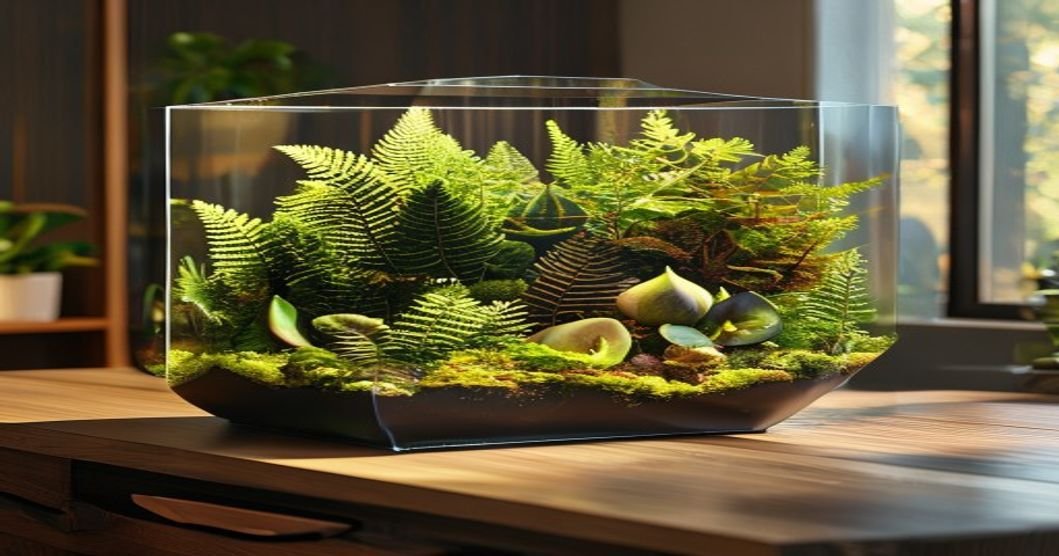

Imagine a lush, miniature rainforest thriving on your bookshelf. A self-contained, self-cleaning world where tiny creatures work in harmony with vibrant houseplants, all sealed within a glass vessel. This isn’t science fiction; it’s the heart of the bioactive terrarium movement, a trend that’s rapidly transforming how we interact with nature inside our homes. For city dwellers and plant enthusiasts across the United States, these living art pieces offer more than just aesthetic beauty—they provide a deep, tangible connection to the intricate dance of a living ecosystem.
In this ultimate guide, we’ll journey deep into the world of bioactive terrariums. We’ll uncover why this trend is set to explode, dissect the essential components that make a terrarium ‘bioactive,’ and provide you with the expert knowledge to build your very own thriving micro-ecosystem. Forget weekly watering schedules and fears of pests; the bioactive terrarium is a paradigm shift in houseplant care, merging horticulture with ecology in the most captivating way imaginable.
The 2026 Houseplant Revolution: Why Bioactive Terrariums Are Dominating US Apartments
While the concept of enclosed plant displays has been around since the Victorian-era Wardian case, the modern bioactive terrarium is a sophisticated evolution. It’s no longer just about showcasing a plant; it’s about curating a complete, functional ecosystem. As we look towards 2026, several cultural and technological shifts are positioning bioactive setups as the next mega-trend in urban horticulture, particularly for those living in US apartments where space and time are precious commodities.
A Tangible Connection to Nature in Urban Jungles
The modern urbanite craves a connection to the natural world. In sprawling cities and compact apartments, a bioactive terrarium serves as a portal to a wild, untamed environment. It’s a dynamic, ever-changing landscape. Watching tiny isopods march across a mossy log or seeing a new fern frond unfurl provides a daily dose of natural wonder that a static potted plant simply cannot replicate. This “living diorama” fulfills a deep-seated human need for biophilia—our innate tendency to seek connections with nature—offering mental health benefits like stress reduction and improved focus.
The “Set and Forget” Appeal (With a Scientific Twist)
At first glance, creating an ecosystem seems complex. However, once established, a balanced bioactive terrarium is remarkably low-maintenance. The closed-loop water cycle means watering is infrequent, sometimes only a few times a year. The “clean-up crew” of microfauna handles waste, mold, and decay, eliminating the need for pruning dead leaves or worrying about fungal outbreaks. This makes it a perfect hobby for busy professionals or frequent travelers who love plants but struggle with the demanding schedules of a large collection. It’s the ultimate expression of “work smart, not hard” in the plant world.
An Educational and Engaging Hobby for All Ages
Building a bioactive terrarium is a hands-on lesson in biology, ecology, and chemistry. You learn about the water cycle, decomposition, symbiotic relationships, and the delicate balance required to sustain life. It’s an endlessly fascinating process that engages the mind far more than simple potting and watering. For families, it’s a fantastic way to introduce children to scientific concepts in a fun, observable way. The ecosystem becomes a living science experiment, fostering curiosity and a deeper appreciation for the unseen forces that govern our planet.
The Heartbeat of Your Ecosystem: The Clean-Up Crew (CUC)
What truly separates a bioactive terrarium from a standard planted terrarium is the introduction of a ‘Clean-Up Crew,’ or CUC. These tiny detritivores are the janitors, recyclers, and gardeners of your miniature world. They are the engine of the ecosystem, breaking down waste and converting it into nutrients that the plants can absorb. Without them, a closed terrarium would quickly succumb to mold, decay, and stagnation. The two most vital members of any CUC are springtails and isopods.
Meet the Springtails (Collembola): The Mold Munchers
If you see tiny, white, grain-of-rice-sized creatures hopping around your substrate, don’t panic! These are springtails, and they are your terrarium’s first line of defense. They are hexapods, not insects, and possess a unique appendage called a furcula which they use to “spring” away from danger, hence their name.
Their Role: Springtails are fungivores, meaning their primary diet consists of mold and fungus. In the high-humidity environment of a closed terrarium, mold can quickly become a problem. Springtails actively seek it out and consume it before it can take hold, keeping the ecosystem clean and healthy. They also feed on decaying organic matter and the waste produced by larger inhabitants like isopods, contributing to the overall nutrient cycle.
Establishing Them: You can purchase a “starter culture,” which is typically a small deli cup filled with charcoal or clay and a thriving population of springtails. To add them to your terrarium, simply flood the culture with dechlorinated water and pour the water (and the floating springtails) directly into your substrate. They will quickly disperse and begin their work.
Isopods: The Heavy-Lifting Decomposers
Commonly known as roly-polies, pill bugs, or woodlice, isopods are terrestrial crustaceans that are essential for breaking down larger organic material. They come in a breathtaking variety of species and color morphs, from the common Porcellionides pruinosus (‘Powder Blue’) to the striking Porcellio scaber (‘Dairy Cow’).
Their Role: Isopods are the bulldozers of the CUC. They consume fallen leaves, decaying wood, leftover food (if you have a primary inhabitant like a reptile), and animal waste. Their consumption aerates the substrate as they burrow, and their waste, known as ‘frass,’ is a highly nutritious, slow-release fertilizer for your plants. Different isopod species have different behaviors; some are prolific breeders and fast cleaners (like Powder Blues), while others are larger and better at aerating the soil (like Dairy Cows). Choosing the right species depends on the size and humidity level of your terrarium.
Establishing Them: Like springtails, isopods are purchased in starter cultures. Gently empty the culture onto one side of the terrarium, preferably on top of a pile of leaf litter, which serves as their initial food and shelter. They will gradually explore and populate the entire environment. Providing a consistent source of leaf litter (oak and magnolia are excellent choices) and a source of calcium (like crushed eggshells or cuttlebone) is crucial for their long-term health and breeding.
Building from the Ground Up: The Foundation of a Healthy Bioactive Terrarium
A successful bioactive terrarium is built on a series of carefully planned layers, each serving a critical function. The health of your plants, the effectiveness of your CUC, and the overall stability of the ecosystem depend entirely on getting this foundation right.
The Critical First Layer: The False Bottom (Drainage Layer)
In a sealed glass container, there is no escape for excess water. This is where a false bottom, or drainage layer, becomes non-negotiable. Its purpose is to create an underground reservoir where water can collect without saturating the soil. This single layer is the most effective defense against the number one killer of terrarium plants: waterlogged soil. An anaerobic, swampy substrate leads to suffocation of the roots, creating a perfect storm for one of the most common plant ailments. Failing to prevent this is a surefire way to cause the dreaded root rot, which can quickly wipe out your entire collection.
Materials: Lightweight Expanded Clay Aggregate (LECA), lava rock, or pea gravel are excellent choices. LECA is particularly popular due to its porous nature and light weight. This layer should be 1-2 inches deep, depending on the overall size of the terrarium.
The Substrate Barrier: It is absolutely crucial to place a barrier between the drainage layer and the substrate layer above it. A piece of fiberglass window screen, cut to size, works perfectly. This barrier prevents the finer substrate particles from washing down and clogging the drainage layer, which would render it useless.
The Substrate: More Than Just Dirt
You cannot use standard potting soil in a bioactive terrarium. It is too dense, lacks proper aeration, and will compact over time, leading to anaerobic conditions. A proper bioactive substrate is a carefully crafted blend designed to retain humidity, provide structure for plant roots, and support the CUC and beneficial microbial life.
A popular and effective recipe is the “ABG mix,” but you can create your own by understanding the role of each component:
- Base: Peat moss or coco fiber provides the main body and water retention.
- Aeration: Orchid bark, charcoal, or perlite creates air pockets within the soil, which are vital for root health and microbial activity.
- Humidity Retention: Sphagnum moss is a superstar here. It can hold many times its weight in water and releases it slowly, maintaining high ambient humidity.
- Nutrients & CUC Habitat: Leaf litter and worm castings provide initial nutrients and a food source for your clean-up crew.
Understanding CEC (Cation Exchange Capacity)
This sounds technical, but it’s a crucial concept. CEC is a measure of the soil’s ability to hold onto positively charged nutrients (cations) like calcium, potassium, and magnesium, and make them available to plant roots. Components like peat moss, worm castings, and charcoal have a high CEC. By including them in your mix, you are essentially creating a nutrient-recharging battery in your substrate. The waste broken down by your CUC releases these nutrients, the high-CEC substrate holds onto them, and the plant roots draw from this reserve as needed. It’s a key mechanism that makes the system self-fertilizing.
The Importance of Aeration
Aeration refers to the presence of air pockets within the substrate. In a sealed environment, gas exchange is limited. A compacted, dense substrate prevents oxygen from reaching plant roots and the beneficial bacteria that drive the nitrogen cycle. This leads to anaerobic “dead zones” where harmful bacteria can thrive. Incorporating chunky materials like orchid bark or lava rock ensures the substrate remains light and fluffy, promoting a healthy, oxygen-rich environment for the entire subterranean ecosystem.
PlantsMag Expert-Recommended Bioactive Starter Gear
Ready to build your own micro-ecosystem? Here are our top picks to get you started on the right foot.
- Best All-in-One Kit: The “In-Situ Bioactive Terrarium Kit” comes with a high-clarity glass tank, LECA for your false bottom, substrate barrier, and a pre-mixed ABG-style substrate. It takes the guesswork out of gathering materials.
- Essential Clean-Up Crew: “Josh’s Frogs Springtail (Collembola) Culture” is the industry standard. Their cultures are dense, healthy, and ready to be added to your new terrarium to start fighting mold from day one.
- Our Favorite Isopods: For a beginner’s tropical terrarium, you can’t go wrong with “Porcellionides pruinosus ‘Powder Blue’ Isopods.” They are hardy, breed quickly, and are incredibly efficient cleaners.
- Perfect Terrarium Lighting: The “Barrina T5 LED Grow Light Strips” are slim, powerful, and provide excellent full-spectrum light. They can be easily mounted to a shelf above your terrarium for perfect illumination.
Let There Be Light: Illuminating Your Glass-Encased World
Proper lighting is often the most overlooked aspect of terrarium care, yet it is as critical as water and substrate. Plants need light for photosynthesis, the process that fuels the entire ecosystem. In a closed terrarium, getting the lighting right presents unique challenges.
Why Your Windowsill Isn’t Enough
While placing a terrarium in a bright window seems logical, it’s often a recipe for failure. Firstly, direct sunlight passing through glass can act like a magnifying glass, rapidly overheating the terrarium and cooking the plants inside. Secondly, natural light is inconsistent. It changes with the weather, time of day, and season. This inconsistency can stress plants. Thirdly, the light from a window is unidirectional, causing plants to stretch and grow awkwardly towards the source. For a stable, thriving ecosystem, you need consistent, controllable, and appropriate artificial lighting.
Demystifying Grow Light Metrics: PPFD and DLI
When you enter the world of grow lights, you’ll encounter a lot of acronyms. The two most important for terrarium success are PPFD and DLI.
- PPFD (Photosynthetic Photon Flux Density): This measures the intensity of the light that actually reaches your plants. Think of it as the number of light particles hitting a specific spot every second. A low-light plant like a Fittonia might be happy with a PPFD of 50-100 µmol/m²/s, while a light-loving bromeliad might need 200-400 µmol/m²/s.
- DLI (Daily Light Integral): This measures the total amount of light a plant receives over a 24-hour period. It’s the combination of intensity (PPFD) and duration (how many hours the light is on). This is arguably the more important metric. A plant can get its required DLI from lower intensity light for a longer period, or higher intensity light for a shorter period. For most tropical terrariums, a DLI of 5-10 mol/m²/day is a great target.
Understanding these concepts allows you to move beyond vague terms like “bright, indirect light” and provide your plants with precisely what they need to flourish.
Choosing the Right Grow Light for Your Terrarium
For the vast majority of bioactive terrariums, full-spectrum LED lights are the undisputed champion. They are energy-efficient, produce very little heat (crucial for a closed environment), and have a long lifespan. LED strips or small clip-on lamps are perfect for illuminating terrariums on shelves or desks. By using a simple outlet timer, you can provide a consistent 10-12 hour photoperiod, ensuring your plants receive their target DLI every single day. For more in-depth information on selecting the perfect artificial sun for your setup, be sure to explore our complete guide to grow lights.
The Invisible Engine: Maintaining the Nitrogen Cycle in Your Terrarium
This is where we dive into the true magic of a bioactive system. The nitrogen cycle is a fundamental process in nature, and by building a bioactive terrarium, you are recreating it in miniature. It’s the invisible, self-sustaining engine that converts waste into food.
Here’s a simplified breakdown of the process within your terrarium:
- Waste Production: A leaf falls off a plant, or an isopod produces frass. This organic waste contains nitrogen.
- Decomposition & Ammonification: The CUC and various microbes begin to break down this waste. This process releases ammonia (NH₃) into the substrate.
- Nitrification (Step 1): A group of beneficial bacteria called Nitrosomonas consumes the ammonia and converts it into nitrites (NO₂⁻), which are still toxic to plants.
- Nitrification (Step 2): Another group of bacteria, Nitrobacter, consumes the nitrites and converts them into nitrates (NO₃⁻).
- Plant Uptake: Nitrates are a readily usable form of nitrogen for plants! The plant roots absorb the nitrates from the soil, using them to grow new leaves and stems.
This elegant cycle means that in a mature, balanced bioactive terrarium, you should almost never have to add fertilizer. The system creates its own.
The Role of Bacteria: The Unseen Workforce
The nitrifying bacteria mentioned above are the heroes of this story. They live on every surface within your substrate—on the LECA, the charcoal, the bark, and the soil particles. A well-aerated, healthy substrate provides a massive surface area for these bacterial colonies to establish and thrive. This is another reason why a custom, chunky substrate is so superior to compacted potting soil. If you ever find your plants showing signs of distress that you can’t attribute to light or water issues, it might be an imbalance in the unseen world of your substrate. Our comprehensive disease finder can help you diagnose potential problems before they escalate.
Kickstarting and Supporting the Cycle
A brand new terrarium’s nitrogen cycle is not active. It takes time—often several weeks to a few months—for these bacterial colonies to grow to a size where they can efficiently process all the waste. This is known as “cycling.” You can support this process by:
- Adding Leaf Litter: This provides the initial fuel for the cycle.
- Seeding with Established Substrate: Taking a small scoop of substrate from a mature, healthy terrarium and adding it to your new one can introduce a starter culture of beneficial bacteria.
- Being Patient: Don’t add too many plants or a heavy bio-load (like a reptile) until the terrarium has had a month or two to mature and stabilize.
Conclusion: Your Miniature World Awaits
The bioactive terrarium is far more than a passing trend. It represents a more thoughtful, holistic, and sustainable approach to keeping plants indoors. It is a fusion of art and science, a hobby that rewards patience and curiosity with a breathtaking, living spectacle. For the US apartment dweller, it is the ultimate solution for bringing a significant, low-maintenance slice of the wild into a small urban space.
By understanding the core principles—the diligent work of the clean-up crew, the critical importance of a layered foundation, the precise application of light, and the invisible engine of the nitrogen cycle—you are now equipped to create more than just a collection of plants. You are ready to become the curator of your very own micro-ecosystem. A world in a bottle, a forest on your desk. Your miniature world awaits.
🌱 Top Recommended Plant Gear
Ensure your plants never dry out. We highly recommend the LECHUZA Self Watering Plant Pot CLASSICO for ultimate moisture control and professional aesthetic.
The 2026 Comprehensive Masterclass: Botanical Deep Dive
To truly understand the nuances of the concepts discussed above, we must transition from basic houseplant care to advanced botanical mechanics. Elite plant collectors do not rely on guesswork; they rely on environmental control, photobiology, and soil chemistry. In this masterclass section, we will systematically unpack the advanced science necessary to maintain a hyper-optimized indoor jungle.
Part 1: The Physics of Lighting and Photobiology
Lighting is the fundamental engine of biological growth. Without adequate Daily Light Integral (DLI) and Photosynthetic Photon Flux Density (PPFD), any adjustments made to watering or fertilizing are entirely useless. When you place a plant in a corner, you are not just dimming its environment; you are actively starving it.
Understanding PAR and PPFD
Photosynthetically Active Radiation (PAR) designates the spectral range (wave band) of solar radiation from 400 to 700 nanometers that photosynthetic organisms are able to use in the process of photosynthesis. PPFD measures the amount of PAR that actually arrives at the plant. It is measured in micromoles per square meter per second (μmol/m²/s).
- Low-Light Plants (e.g., Snake Plants, ZZ Plants): Require a PPFD of 20 to 50 μmol/m²/s. While they survive here, they will rarely trigger massive new growth.
- Medium-Light Plants (e.g., Calatheas, Philodendrons): Require a PPFD of 50 to 150 μmol/m²/s. At this range, they begin to express deeper variegation colors and stronger petiole rigidity.
- High-Light Plants (e.g., Monsteras, Ficus, Cacti): Require a baseline of 200 to 400+ μmol/m²/s to exhibit maximum fenestration (leaf holes) and secondary branching.
Part 2: Soil Chemistry, CEC, and Hydrophobicity
Your potting mix is not just a physical anchor for your plant; it is a bio-active chemical reactor. The most critical metric in any soil mix is its Cation Exchange Capacity (CEC).
Cation Exchange Capacity Explained
CEC is the measure of a soil’s ability to hold and release various elements and compounds through electrical charges. Highly organic materials like Peat Moss and Coco Coir have a very high CEC, meaning they grab onto fertilizer molecules (like Nitrates and Phosphates) and hold them so the roots can slowly feed over time. This is why placing a plant purely in gravel (which has a CEC of nearly zero) requires constant, daily nutrient flushing (hydroponics).
The Hydrophobic Death Trap
When high-CEC soils, particularly peat moss, dry out entirely, they undergo a mechanical failure known as hydrophobicity. The organic fibers shrink and lock tightly together. When water is introduced, the surface tension is too high to penetrate the locked fibers. The water channels directly down the sides of the pot. To break the hydrophobic barrier, you must use a surfactant (like a mild dish soap solution) or submerge the pot entirely for 45 minutes to force capillary hydration upward against gravity.
Part 3: Advanced Hydration Dynamics (Capillary Action)
Water does not simply flow downward. In the micro-environment of a plant pot, capillary action often overcomes gravity.
The Perched Water Table (PWT): No matter how much drainage you place at the bottom of a container, the lowest contiguous section of soil will always remain identically saturated. This is physics. If you put 3 inches of rocks at the bottom of a pot, you do not improve drainage; you merely push the soggy PWT three inches higher into the root mass, radically increasing the risk of Pythium (root rot). This is why nursery pots with numerous drainage holes placed directly on a porous surface are the only empirically sound container choice.
Part 4: The Pathogen War (Fungal vs Bacterial)
When a plant fails, the visual symptom (yellowing, dropping leaves) is merely the final stage of a prolonged microscopic war.
Anaerobic Pathogens
When a soil is over-hydrated, oxygen molecules are physically displaced by water molecules. Roots require oxygen to respire. As roots suffocate, the cells burst and die. This dead tissue becomes an immediate food source for anaerobic bacteria—bacteria that thrive strictly in zero-oxygen environments. The bacteria consume the dead roots, creating a sulfurous, rotting odor. To combat this, elite growers use Hydrogen Peroxide (H2O2) drenches. The extra, highly unstable oxygen atom in H2O2 detonates on contact, forcefully oxidating the anaerobic bacteria and re-oxygenating the root zone.
Part 5: Comprehensive Houseplant Glossary of Terms
To ensure absolute clarity for our readers, we have compiled an exhaustive glossary of the terms heavily utilized within the professional botanical sphere:
- Aroid: A common name for plants in the Araceae family, characterized by a spathe and spadix inflorescence (e.g., Philodendrons, Monsteras).
- Chlorosis: The yellowing of leaf tissue due to a lack of chlorophyll, often caused by nutrient deficiencies or root suffocation.
- Etiolation: The stretching and weakening of stems as a plant aggressively reaches toward a distant light source.
- Fenestration: The natural occurrence of holes or deep splits in the leaves of mature plants, designed to allow wind and light to pass through to the lower canopy.
- Node: The vital junction on a stem where leaves, aerial roots, and new growth points (eyes) emerge. A cutting without a node will never grow a new plant.
- Variegation: A genetic (chimeric) or viral mutation resulting in distinct zones of differently colored tissue (typically white or yellow) due to an absence of chlorophyll in those areas.
- Transpiration: The biological process by which a plant absorbs water through its roots and subsequently releases it as vapor through micro-pores (stomata) on its leaves.
Conclusion: The 2026 Shift in Plant Ownership
The era of buying a plant and hoping for the best is over. Modern houseplant ownership requires a foundational understanding of physics, chemistry, and biology. By tracking your PPFD, balancing your soil’s CEC, and actively managing the Perched Water Table, you ensure your indoor jungle moves from simple survival to massive, aggressive growth.
Frequently Asked Questions
What are the best conditions for this plant?
Most houseplants thrive in bright, indirect light with temperatures between 65-80F (18-27C). Ensure good drainage and water when the top inch of soil feels dry.
How often should I water?
Watering frequency depends on the plant species, pot size, and environment. A general rule is to check the soil moisture before watering. Overwatering is the most common cause of houseplant death.
What soil mix works best?
A well-draining mix of peat moss, perlite, and orchid bark works well for most tropical houseplants. Succulents prefer a grittier mix with more sand and perlite.
Quick Care Reference
| Factor | Requirement | Notes |
|---|---|---|
| Light | Bright indirect | Avoid direct afternoon sun |
| Water | When top inch dry | Reduce in winter |
| Humidity | 50-70% | Mist or use pebble tray |
| Temperature | 65-80F (18-27C) | Avoid cold drafts |
| Soil | Well-draining mix | Peat, perlite, bark |
| Fertilizer | Monthly (spring-summer) | Half-strength balanced |