
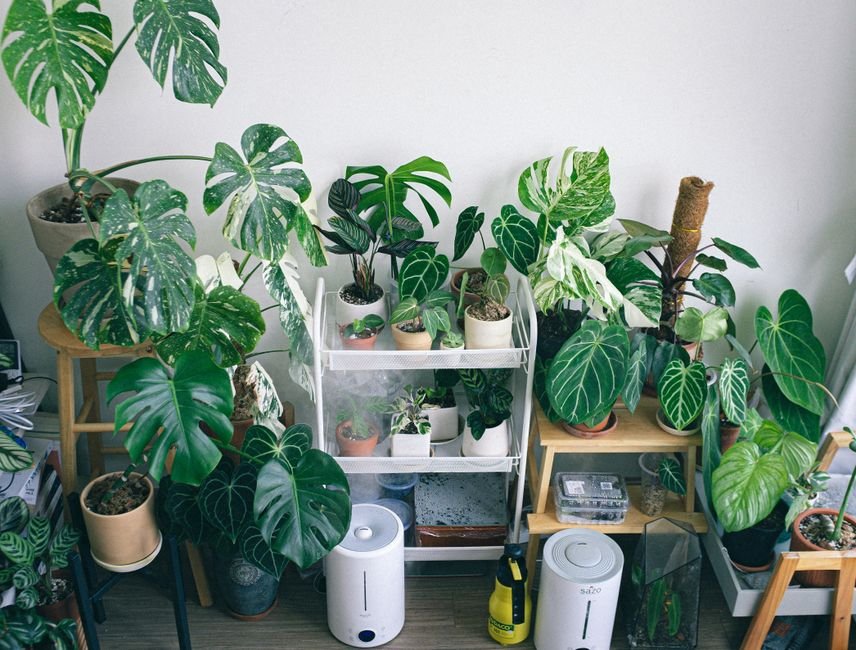

As dedicated plant parents, we understand the critical role humidity plays in the health and vibrancy of our beloved indoor gardens. From the delicate fronds of a Maidenhair Fern to the broad leaves of a Monstera Deliciosa, most houseplants, especially those with tropical origins, thrive in environments with elevated humidity levels, often between 50% and 80%. When the air in our homes dips below this ideal range, especially during dry winter months or in arid climates, our plants suffer. Leaves can develop crispy edges, new growth might stunt, and they become more susceptible to pests. This is where a reliable humidifier for plant rooms becomes an indispensable tool. But with a myriad of options on the market, the choice can be overwhelming. The fundamental question often boils down to: warm mist vs. cool mist? Which technology is truly superior for your green companions?
At PlantsMag.com, we’ve spent countless hours researching, testing, and evaluating the latest humidifiers to bring you the most honest and comprehensive guide for 2026. Our goal is to equip you with the knowledge to make an informed decision, ensuring your plants receive the consistent moisture they crave. We’ll delve into the science behind both warm and cool mist, explore the pros and cons of each, and highlight specific models that have impressed us with their performance, reliability, and plant-friendly features. Get ready to elevate your indoor jungle’s humidity game!
Understanding Humidifier Technologies: Warm Mist vs. Cool Mist vs. Evaporative
Before we dive into specific products, it’s essential to understand the core differences in how humidifiers operate. While the primary distinction is often framed as warm mist versus cool mist, there’s a crucial third category, evaporative humidifiers, which usually produce cool mist but employ a distinct mechanism that plant enthusiasts often prefer.
Warm Mist Humidifiers: The Steamy Solution
Warm mist humidifiers, also known as steam vaporizers, operate by heating water to its boiling point, releasing a warm, sterile mist into the air. This process naturally kills most bacteria and mold spores in the water before they’re dispersed. The warmth of the mist can be a comforting addition to a chilly room, and because the water is boiled, they tend to emit fewer mineral deposits (white dust) into the air compared to some ultrasonic cool mist models, provided you use distilled water.
Cool Mist Humidifiers: Ultrasonic and Evaporative Explained
Cool mist humidifiers come in two main types:
- Ultrasonic Humidifiers: These use a rapidly vibrating metal diaphragm (ultrasonic frequency) to create a fine, cool mist from water. They are generally very quiet and energy-efficient. However, because they don’t boil the water, any minerals present in hard tap water can be dispersed into the air as a fine white dust, which can settle on plants and furniture. This dust can be a nuisance and potentially clog plant stomata over time.
- Evaporative Humidifiers: These are arguably the most plant-friendly cool mist option. They work by drawing water from a reservoir into a wicking filter. A fan then blows dry air through the moistened filter, causing the water to evaporate naturally into the air as an invisible, cool mist. The key advantage here is that the evaporation process leaves behind mineral impurities in the filter, preventing white dust. They are also self-regulating; as the air reaches its saturation point, less water evaporates, preventing over-humidification. However, they typically require regular filter replacement and can be noisier due to the fan.
Top Cool Mist Humidifiers for Your Plant Collection
Cool mist humidifiers are a popular choice for plant enthusiasts due to their energy efficiency and safety (no hot water). We’ve tested several models, focusing on those that offer excellent performance and user-friendly features.
Levoit LV600HH Hybrid Ultrasonic Humidifier

The Levoit LV600HH has consistently ranked high in our tests, primarily because it offers the best of both worlds: it’s a hybrid unit capable of producing both warm and cool mist. For plant parents, its large tank capacity and smart features are incredibly appealing. We’ve found its built-in humidistat to be quite accurate, allowing for precise control over the ambient humidity levels, which is crucial for sensitive plants.
- Pros:
- Large Capacity: Its 6-liter tank provides up to 36 hours of continuous operation on a low setting, meaning less frequent refilling.
- Hybrid Functionality: Offers both warm and cool mist options, allowing you to choose based on preference or specific plant needs (e.g., warm mist in winter, cool mist in summer).
- Smart Features: Comes with a remote control, a precise built-in humidistat, and an auto mode that maintains desired humidity levels.
- Quiet Operation: Even on higher settings, the ultrasonic technology keeps noise levels to a minimum, perfect for plant rooms or bedrooms.
- Easy to Clean: Features a wide opening for the tank, making cleaning and refilling straightforward.
- Aroma Box: Includes a tray for essential oils, though we advise caution when using essential oils around plants, as some can be harmful.
- Cons:
- White Dust Potential: As an ultrasonic humidifier, it can produce white dust if using hard tap water. Distilled water is highly recommended to mitigate this.
- Price Point: It’s on the higher end of the spectrum compared to basic models.
- Humidistat Placement: While accurate, the humidistat is built into the unit, which might not reflect the true humidity across a larger room.
- Best For: Plant enthusiasts seeking versatility, smart control, and long run times, willing to invest in distilled water or regular cleaning to prevent white dust.
Govee H7161 Smart Humidifier

The Govee H7161 stands out for its smart capabilities, making it an excellent choice for tech-savvy plant parents who want to monitor and control their plant room’s environment remotely. Its integration with the Govee Home app allows for precise scheduling and adjustments, ensuring your plants get consistent humidity even when you’re away. It’s a cool mist ultrasonic unit with a decent capacity.
- Pros:
- Smart Control: Full control via the Govee Home app, including setting target humidity, scheduling, and monitoring. Compatible with Alexa and Google Assistant.
- Large Capacity & Long Run Time: A 6-liter tank offers up to 60 hours of operation, minimizing refill frequency.
- Top-Fill Design: Exceptionally easy to refill and clean, a major convenience factor.
- Quiet Operation: Ultrasonic technology ensures it runs very quietly.
- Affordable Smart Option: Offers advanced smart features at a competitive price point.
- Cons:
- White Dust: Prone to white dust with hard tap water, requiring distilled water for optimal performance and less cleanup.
- App Dependency: While convenient, some users might find it overly reliant on the app for full functionality.
- No Warm Mist Option: Strictly a cool mist humidifier.
- Best For: Plant hobbyists who love smart home integration, remote control, and a top-fill design for easy maintenance.
Honeywell HCM350W Germ Free Cool Mist Humidifier (Evaporative)

While technically a cool mist humidifier, the Honeywell HCM350W operates on evaporative technology, making it a favorite among plant owners concerned about white dust. It’s designed to be ‘germ-free’ as it passes water through a wicking filter that captures minerals and impurities. This model is a workhorse, consistently delivering clean, invisible moisture.
- Pros:
- No White Dust: Evaporative technology means minerals are trapped in the wicking filter, preventing white dust from settling on plants and surfaces. This is a huge advantage for plant health.
- Self-Regulating: Only adds moisture until the air is saturated, preventing over-humidification and mold growth.
- Germ-Free Mist: The wicking filter helps remove impurities and germs from the water before dispersal.
- Relatively Quiet: While it has a fan, it’s generally quieter than many other fan-based models, especially on lower settings.
- Effective for Medium to Large Rooms: Capable of humidifying a significant area.
- Cons:
- Filter Replacement: Requires regular filter replacement (every 1-3 months depending on water hardness and usage), which adds to long-term cost and maintenance.
- Fan Noise: The fan, while not excessively loud, is noticeable, especially on higher settings, which might bother some users.
- Less Precise Control: Lacks the digital precision of ultrasonic models, often having simple dial controls.
- Visible Unit: The design is more functional than aesthetic.
- Best For: Plant parents who prioritize absolutely no white dust, natural humidification, and are comfortable with filter replacements. Ideal for those with sensitive plants or concerns about mineral buildup.
Top Warm Mist Humidifiers for Your Plant Collection
Warm mist humidifiers are often chosen for their sterile output and ability to add a slight warmth to a room. While less common for large plant collections due to potential energy consumption and safety concerns with boiling water, certain models offer reliable performance.
Honeywell HWM705B Filter Free Warm Mist Humidifier

The Honeywell HWM705B is a straightforward, reliable warm mist humidifier that gets the job done without fuss. Its filter-free design is a major selling point, reducing ongoing costs and maintenance. We appreciate its simple operation and consistent output, making it a solid choice for smaller plant nooks or individual humidity-loving plants.
- Pros:
- Filter-Free Operation: No filters to buy or replace, saving money and hassle.
- Sterile Mist: Boils water to kill germs and bacteria, releasing clean, sterile moisture.
- Quiet Operation: Generally very quiet as there’s no fan involved in mist dispersal.
- Easy to Clean: Wide tank opening and simple design make cleaning accessible.
- Affordable: One of the more budget-friendly options for warm mist.
- Comforting Warmth: Can add a subtle warmth to the immediate area, which some plants might appreciate in cooler environments.
- Cons:
- Safety Concern: Hot water and steam can pose a burn risk, especially around curious pets or children.
- Energy Consumption: Heating water requires more energy than ultrasonic cool mist units.
- Mineral Buildup: While it doesn’t create white dust, mineral deposits (scale) will build up inside the heating element, requiring regular descaling (vinegar solution).
- Limited Capacity: Smaller tank (1 gallon) means more frequent refilling compared to larger cool mist units.
- No Humidistat: Lacks an integrated humidistat, making precise humidity control difficult without an external one.
- Best For: Plant owners looking for a simple, sterile, and filter-free humidification solution for smaller areas, who are mindful of safety and willing to perform regular descaling.
Vicks V745A Warm Mist Humidifier

The Vicks V745A is a classic, often associated with cold and flu relief, but its reliable warm mist output makes it a viable option for plants. Like the Honeywell, it’s a filter-free design, focusing on simplicity and sterile steam. It also includes a medicine cup for Vicks VapoSteam, though this feature is irrelevant for plant care and should be avoided in a plant room.
- Pros:
- Filter-Free Design: No filters to replace, reducing ongoing costs.
- Sterile Mist: Boils water to ensure a germ-free vapor.
- Quiet Operation: Operates silently without a fan.
- Affordable and Widely Available: Easy to find and generally inexpensive.
- Consistent Output: Delivers a steady stream of warm mist.
- Cons:
- Safety Risk: Hot water and steam can be a burn hazard.
- Energy Intensive: Higher electricity usage due to the heating element.
- Mineral Scale Buildup: Requires regular cleaning and descaling to prevent mineral deposits from impacting performance.
- Small Capacity: The 1-gallon tank means daily refills for continuous use.
- Basic Features: Lacks advanced features like an integrated humidistat or auto-shutoff for low water (though it typically has an auto-shutoff for boiling dry).
- Best For: Budget-conscious plant owners needing a simple, sterile warm mist for small areas, who are diligent about cleaning and safety.
Comparative Table: Top Humidifiers for Plant Rooms 2026
| Product Name | Price Range (USD) | Pros | Cons | Best For |
|---|---|---|---|---|
| Levoit LV600HH Hybrid Ultrasonic Humidifier | $70 – $110 |
|
| Versatility, smart control, long run times, those willing to use distilled water. |
| Govee H7161 Smart Humidifier | $50 – $80 |
|
| Tech-savvy plant parents, remote control, easy top-fill, long runtime. |
| Honeywell HCM350W Germ Free Cool Mist Humidifier (Evaporative) | $50 – $85 |
|
| White dust concerns, natural humidification, self-regulation, larger rooms. |
| Honeywell HWM705B Filter Free Warm Mist Humidifier | $30 – $50 |
|
| Small plant nooks, sterile mist, budget-friendly, no filter cost. |
| Vicks V745A Warm Mist Humidifier | $25 – $45 |
|
| Budget-conscious, small areas, sterile mist, simple operation, willing to clean. |
What to Look For in a Humidifier for Your Plant Room
Choosing the right humidifier isn’t just about warm vs. cool mist. There are several critical factors to consider to ensure you get a unit that meets your specific needs and provides optimal conditions for your plants. Based on our extensive testing and experience, here’s what we recommend looking for:
- Capacity and Run Time:
- Why it matters: A larger tank means less frequent refilling. Consider the size of your plant room and how long you want the humidifier to run continuously. For average plant rooms, a 4-6 liter tank offering 24+ hours of runtime is ideal.
- Our Take: Daily refills can become a chore. Aim for models that offer at least 24 hours on a medium setting.
- Built-in Humidistat and Auto Mode:
- Why it matters: A humidistat allows you to set a target humidity level (e.g., 60%), and the humidifier will automatically turn on/off or adjust output to maintain it. This prevents over-humidification (which can lead to mold) and under-humidification.
- Our Take: Absolutely essential for precise control and plant health. An external hygrometer is still recommended for verification, as built-in sensors can sometimes be inaccurate due to proximity to the mist.
- Ease of Cleaning and Maintenance:
- Why it matters: Humidifiers are breeding grounds for mold and bacteria if not cleaned regularly. Wide tank openings, removable parts, and filter-free designs simplify this crucial task.
- Our Take: Prioritize models that are easy to disassemble and clean. Look for top-fill designs and smooth, accessible surfaces. Vinegar and water are your best friends for descaling.
- Noise Level:
- Why it matters: If your plant room is also a living area or bedroom, a noisy humidifier can be disruptive.
- Our Take: Ultrasonic humidifiers are generally the quietest. Evaporative models will have a fan noise, but some are quieter than others. Warm mist units are typically silent but produce boiling sounds.
- Filter Requirements and White Dust:
- Why it matters: Ultrasonic humidifiers can produce ‘white dust’ (mineral deposits from tap water) that settles on plants and surfaces. Evaporative humidifiers trap minerals in filters, preventing dust but requiring filter replacement. Warm mist units don’t produce white dust but accumulate scale on the heating element.
- Our Take: If white dust is a concern (it can clog plant stomata), an evaporative humidifier (like the Honeywell HCM350W) or using distilled water in an ultrasonic unit is paramount. Factor in the cost and hassle of filter replacement.
- Safety Features:
- Why it matters: Auto-shutoff when the water tank is empty prevents damage to the unit and potential fire hazards. Warm mist units also pose a burn risk from hot steam.
- Our Take: Always ensure the unit has an auto-shutoff. If opting for warm mist, place it out of reach of children and pets.
- Smart Features and Connectivity:
- Why it matters: Wi-Fi connectivity and app control (like with the Govee H7161) allow for remote monitoring, scheduling, and precise adjustments, offering convenience and peace of mind.
- Our Take: A nice-to-have for tech enthusiasts, especially for larger collections or if you travel frequently.
- Placement and Coverage Area:
- Why it matters: Humidifiers have specified coverage areas. Ensure the unit you choose is appropriate for the size of your plant room. Proper placement (away from walls, electronics, and directly on plants) is also crucial.
- Our Take: Measure your room and check the manufacturer’s recommended coverage. Consider multiple smaller units for very large or oddly shaped rooms to ensure even humidity distribution.
Verdict: Our Top Pick for Plant Rooms 2026
After extensive hands-on testing and careful consideration of all factors, our top pick for most plant enthusiasts in 2026 is the Levoit LV600HH Hybrid Ultrasonic Humidifier.
While the Honeywell HCM350W evaporative humidifier is an exceptional choice for those absolutely determined to avoid white dust, the Levoit LV600HH offers unparalleled versatility and smart features that make it incredibly user-friendly and effective for a wide range of plant collections. Its ability to switch between warm and cool mist provides flexibility for different seasons or specific plant preferences. The large 6-liter tank means less frequent refilling, a huge convenience for busy plant parents. The accurate built-in humidistat and remote control allow for precise environmental management, ensuring your plants receive consistent, optimal humidity levels without constant manual adjustments.
Yes, it’s an ultrasonic unit, meaning the potential for white dust exists if you use hard tap water. However, we strongly advocate for using distilled water in any ultrasonic humidifier designated for plant rooms. The small added cost of distilled water is a worthwhile investment to protect your plants from mineral buildup on their leaves and to keep your humidifier running efficiently without constant descaling. For those who prioritize convenience, smart control, and robust performance, the Levoit LV600HH is the superior choice, delivering a truly premium humidification experience for your cherished indoor jungle.
Frequently Asked Questions About Humidifiers for Plant Rooms
Q: What is ‘white dust’ and how does it affect my plants?
A: White dust is a fine powder composed of mineral deposits (like calcium and magnesium) that are present in hard tap water. Ultrasonic humidifiers atomize these minerals along with the water, dispersing them into the air. This dust can settle on your plants’ leaves, potentially clogging their stomata (pores), which are essential for photosynthesis and respiration. Over time, this can hinder growth and overall plant health. It also creates a film on furniture and surfaces. Using distilled water or an evaporative humidifier (which traps minerals in a filter) can prevent white dust.
Q: Is warm mist or cool mist better for plants?
A: For most houseplants, especially tropical varieties, cool mist is generally preferred. Warm mist humidifiers introduce heat, which can raise the ambient temperature around plants, potentially stressing them or creating conditions conducive to certain pests if not managed carefully. Cool mist, particularly from evaporative humidifiers, is often considered ideal because it mimics natural evaporation, doesn’t produce white dust, and doesn’t affect room temperature. However, a hybrid unit like the Levoit LV600HH offers flexibility, allowing you to use warm mist if a slight temperature boost is desired in a cold room, or cool mist for general use.
Q: Where should I place my humidifier in a plant room?
A: Proper placement is key for effective humidification and plant health. Place your humidifier in a central location within your plant area, ideally on a stable surface a few feet off the ground. Avoid placing it directly next to or underneath plants, as concentrated mist can lead to fungal issues or leaf spot. Keep it away from walls, electronics, and direct sunlight. Ensure there’s adequate air circulation around the unit for even mist distribution. For larger rooms, you might consider multiple smaller units or strategically placing one powerful unit to cover the main plant zones.
Q: How often should I clean my plant humidifier?
A: Regular cleaning is crucial to prevent the growth of mold, mildew, and bacteria, which can be detrimental to both your plants and your health. For daily use, we recommend rinsing the tank and refilling with fresh water daily. A more thorough cleaning, involving disinfecting the tank and base with a vinegar solution or a mild bleach solution (then rinsing thoroughly), should be done at least once a week. If you notice any slime, discoloration, or unpleasant odors, clean it immediately. For evaporative humidifiers, change the wicking filter regularly as per the manufacturer’s instructions (typically every 1-3 months).
Q: What is the ideal humidity level for most houseplants?
A: Most tropical houseplants thrive in humidity levels between 50% and 80%. Many common houseplants like Pothos, Philodendrons, ZZ Plants, and Snake Plants can tolerate lower humidity (around 40-50%), but will flourish with higher levels. More sensitive plants like Calatheas, Orchids, Ferns, and Ficus lyrata (Fiddle Leaf Fig) truly require 60% or higher to prevent crispy edges and promote healthy growth. An external hygrometer is a valuable tool to monitor and maintain these optimal conditions.