
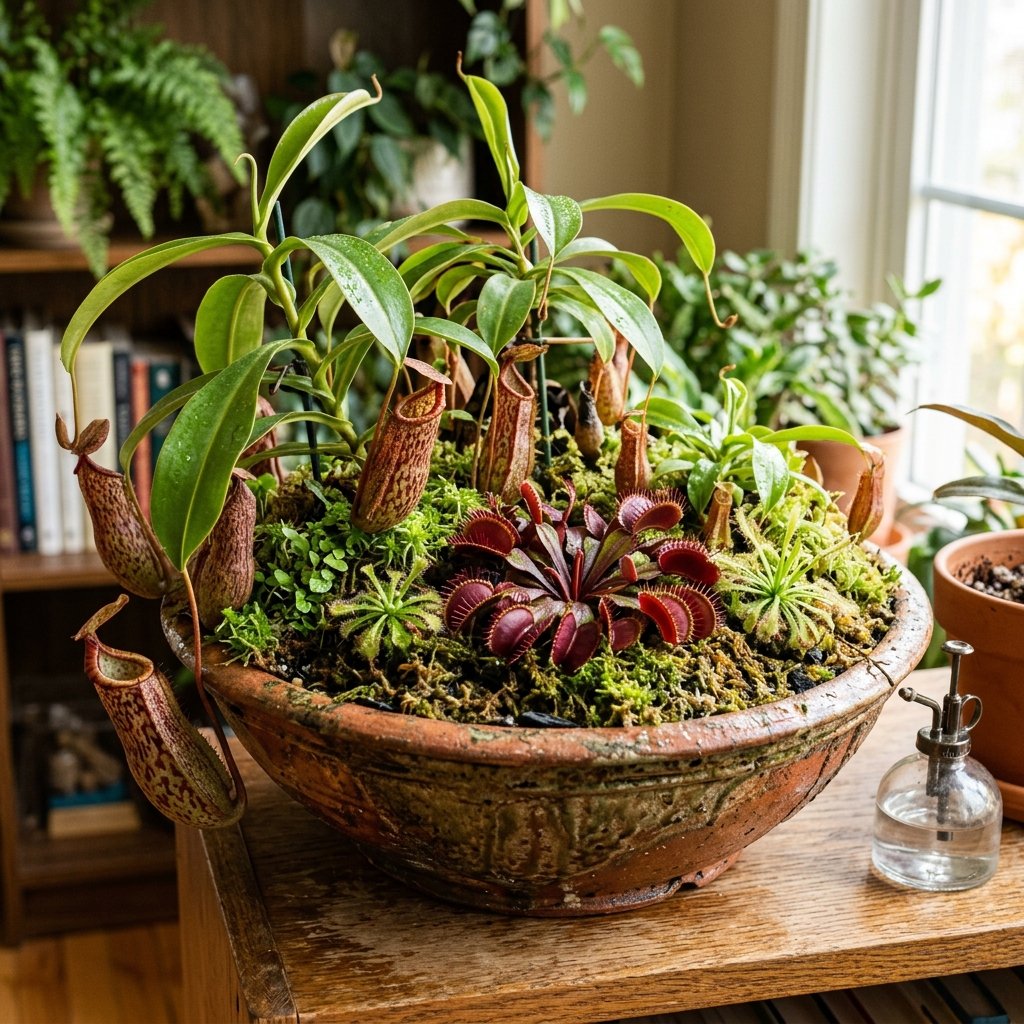

Keeping a single Venus Flytrap alive in a tiny plastic cup is stressful. But what if you combined Sarracenia pitcher plants, glowing Sundews, and flytraps into one massive, sweeping ecosystem? The indoor Carnivorous Bog Garden is the hottest new trend in high-end horticulture.
What is a Bog Garden?
A bog is a highly acidic, heavily waterlogged ecosystem devoid of terrestrial nutrients. To recreate this indoors, you cannot just use a regular pot with a drainage hole. You need a completely sealed vessel—like a wide glass bowl or a decorative ceramic planter without drainage.
The Architecture of the Swamp
- The Reservoir Layer: Fill the bottom 2 inches of the sealed bowl with pure, rinsed silica sand or coarse perlite. This creates an aquifer for water to sit in.
- The Watering Pipe: Stick a PVC pipe vertically into the sand layer before you add soil. This allows you to pour water directly into the bottom aquifer without destroying the topsoil.
- The Substrate: The top layer must be a 50/50 mix of pure, unfertilized Peat Moss and Perlite. Never use standard potting soil.
The Golden Rule of Bog Maintenance
Once your bog is constructed and your carnivorous plants are arranged, you must fill the bottom reservoir with pure Reverse Osmosis (RO), Distilled, or Rain water. Tap water will poison the entire ecosystem within weeks. The beautiful part of a bog garden is that because it is sealed, you only need to “refill the swamp” once every few weeks, creating a surprisingly low-maintenance, brutally effective pest-control ecosystem.
Frequently Asked Questions
What are the best conditions for this plant?
Most houseplants thrive in bright, indirect light with temperatures between 65-80F (18-27C). Ensure good drainage and water when the top inch of soil feels dry.
How often should I water?
Watering frequency depends on the plant species, pot size, and environment. A general rule is to check the soil moisture before watering. Overwatering is the most common cause of houseplant death.
What soil mix works best?
A well-draining mix of peat moss, perlite, and orchid bark works well for most tropical houseplants. Succulents prefer a grittier mix with more sand and perlite.
Quick Care Reference
| Factor | Requirement | Notes |
|---|---|---|
| Light | Bright indirect | Avoid direct afternoon sun |
| Water | When top inch dry | Reduce in winter |
| Humidity | 50-70% | Mist or use pebble tray |
| Temperature | 65-80F (18-27C) | Avoid cold drafts |
| Soil | Well-draining mix | Peat, perlite, bark |
| Fertilizer | Monthly (spring-summer) | Half-strength balanced |