
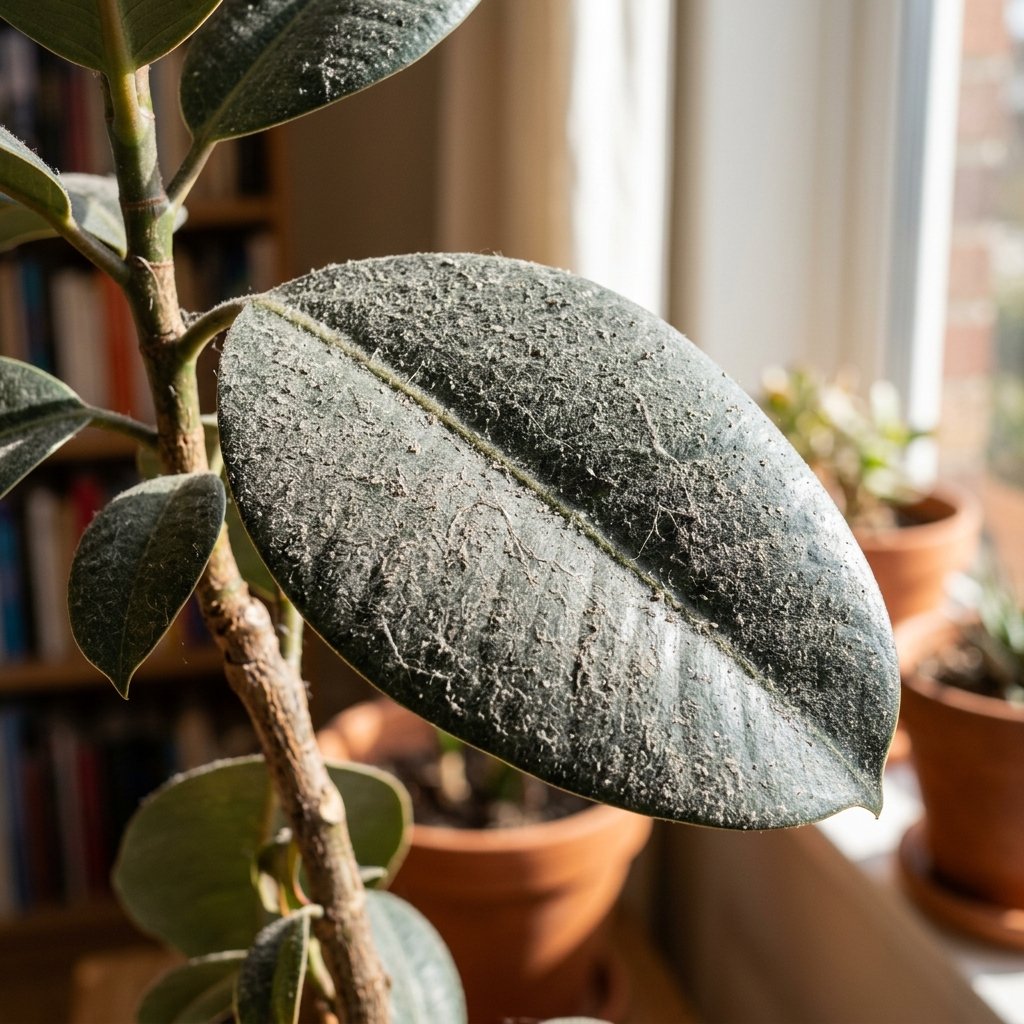

Your Monstera Deliciosa sits in the brightest, sunniest corner of your living room. You water it perfectly. The humidity is dialed in at 65%. Yet, it hasn’t pushed out a new leaf in six months. The culprit isn’t the soil, the water, or the light. Look closely at the surface of the leaves: they are covered in a thick, grey layer of household dust. Your plant is suffocating to death.
The Stomata Blockade
Unlike humans, plants do not have lungs. They breathe exclusively through microscopic pores located on the surfaces of their leaves, known as stomata. These pores actively pull in CO2 for photosynthesis and expel oxygen and water vapor (transpiration).
Household dust is primarily comprised of dead human skin cells, pet dander, and clothing fibers. When a thick layer of dust settles on a leaf, it physically seals the stomata shut. A dusty plant cannot “inhale” carbon dioxide. Without carbon, photosynthesis halts entirely. Furthermore, the dust layer acts as a physical mirror, reflecting valuable light photons away from the chloroplasts.
How to Properly Clean Foliage
Never use “leaf shine” sprays purchased from hardware stores. These sprays contain microscopic waxes and oils that artificially create a glossy look by permanently clogging the stomata, accelerating the suffocation process.
- The Shower Method: For large plants, take them directly into your shower once a month. Use lukewarm water to violently blast the dust off the top and bottom of every leaf.
- The Microfiber Method: For climbing plants that cannot be moved, soak a microfiber cloth in highly diluted soapy water (a drop of castile soap) and gently wipe each leaf, supporting the underside with your other hand to prevent snapping the petiole. Also, a clean plant is a pest-free plant—dust acts as natural camouflage for Spider Mites.
What’s Your Next Step?
You have corrected a critical environmental stressor. Now, optimize your plant’s entire life cycle. Your next action determines whether your collection merely survives or truly thrives.
- Are you aware of the 3-step ‘shock-proofing’ method that prevents over 90% of new
Frequently Asked Questions
What are the best conditions for this plant?
Most houseplants thrive in bright, indirect light with temperatures between 65-80F (18-27C). Ensure good drainage and water when the top inch of soil feels dry.
How often should I water?
Watering frequency depends on the plant species, pot size, and environment. A general rule is to check the soil moisture before watering. Overwatering is the most common cause of houseplant death.
What soil mix works best?
A well-draining mix of peat moss, perlite, and orchid bark works well for most tropical houseplants. Succulents prefer a grittier mix with more sand and perlite.
Quick Care Reference
Factor Requirement Notes Light Bright indirect Avoid direct afternoon sun Water When top inch dry Reduce in winter Humidity 50-70% Mist or use pebble tray Temperature 65-80F (18-27C) Avoid cold drafts Soil Well-draining mix Peat, perlite, bark Fertilizer Monthly (spring-summer) Half-strength balanced