
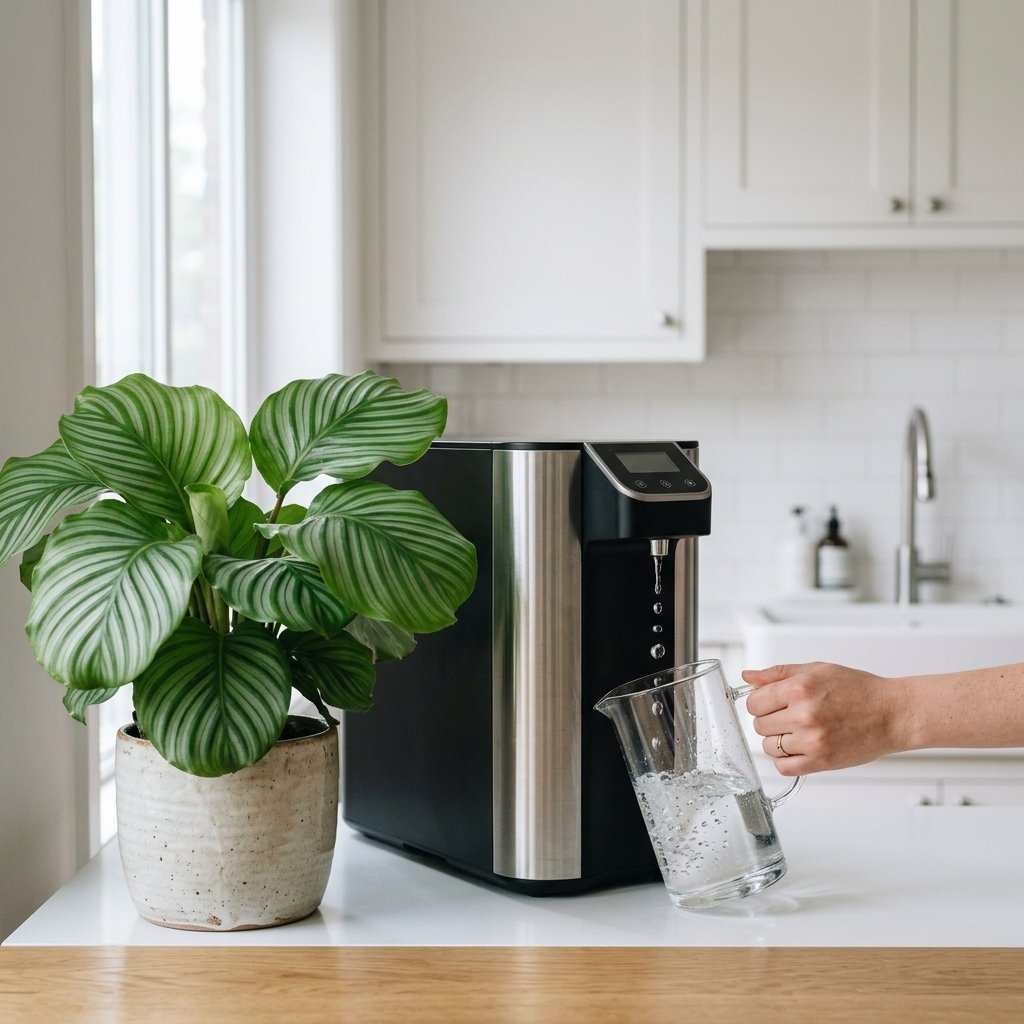

We do not all have the luxury of perfectly pure, triple-filtered reverse osmosis water. Sometimes, you just want a plant that you can brutally drench with the garden hose or the kitchen sink without it instantly dying of fluoride poisoning. If your tap water is thick enough to chew, you need to rely on the heavy-duty tanks of the botanical world.
Why Hard Water Kills Sensitive Plants
Hard water is packed with calcium carbonate, magnesium, chlorine, and fluoride. When sensitive tropicals drink this, the minerals crystallize inside the leaf tips, destroying the cellular structure resulting in rapid necrosis (crispy brown edges). So how do some plants survive it?
The Mechanism of Immortality
Indestructible plants possess aggressive filtration systems in their roots, physically rejecting heavy mineral salts, or they possess thick, fleshy cuticles that are impervious to chemical burn-out.
The Top 5 Tap-Water Tanks
1. The ZZ Plant (Zamioculcas zamiifolia)
The ZZ plant does not care about water quality. It stores water in massive underground potato-like rhizomes, acting as its own filtration and stabilization system. You can water a ZZ plant with pool water and it would probably still push a new glossy green leaf.
2. Epipremnum Aureum (Golden Pothos)
The Golden Pothos is invasive in the wild for a reason. Its vascular system is incredibly primitive and highly robust. It can process heavy salts and chlorine without skipping a beat, happily cascading 10-feet down your bookshelf.
3. Sansevieria (Snake Plant)
Like the ZZ plant, the Snake Plant is a succulent native to harsh, mineral-heavy, arid soil in West Africa. It evolved explicitly to process aggressive minerals.
4. Syngonium Podophyllum (Arrowhead Plant)
Surprisingly, this thin-leaved aroid is completely unbothered by municipal tap water. While Calatheas melt under the tap, the Arrowhead plant will grow aggressively into a massive bush.
5. Ficus Elastica (Rubber Tree)
The thick, waxy, rubbery leaves of the Ficus Elastica act as an armor shell. While Fiddle Leaf Figs might drop leaves from poor water quality, the classic Rubber Tree will quietly tolerate standard tap water for decades.
WhatFrequently Asked Questions
What are the best conditions for this plant?
Most houseplants thrive in bright, indirect light with temperatures between 65-80F (18-27C). Ensure good drainage and water when the top inch of soil feels dry.
How often should I water?
Watering frequency depends on the plant species, pot size, and environment. A general rule is to check the soil moisture before watering. Overwatering is the most common cause of houseplant death.
What soil mix works best?
A well-draining mix of peat moss, perlite, and orchid bark works well for most tropical houseplants. Succulents prefer a grittier mix with more sand and perlite.
Quick Care Reference
What are the best conditions for this plant?
Most houseplants thrive in bright, indirect light with temperatures between 65-80F (18-27C). Ensure good drainage and water when the top inch of soil feels dry.
How often should I water?
Watering frequency depends on the plant species, pot size, and environment. A general rule is to check the soil moisture before watering. Overwatering is the most common cause of houseplant death.
What soil mix works best?
A well-draining mix of peat moss, perlite, and orchid bark works well for most tropical houseplants. Succulents prefer a grittier mix with more sand and perlite.
| Factor | Requirement | Notes |
|---|---|---|
| Light | Bright indirect | Avoid direct afternoon sun |
| Water | When top inch dry | Reduce in winter |
| Humidity | 50-70% | Mist or use pebble tray |
| Temperature | 65-80F (18-27C) | Avoid cold drafts |
| Soil | Well-draining mix | Peat, perlite, bark |
| Fertilizer | Monthly (spring-summer) | Half-strength balanced |