
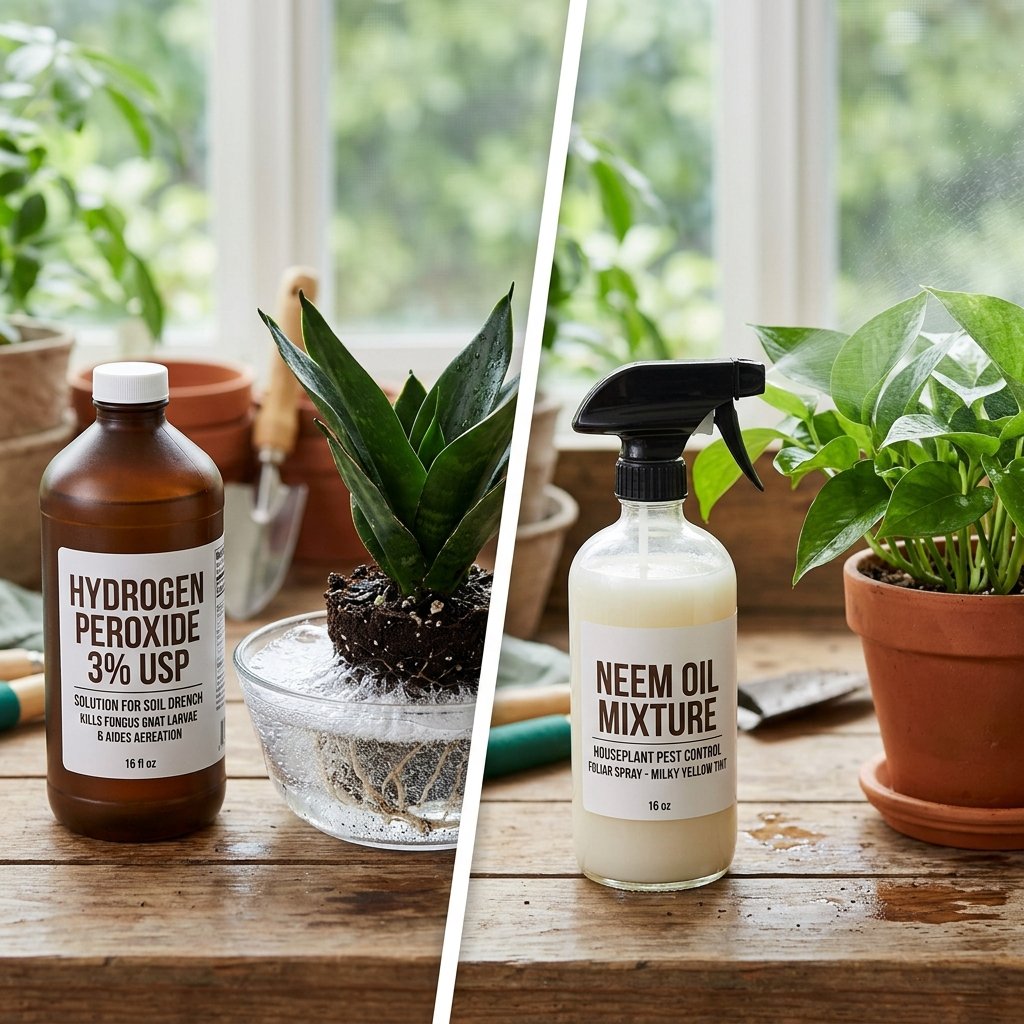

When you spot the first web of a Spider Mite or the sticky honeydew of Mealybugs, the internet generally gives you two opposing nuclear options: spray the plant with Neem Oil, or drench the soil with Hydrogen Peroxide. Both are powerful, but using the wrong one will either fail to kill the bugs, or successfully kill your plant.
Neem Oil: The Smelly Suffocator
Neem oil is an organic, naturally occurring pesticide pressed from the seeds of the Neem tree. It works primarily via suffocation. When sprayed onto the leaves, the thick oil literally coats the breathing pores (spiracles) of soft-bodied insects like Aphids and Spider Mites, choking them to death.
- Pros: It is organic, highly effective against foliage pests, and acts as a mild fungicide.
- Cons: It smells horrific (like rancid garlic), and if you spray it on your leaves and then put the plant under hot grow lights, the oil will literally deep-fry the leaves.
Hydrogen Peroxide: The Oxidizing Grenade
3% Hydrogen Peroxide (H2O2) is water with a highly unstable extra oxygen atom. It is entirely chemical, incredibly violent, and completely odorless.
- How it works: H2O2 is not for the leaves; it is for the soil. Pouring a diluted mix into your potting soil instantly detonates upon contact with organic matter. This violent oxidization instantly melts the soft bodies of Fungus Gnat larvae and eradicates anaerobic root rot bacteria.
- The Winner? There is no overall winner; they serve different warzones. Use Neem oil for bugs living on the leaves (Spider mites, Thrips). Use Hydrogen peroxide for villains living in the soil (Gnat larvae, Rot).
What’s Your Next Step?
You have successfully analyzed the data on Hydrogen Peroxide and Neem Oil. Your pest control protocol is now optimized. However, eliminating threats is only 50% of the equation for achieving superior plant vitality. Consider your next strategic move.
- Are you aware of the single hormonal compound that can force a new, active growth point on a “useless” Monstera node in under 21 days?
- <a href="https://plantsmag.com/dust-suffocation-why-your-plants-cannot-breathe/" style="color: #
Frequently Asked Questions
What are the best conditions for this plant?
Most houseplants thrive in bright, indirect light with temperatures between 65-80F (18-27C). Ensure good drainage and water when the top inch of soil feels dry.
How often should I water?
Watering frequency depends on the plant species, pot size, and environment. A general rule is to check the soil moisture before watering. Overwatering is the most common cause of houseplant death.
What soil mix works best?
A well-draining mix of peat moss, perlite, and orchid bark works well for most tropical houseplants. Succulents prefer a grittier mix with more sand and perlite.
Quick Care Reference
Factor Requirement Notes Light Bright indirect Avoid direct afternoon sun Water When top inch dry Reduce in winter Humidity 50-70% Mist or use pebble tray Temperature 65-80F (18-27C) Avoid cold drafts Soil Well-draining mix Peat, perlite, bark Fertilizer Monthly (spring-summer) Half-strength balanced