
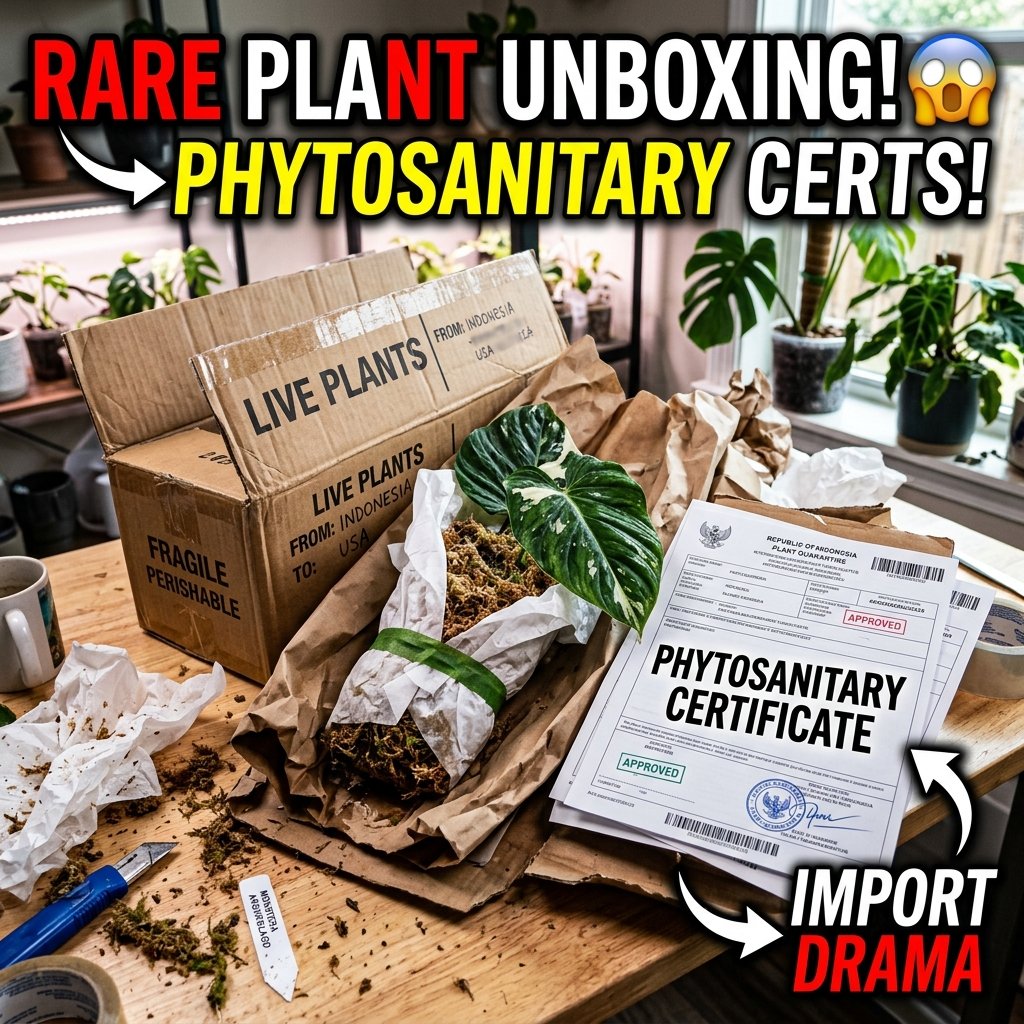

Buying a rare $300 Philodendron from a local nursery is intimidating, but buying 10 imported rare Aroids from a grower in Indonesia or Thailand via Instagram for $100 sounds like the ultimate hack. However, international plant importing is currently an absolute warzone of seized packages, dead roots, and highly convincing scams.
The Importance of the Phytosanitary Certificate
You cannot just mail a plant across international borders. The Department of Agriculture (USDA) aggressively monitors packages for foreign pests and nematodes that could annihilate domestic crops.
The Legal Requirements
- Phyto Certificate: An official document from the exporting country proving the plant was inspected, treated with pesticides, and is pest-free.
- Bare-Root Law: It is illegal to mail soil across most borders. The roots must be 100% naked, washed clean, and wrapped in sterile sphagnum moss.
The Scams Plaguing the Industry
As the rare plant craze peaks, Southeast Asian scammers have perfected their craft.
1. The Fake Phyto
Scammers will Photoshop legitimate Phytosanitary certificates and charge you $50 for the “document fee.” When the package hits customs, scanners realize the documents are fake. Customs incinerates your plants instantly, and you are left with zero recourse.
2. The Bait and Switch
You purchase a stunning, heavily variegated Monstera Adansonii based on photographs. The seller ships you a green, unvariegated junk cutting. Because the shipping process takes 10-14 days and causes heavy damage, the seller will claim it “reverted due to shipping stress.”
The Reality of Import Rehab
If you successfully navigate customs, you must understand that the plant arriving at your door is essentially dying. It was subjected to toxic chemical baths for customs, shoved into a freezing airplane cargo hold for two weeks, and has zero working roots. You are not buying a houseplant; you are buying an intensive care project that requires immediate greenhouse-level rehab protocols.
Frequently Asked Questions
What are the best conditions for this plant?
Most houseplants thrive in bright, indirect light with temperatures between 65-80F (18-27C). Ensure good drainage and water when the top inch of soil feels dry.
How often should I water?
Watering frequency depends on the plant species, pot size, and environment. A general rule is to check the soil moisture before watering. Overwatering is the most common cause of houseplant death.
What soil mix works best?
A well-draining mix of peat moss, perlite, and orchid bark works well for most tropical houseplants. Succulents prefer a grittier mix with more sand and perlite.
Quick Care Reference
| Factor | Requirement | Notes |
|---|---|---|
| Light | Bright indirect | Avoid direct afternoon sun |
| Water | When top inch dry | Reduce in winter |
| Humidity | 50-70% | Mist or use pebble tray |
| Temperature | 65-80F (18-27C) | Avoid cold drafts |
| Soil | Well-draining mix | Peat, perlite, bark |
| Fertilizer | Monthly (spring-summer) | Half-strength balanced |