
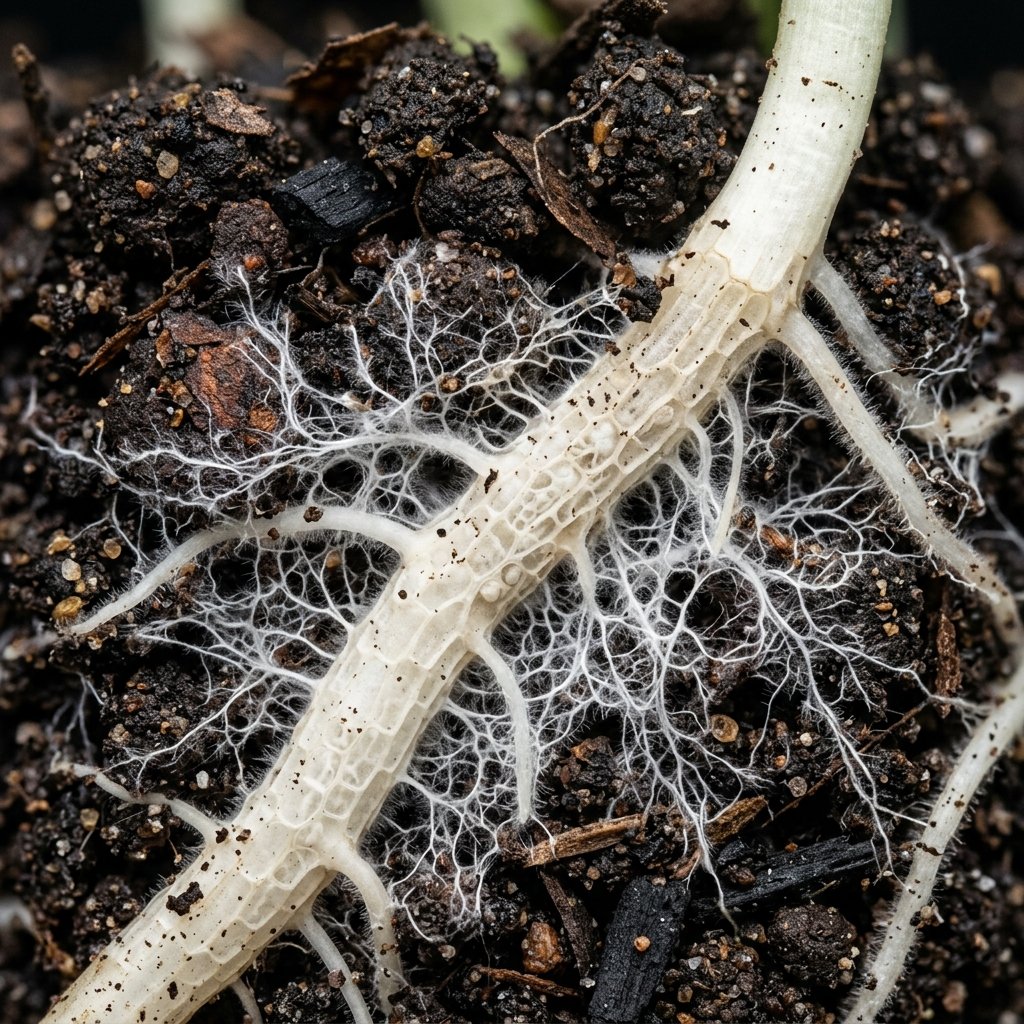

In the wild, there is an invisible, underground internet connecting the forest. Trees communicate, share nutrients, and trade sugars through an impossibly vast network of fungal threads. For decades, traditional houseplant care focused entirely on chemical fertilizers. Today, advanced growers are bio-hacking their pots using Mycorrhizal Fungi Inoculation.
What are Mycorrhizae?
Mycorrhizal fungi are beneficial microorganisms that form a symbiotic, physical bond with the roots of your plants. This is not soil decay or root rot; this is a biological partnership older than the dinosaurs.
How the Fungal Trade Works
- The Plant Gives: Carbon and carbohydrates (sugars) produced through photosynthesis.
- The Fungus Gives: Phosphorous, nitrogen, and a massive expansion in water absorption capabilities.
Why Your Houseplants Need It
When you plant a Monstera in sterile potting soil, it is utterly alone. Its root hairs can only absorb nutrients immediately touching them. By adding mycorrhizal powder to the soil, the fungi germinate and build a vast, white web of hyphae that extends hundreds of times further than the plant’s own roots.
The Benefits of the Fungal Web
- Explosive Growth: The fungal web acts as an external digestive system, breaking down organic matter far faster than the plant could alone, unlocking a tsunami of nutrients.
- Drought Resistance: The microscopic fungal threads can probe into tiny soil crevices that thick roots cannot reach, mining hidden water reserves and significantly reducing wilting during missed waterings.
- Pathogen Immunity: By colonizing the root zone completely, friendly mycorrhizae outcompete and block malicious soil pathogens (like the fungi that cause root rot) from gaining a foothold.
How to Inoculate Your Indoor Jungle
- Buy Premium Inoculant: Look for products containing ENDO-mycorrhizae (often labeled as *Glomus intraradices*). Ecto-mycorrhizae are for pine trees and won’t work on tropicals.
- Direct Root Contact is Mandatory: You cannot just sprinkle the powder on top of the soil. The spores must physically touch the root system to germinate.
- The Repotting Method: The easiest way to apply is during a repot. Take the bare root ball of your Philodendron, dust it heavily with the mycorrhizal powder like you are coating a piece of chicken, and immediately pot it up.
Warning: Never Use Chemical Phosphorous
If you inoculate your plants, you must switch to organic, gentle fertilizers. High-concentration synthetic phosphorus fertilizers will actually signal the plant to sever the fungal connection, instantly killing your entire micro-ecosystem.
<div class='pm-retention-hook' style='background-color: #f
Frequently Asked Questions
What are the best conditions for this plant?
Most houseplants thrive in bright, indirect light with temperatures between 65-80F (18-27C). Ensure good drainage and water when the top inch of soil feels dry.
How often should I water?
Watering frequency depends on the plant species, pot size, and environment. A general rule is to check the soil moisture before watering. Overwatering is the most common cause of houseplant death.
What soil mix works best?
A well-draining mix of peat moss, perlite, and orchid bark works well for most tropical houseplants. Succulents prefer a grittier mix with more sand and perlite.
Quick Care Reference
| Factor | Requirement | Notes |
|---|---|---|
| Light | Bright indirect | Avoid direct afternoon sun |
| Water | When top inch dry | Reduce in winter |
| Humidity | 50-70% | Mist or use pebble tray |
| Temperature | 65-80F (18-27C) | Avoid cold drafts |
| Soil | Well-draining mix | Peat, perlite, bark |
| Fertilizer | Monthly (spring-summer) | Half-strength balanced |
Advanced Mycorrhizal Inoculation: Expert Pro Tips
As expert botanists and seasoned growers, we’ve moved beyond basic application. Here are highly advanced, experience-based insights to truly leverage mycorrhizal fungi for unparalleled root development and plant resilience:
Pro Tip 1: The ‘Mycorrhizal Pause’ & Strategic P-Dosing
While mycorrhizae are phosphorus scavengers, an initial surge of high phosphorus (P) from starter fertilizers can trigger a phenomenon we call the ‘Mycorrhizal Pause’. Young seedlings, especially, will delay or even suppress colonization if P is overly abundant. Our recommendation: For transplants, use a very low-P starter solution (e.g., a 1-1-1 NPK ratio or even just N) for the first 1-2 weeks post-transplant. Introduce your mycorrhizal inoculum once the plant has established its first true leaves and has a slight physiological need for P. This subtle P-stress signals to the plant to actively seek out and form the symbiotic relationship, leading to much more robust colonization long-term.
Pro Tip 2: Soil Microbiome Harmonization & Antagonistic Fungi Avoidance
A truly successful mycorrhizal program isn’t just about adding spores; it’s about fostering a synergistic soil microbiome. Before inoculation, conduct a basic soil health assessment. High levels of antagonistic fungi (e.g., certain *Trichoderma* species in some formulations, or specific pathogenic *Fusarium* strains) can compete with or even predate on beneficial mycorrhizal propagules. While broad-spectrum beneficial *Trichoderma* are often great, ensure your mycorrhizal product is compatible. Avoid applying synthetic fungicides, especially broad-spectrum systemic types, for at least 4-6 weeks post-inoculation, as they can severely impair or destroy the developing fungal network. Instead, integrate biological pest controls that target specific pathogens without harming beneficial fungi.
Pro Tip 3: Species-Specific Inoculum & Ecosystem Mimicry
Don’t fall for the “one-size-fits-all” inoculum trap. While a generalist *Rhizophagus irregularis* is excellent for many plants, true expertise lies in matching the mycorrhizal species to your specific plant and ecosystem. For instance, ericaceous plants (blueberries, rhododendrons) require ericoid mycorrhizae, while many conifers thrive with specific ectomycorrhizal species. For native plant restorations or highly specialized crops, consider isolating and propagating local mycorrhizal strains adapted to your unique soil chemistry and climate. This “ecosystem mimicry” approach ensures the most efficient and resilient symbiosis, as these native strains are already optimized for local conditions.
Mycorrhizal Fungi Inoculation: Advanced FAQ (2026 Guide)