
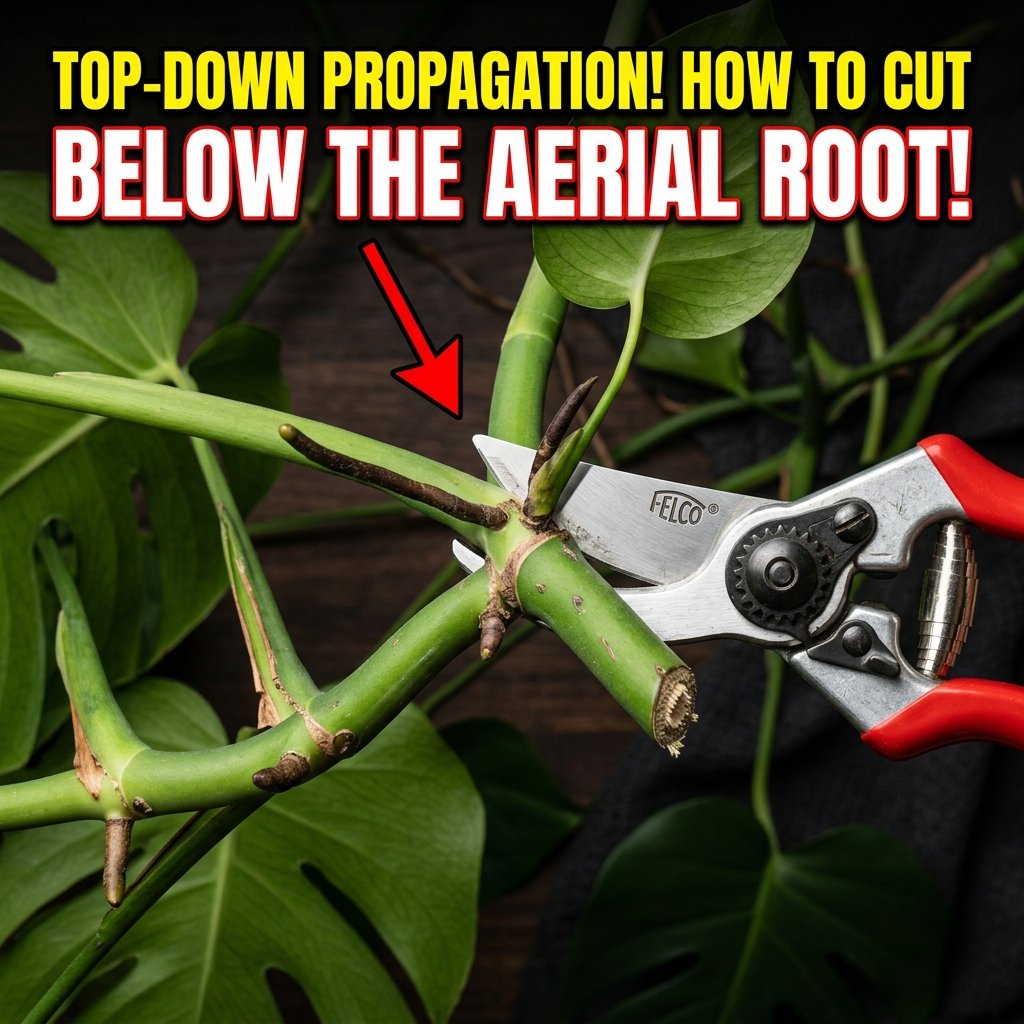

The ZZ Plant (Zamioculcas zamiifolia) is practically immortal. It survives in dark corners and thrives on neglect. Propagating it seems incredibly easy: you snip off a single green leaf, stick the base of the leaf into a cup of wet soil, and wait it to grow into a new plant. But patience is not measured in weeks for a ZZ plant; it is measured in seasons.
The Biology of a Leaf Propagation
When you put a Monstera stem in water, it pushes roots from a pre-existing node in 14 days. When you stick a ZZ plant leaf into the dirt, the leaf doesn’t have a node. It has to perform a biological miracle: it must genetically reprogram the cells at the cut site to stop being “leaf cells” and start being “root cells.”
The Timeline of Despair
- Months 1-3 (The Tuber Phase): You look at the leaf. Nothing is happening. But underground, the leaf is slowly building a tiny, potato-like rhizome at its base to store water.
- Months 4-6 (The Root Phase): The tiny potato finally pushes out thick, white, fleshy roots to establish a water supply.
- Months 7-12 (The Shoot Phase): The original leaf is exhausted. Finally, the underground potato harnesses enough energy to push a single, tiny, new green shoot out of the dirt.
How to Speed Up the Process
There is only one way to hack the biology of a ZZ leaf propagation: Heat.
If you leave the cup on a cold windowsill in the winter, the leaf will sit dormant for two years. You must place the propagation cup on top of a seedling heat mat set to exactly 80°F (26°C), and trap humidity over the leaf with a clear plastic cup. The constant, warm soil temperature radically accelerates cellular division, cutting the agonizing 12-month wait down to a much more manageable 4 months.
<div class='pm-retention-hook' style='background-color: #f8fafc; border-left: 4px solid #2A7B4C; padding: 20px; margin
Frequently Asked Questions
What are the best conditions for this plant?
Most houseplants thrive in bright, indirect light with temperatures between 65-80F (18-27C). Ensure good drainage and water when the top inch of soil feels dry.
How often should I water?
Watering frequency depends on the plant species, pot size, and environment. A general rule is to check the soil moisture before watering. Overwatering is the most common cause of houseplant death.
What soil mix works best?
A well-draining mix of peat moss, perlite, and orchid bark works well for most tropical houseplants. Succulents prefer a grittier mix with more sand and perlite.
Quick Care Reference
| Factor | Requirement | Notes |
|---|---|---|
| Light | Bright indirect | Avoid direct afternoon sun |
| Water | When top inch dry | Reduce in winter |
| Humidity | 50-70% | Mist or use pebble tray |
| Temperature | 65-80F (18-27C) | Avoid cold drafts |
| Soil | Well-draining mix | Peat, perlite, bark |
| Fertilizer | Monthly (spring-summer) | Half-strength balanced |