
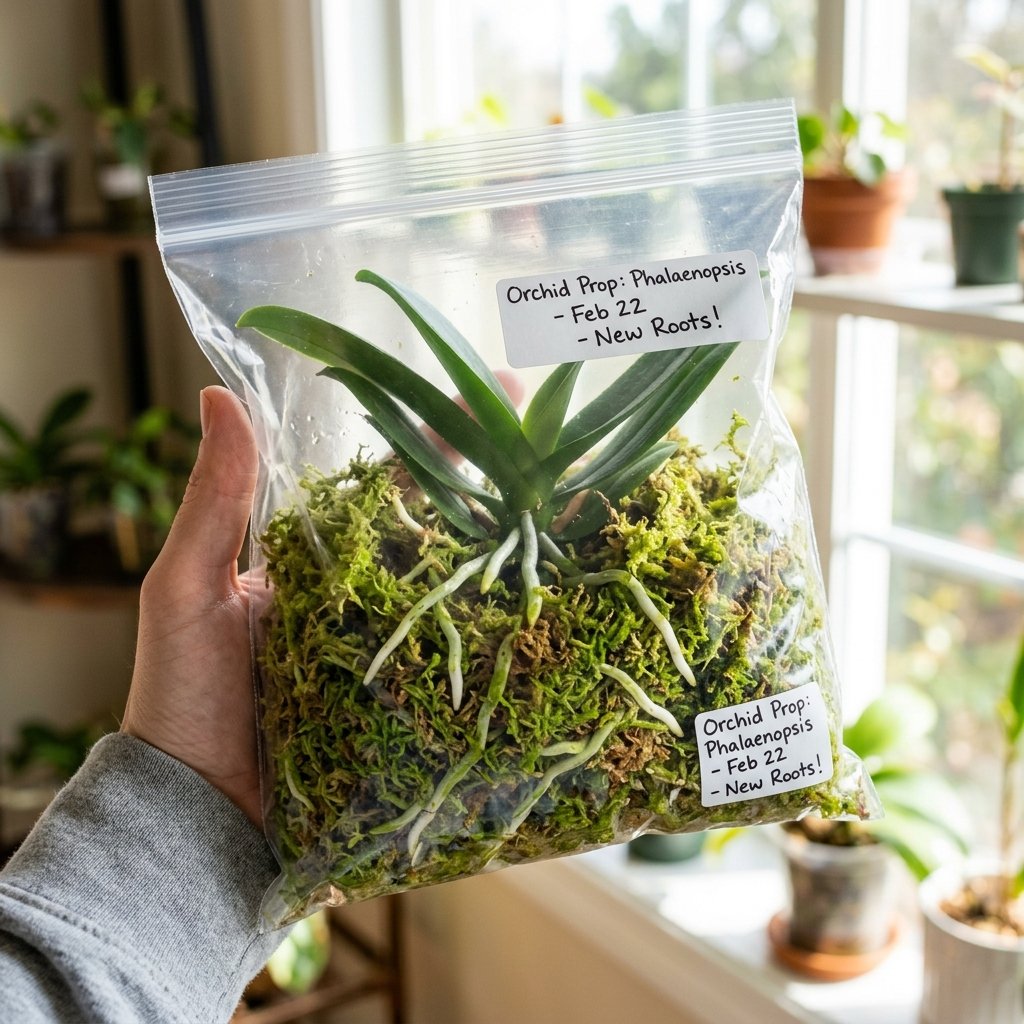

You pull your prize Phalaenopsis orchid out of its pot, and to your horror, every single root has turned to brown, mushy string due to overwatering. The plant has zero viable roots left. Most people throw it in the trash. But the hardcore orchid community has weaponized a controversial, highly effective rescue method: Full Water Culture (FWC).
Why Bark Fails a Rootless Orchid
If you take an orchid with zero roots and stick it back into dry orchid bark, it will desiccate and die in a week. Without roots, the plant has no mechanical way to pull moisture out of the air gaps in the bark. You need a medium that forces moisture directly into the base of the stem (the basal plate) to trigger emergency root growth.
The FWC Protocol
Full Water Culture sounds like a death sentence for an epiphyte, but in a sterile environment, it works miracles.
- Surgically remove 100% of the dead, mushy root strings. Leave only the hard stem.
- Place the orchid in a clear glass vase.
- Fill the vase with pure distilled water ONLY until the water touches the bottom 1/4 inch of the stem. Do not submerge the leaves.
The Secret: Evaporation and Oxygen
The magic of FWC isn’t the plant “drinking” the water. The magic is the humidity column. As the water evaporates inside the glass vase, it creates a 100% humidity micro-climate directly around the base of the stem. Because there is no soil blocking the airflow, the stem has access to massive amounts of oxygen. This specific combination of high humidity and high oxygen triggers the dormant nodes to push aggressive, thick green “water roots” directly into the reservoir. Within two months, you can transplant your resurrected orchid safely back into bark.
What’s Your Next Step?
You have successfully analyzed the data on orchid rehabilitation. Your next action is critical for optimizing the survival rates of your entire plant collection. Choose your next diagnostic challenge:
- Are you making the #1 mistake that allows spider mites to turn your Calathea’s leaves to dust, even after you’ve treated them?
- <a href="https://plantsmag.com/the-great-peperomia-die-off-why-they-melt-overnight/" style="color: #1e40af; text-decoration:
Frequently Asked Questions
What are the best conditions for this plant?
Most houseplants thrive in bright, indirect light with temperatures between 65-80F (18-27C). Ensure good drainage and water when the top inch of soil feels dry.
How often should I water?
Watering frequency depends on the plant species, pot size, and environment. A general rule is to check the soil moisture before watering. Overwatering is the most common cause of houseplant death.
What soil mix works best?
A well-draining mix of peat moss, perlite, and orchid bark works well for most tropical houseplants. Succulents prefer a grittier mix with more sand and perlite.
Quick Care Reference
Factor Requirement Notes Light Bright indirect Avoid direct afternoon sun Water When top inch dry Reduce in winter Humidity 50-70% Mist or use pebble tray Temperature 65-80F (18-27C) Avoid cold drafts Soil Well-draining mix Peat, perlite, bark Fertilizer Monthly (spring-summer) Half-strength balanced