
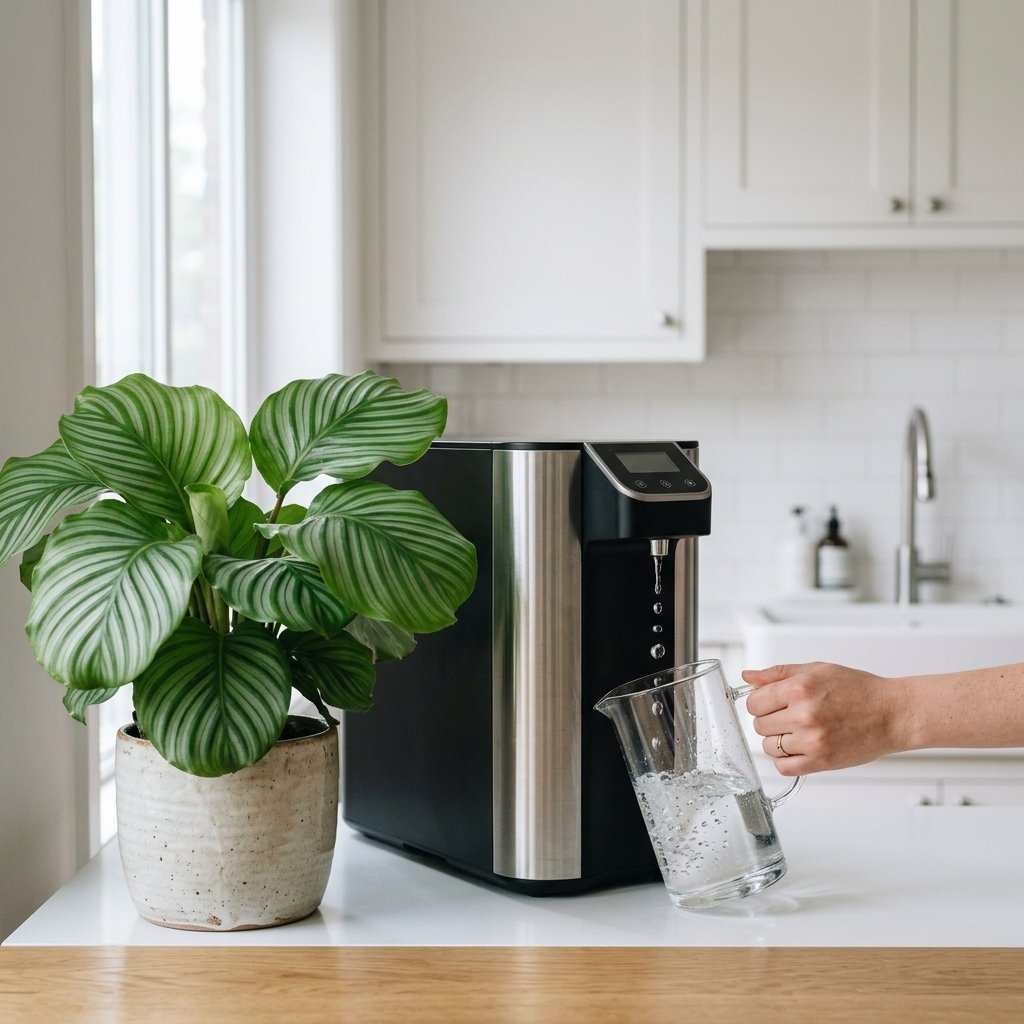

As your houseplant collection grows from pothos to highly sensitive Alocasias, Calatheas, and Anthuriums, you will encounter the “Tap Water Ceiling.” No matter how perfect your light and humidity are, your plants constantly develop crispy brown edges. The solution everyone pushes is a Reverse Osmosis (RO) System. But is buying a $200 water filtration system actually necessary?
Why Calatheas Reject Tap Water
Municipal tap water is strictly engineered to protect human pipes, not plant cells. It is loaded with Chlorine (to kill bacteria), Fluoride (for your teeth), and Calcium/Magnesium (hard water minerals). Delicate tropical plants have zero biological mechanism to filter out Fluoride. It builds up in the margins of their leaves until it reaches toxic levels, causing cellular necrosis (the brown crispy edges).
What Does RO Actually Do?
- A Brita filter or a refrigerator filter only removes taste and odor; it leaves 90% of the dissolved minerals intact. Do not use them for sensitive plants.
- An RO system physically forces water through a semi-permeable microscopic membrane, stripping exactly 99.9% of all minerals, chemicals, and salts from the water. The output is chemically pure H2O (0 parts per million).
The Hidden Danger of Pure RO Water
Because RO water is perfectly pure, it is actually highly unstable. It contains absolutely zero Calcium or Magnesium—two macro-nutrients vital for plant survival. If you water your plants exclusively with RO water without remineralizing it, your plants will suffer massive nutrient deficiencies within three months. You must add a “Cal-Mag” (Calcium/Magnesium) supplement to your RO water every single time you water.
What’s Your Next Step?
You have optimized your water quality. Now, you must address the other critical threats to your plant investment. Your next action will determine their survival.
- Did you know there’s a 3-step method to permanently eradicate spider mites from your Calathea without any leaf damage? Most growers only know
Frequently Asked Questions
What are the best conditions for this plant?
Most houseplants thrive in bright, indirect light with temperatures between 65-80F (18-27C). Ensure good drainage and water when the top inch of soil feels dry.
How often should I water?
Watering frequency depends on the plant species, pot size, and environment. A general rule is to check the soil moisture before watering. Overwatering is the most common cause of houseplant death.
What soil mix works best?
A well-draining mix of peat moss, perlite, and orchid bark works well for most tropical houseplants. Succulents prefer a grittier mix with more sand and perlite.
Quick Care Reference
Factor Requirement Notes Light Bright indirect Avoid direct afternoon sun Water When top inch dry Reduce in winter Humidity 50-70% Mist or use pebble tray Temperature 65-80F (18-27C) Avoid cold drafts Soil Well-draining mix Peat, perlite, bark Fertilizer Monthly (spring-summer) Half-strength balanced