
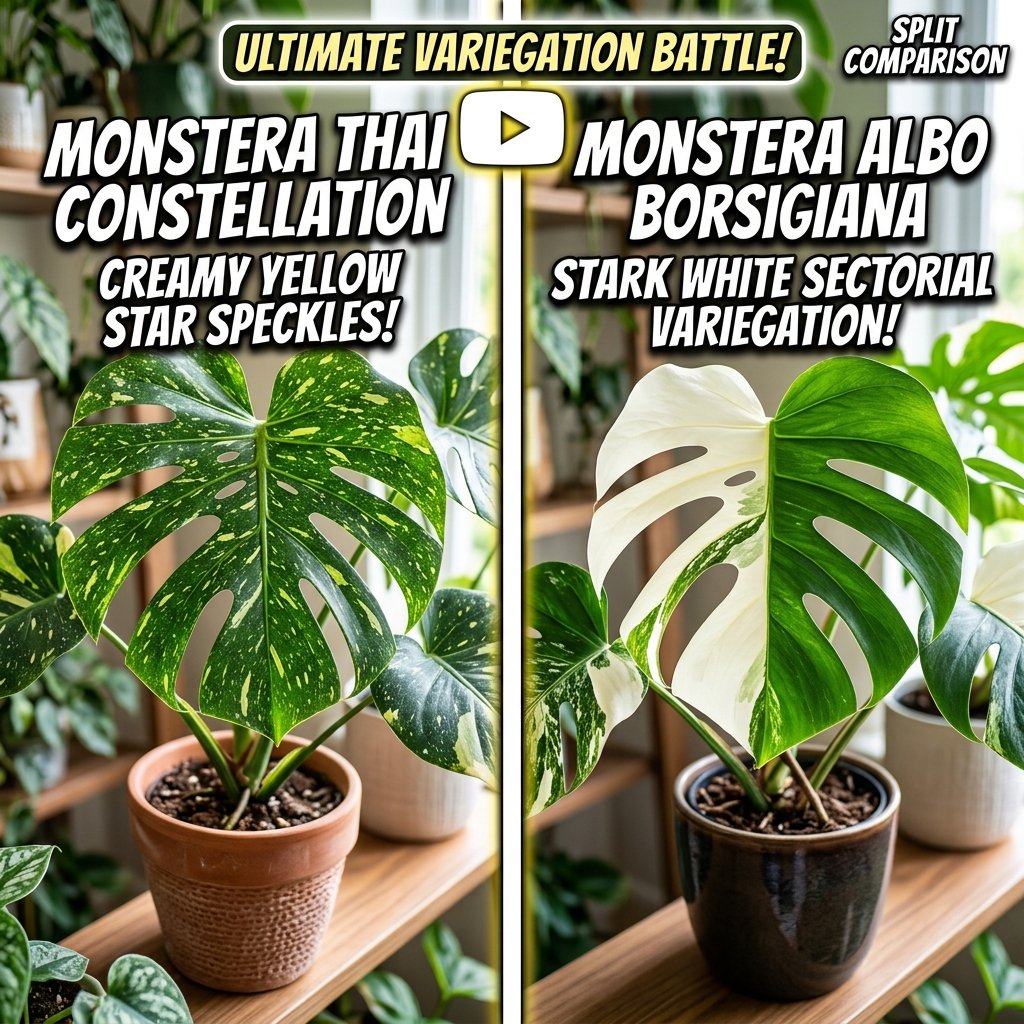

You spent $200 on a heavily variegated Philodendron Pink Princess or a Monstera Albo. The first two leaves it produced for you were stunning half-moons of pure color. But the newest leaf has emerged completely, devastatingly green. Panic sets in. Your high-end investment is “reverting.” What do you do?
Understanding Chimeric Mutations
In most highly variegated plants, the mutation is chimeric. This means there are two distinct types of DNA (green cells and mutated white/pink cells) living inside the exact same stem, constantly fighting for dominance. Whichever color dominates the specific node (the cellular growth point on the stem) determines the color of the upcoming leaf.
The “Rule of Three”
If a plant pushes one solid green leaf, do not panic. It might just be the green genetics temporarily taking the lead to gather energy. If the plant pushes a second solid green leaf, you are in danger territory. If the plant pushes a third consecutive solid green leaf, the mutated DNA has officially lost the battle. The plant has permanently reverted. Every leaf from this point forward will be green.
The Surgical Pruning Protocol
To save a reverting plant, you cannot simply give it more sunlight; you must physically intervene by hacking the stem back to a point where the mutated DNA was still active.
- Locate the last wildly variegated, beautiful leaf on the vine.
- Look directly at the stem segment connected to that leaf. Identify the axillary bud (the tiny, dormant bump that will become the new vine). Ensure the stripe of color on the stem passes directly through that bud.
- Take sterilized shears and amputate the entire top half of the plant, cutting exactly one inch above that perfectly positioned bud.
By forcing the plant to regrow from a bud that contains both green and pink DNA, you “reset” the genetic roulette wheel, ensuring spectacular color returns on the very next leaf.
<div class='pm-retention-hook' style='background-color: #f8fafc; border-left: 4
Frequently Asked Questions
What are the best conditions for this plant?
Most houseplants thrive in bright, indirect light with temperatures between 65-80F (18-27C). Ensure good drainage and water when the top inch of soil feels dry.
How often should I water?
Watering frequency depends on the plant species, pot size, and environment. A general rule is to check the soil moisture before watering. Overwatering is the most common cause of houseplant death.
What soil mix works best?
A well-draining mix of peat moss, perlite, and orchid bark works well for most tropical houseplants. Succulents prefer a grittier mix with more sand and perlite.
Quick Care Reference
| Factor | Requirement | Notes |
|---|---|---|
| Light | Bright indirect | Avoid direct afternoon sun |
| Water | When top inch dry | Reduce in winter |
| Humidity | 50-70% | Mist or use pebble tray |
| Temperature | 65-80F (18-27C) | Avoid cold drafts |
| Soil | Well-draining mix | Peat, perlite, bark |
| Fertilizer | Monthly (spring-summer) | Half-strength balanced |