
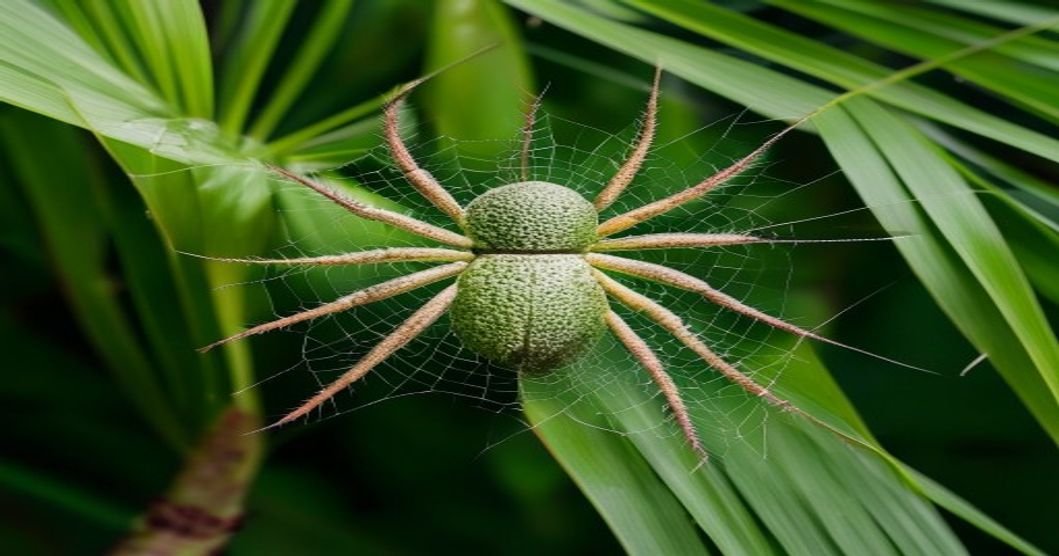

You walk past your majestic Majesty Palm or your delicate Calathea. You notice the leaves are looking slightly faded, dusty, and yellowing overall. You try to wipe the “dust” off, but it smears. You look closer, and you notice impossibly tiny, microscopic spider webs bridging the gaps between the leaves. You have been invaded by the most common, devastating houseplant pest on Earth: The Two-Spotted Spider Mite.
Why Mites Attack specific Plants
Spider mites are arachnids, not insects. They thrive in bone-dry, stagnant, hot air. When winter arrives and the central heating kicks on, dropping your living room humidity to 20%, spider mite populations explode. They aggressively target plants with thin, delicate leaves—particularly Palms, Calatheas, and Alocasias—because their tiny fangs can easily pierce the thin cellular walls to suck out the chlorophyll.
Identifying the Invisible
You cannot easily see the bugs themselves. You must look for the damage:
- Stippling: Before the webs appear, the leaf will look like it was poked with a needle a thousand times, showing tiny yellow or white speckles where the chlorophyll was drained.
- The Webbing: Spider mites spin webs over the undersides of leaves and the junction of the stems to protect their eggs from predators and hold humidity against the leaf.
The Extermination Protocol
Systemic insecticides (like Imidacloprid) DO NOT WORK on spider mites because mites are arachnids, not insects. If you use normal bug spray, you will literally only breed super-mites.
The absolute most effective, free weapon you have against spider mites is Water Pressure. Mites cannot physically survive high humidity or being wet.
Take the infected plant to the shower. Blast every single leaf (especially the undersides) with lukewarm water pressure. This physically washes away 95% of the mites and shatters their webs. Immediately follow this up by spraying the foliage with a mixture of Castille soap, alcohol, and water to break down the exoskeletons of any survivors. Repeat the shower protocol every 4 days for two weeks to completely break the egg-hatching life cycle.
What’s Your Next Step?
You have successfully identified the threat of spider mites. Your immediate protocol is
Frequently Asked Questions
What are the best conditions for this plant?
Most houseplants thrive in bright, indirect light with temperatures between 65-80F (18-27C). Ensure good drainage and water when the top inch of soil feels dry.
How often should I water?
Watering frequency depends on the plant species, pot size, and environment. A general rule is to check the soil moisture before watering. Overwatering is the most common cause of houseplant death.
What soil mix works best?
A well-draining mix of peat moss, perlite, and orchid bark works well for most tropical houseplants. Succulents prefer a grittier mix with more sand and perlite.
Quick Care Reference
| Factor | Requirement | Notes |
|---|---|---|
| Light | Bright indirect | Avoid direct afternoon sun |
| Water | When top inch dry | Reduce in winter |
| Humidity | 50-70% | Mist or use pebble tray |
| Temperature | 65-80F (18-27C) | Avoid cold drafts |
| Soil | Well-draining mix | Peat, perlite, bark |
| Fertilizer | Monthly (spring-summer) | Half-strength balanced |