
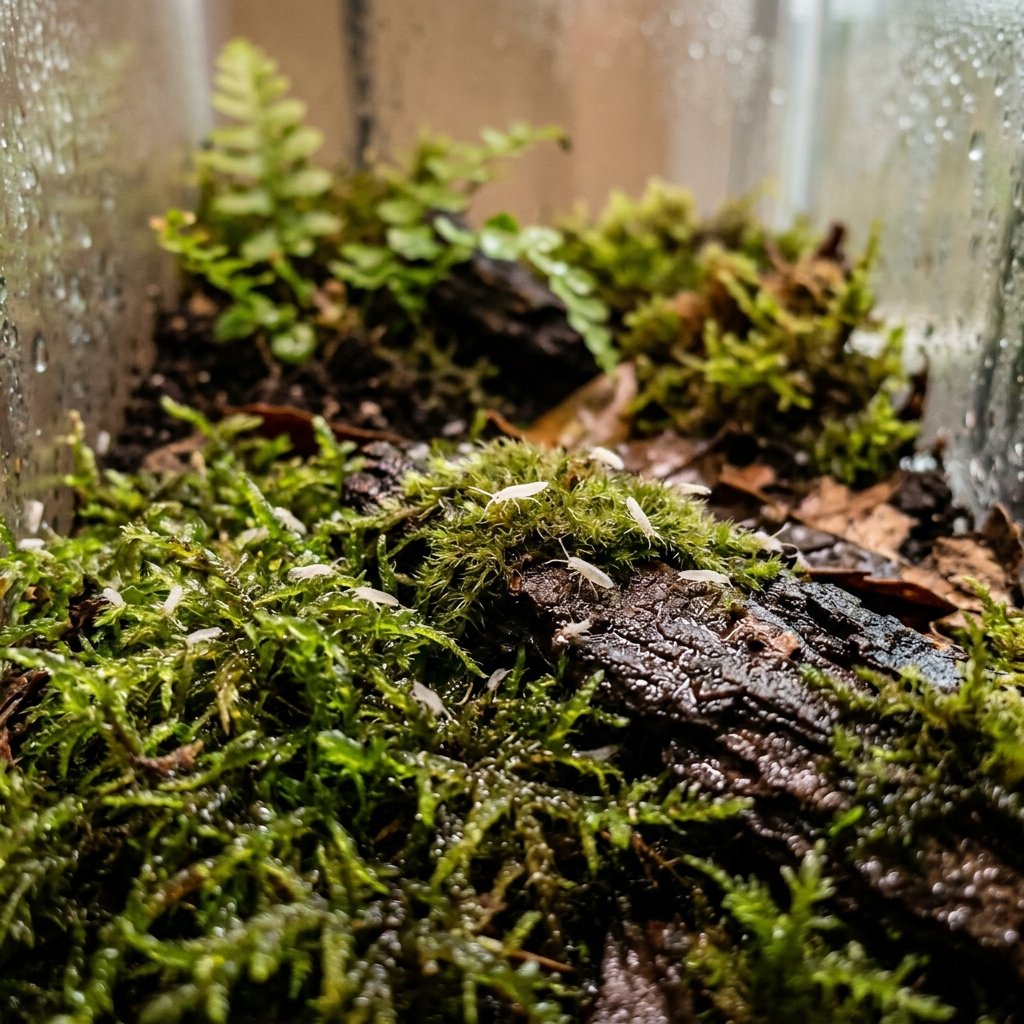

Building a closed, high-humidity glass terrarium filled with miniature ferns and jewel orchids is deeply rewarding. But within a month, the beautiful glass walls usually fog up, a white fuzz creeps over the soil, and a catastrophic mold explosion decimates the ecosystem. If you are building a terrarium, you cannot just add plants. You must add the ultimate microscopic janitors: Springtails.
What are Springtails?
Springtails (Collembola) are microscopic, blind, white hexapods that live entirely in the soil. They are not pests; they will not escape your terrarium and infest your house. They are detritivores, meaning they exclusively eat dead, rotting organic matter.
The Biological Janitors
- Mold Annihilation: Springtails primary food source is mold and fungal spores. If mold begins to bloom on a dead leaf in your terrarium, a colony of springtails will swarm it and devour the mold entirely within 24 hours.
- Poop Power: As they eat the rotting matter, they process it in their digestive tract and excrete massive amounts of highly bio-available nitrogen directly into the terrarium soil, creating an infinite, self-fertilizing loop.
Seeding the Ecosystem
When you construct a terrarium, you must buy a “master culture” of springtails (usually sold on a piece of horticultural charcoal). Simply tap the charcoal over your terrarium soil to drop a few hundred springtails into the ecosystem.
Because the terrarium is sealed and perfectly humid, the springtails will reproduce at a staggering rate, balancing their population perfectly based on how much dead organic matter is available. With an established colony of springtails and a few isopods (roly-polys), you can essentially seal the glass jar and never intervene for years. Welcome to true bioactive keeping.
Frequently Asked Questions
What are the best conditions for this plant?
Most houseplants thrive in bright, indirect light with temperatures between 65-80F (18-27C). Ensure good drainage and water when the top inch of soil feels dry.
How often should I water?
Watering frequency depends on the plant species, pot size, and environment. A general rule is to check the soil moisture before watering. Overwatering is the most common cause of houseplant death.
What soil mix works best?
A well-draining mix of peat moss, perlite, and orchid bark works well for most tropical houseplants. Succulents prefer a grittier mix with more sand and perlite.
Quick Care Reference
| Factor | Requirement | Notes |
|---|---|---|
| Light | Bright indirect | Avoid direct afternoon sun |
| Water | When top inch dry | Reduce in winter |
| Humidity | 50-70% | Mist or use pebble tray |
| Temperature | 65-80F (18-27C) | Avoid cold drafts |
| Soil | Well-draining mix | Peat, perlite, bark |
| Fertilizer | Monthly (spring-summer) | Half-strength balanced |