
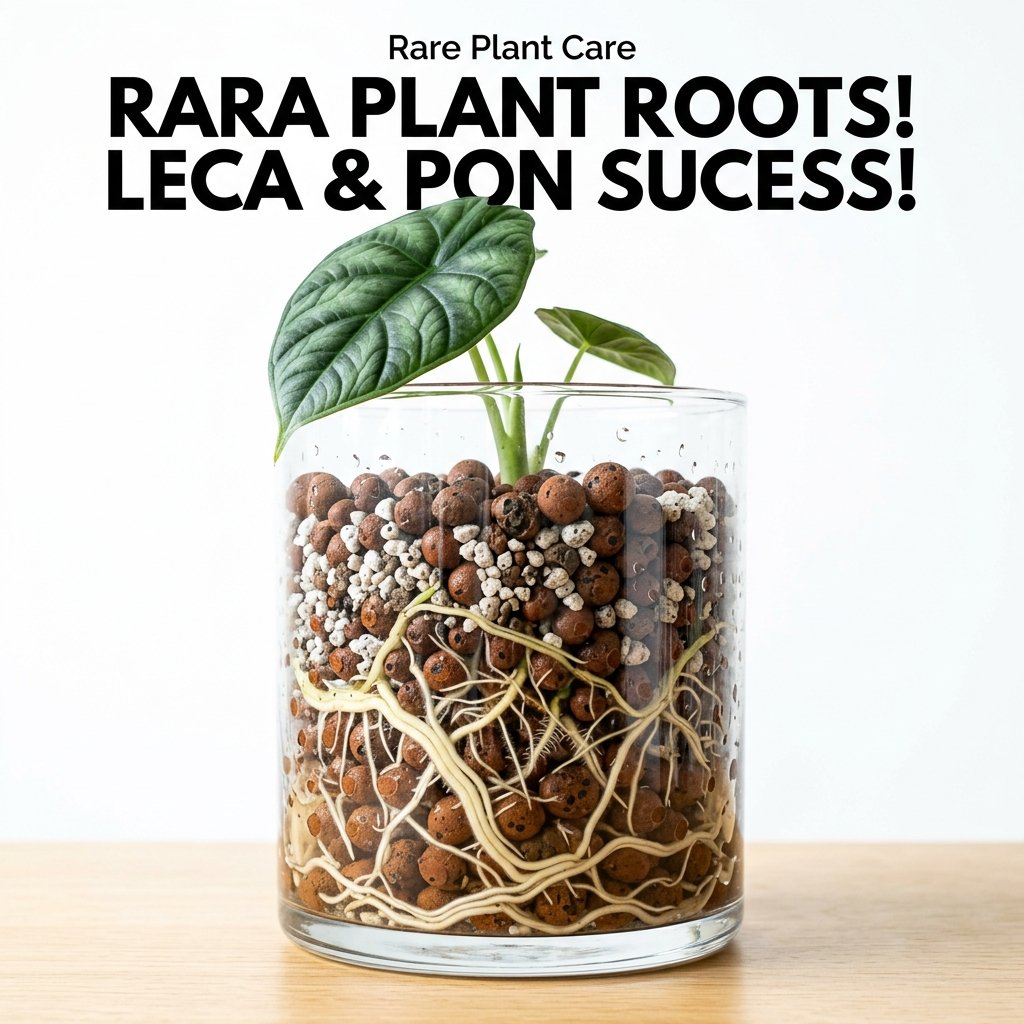

The days of dealing with fungus gnats and messy organic soil might be coming to an end. The biggest trend currently sweeping the indoor jungle community is the mass migration to Semi-Hydroponics—specifically using LECA (Lightweight Expanded Clay Aggregate) and mineral substrates like Lechuza Pon. But why is this happening now, and is it right for your rare aroids?
What Exactly is Semi-Hydroponics?
Semi-hydroponics is a method of growing plants where the roots are suspended in an inert, inorganic substrate rather than traditional potting mix. The roots sip water and liquid fertilizers from a reservoir at the bottom of the pot through capillary action. This system mimics the highly oxygenated environment many tropical epiphytes experience in the wild.
Key Takeaways
- No Soil Pests: Without organic matter, fungus gnats and springtails cannot breed.
- Perfect Oxygenation: LECA balls provide massive air pockets, virtually eliminating root rot.
- Less Guesswork: With a clear reservoir, you always know exactly when to water.
LECA vs. Pon: The Ultimate Showdown
While both are excellent, they serve different purposes based on the maturity of your plant’s root system.
1. LECA (Clay Pebbles)
LECA consists of clay balls baked in a kiln until they pop like popcorn. They are incredible for thick-rooted plants like large Monstera Deliciosa and mature Philodendrons. Pros: Cheap, highly reusable, massive airflow. Cons: Requires tedious pH balancing and flushing.
2. Lechuza Pon
Pon is a mineral gravel mix consisting of pumice, zeolites, and lava rock, usually pre-mixed with an slow-release fertilizer. It acts much closer to soil, which makes the transition process smoother for fine-rooted plants. Pros: Incredible capillary action, buffering capacity, zero preparation needed. Cons: Expensive and heavy.
How to Transition Your First Plant
- The Big Clean: Remove the plant from its soil. You must wash 100% of the dirt off the roots. Use a gentle hose or sprayer. Any remaining soil will rot in water.
- The Water Soak: Submerge the roots in a weak nutrient solution for a week to acclimate the soil roots into water roots.
- Potting Up: Fill a net pot with LECA, position your plant, and backfill. Place the net pot into a cache pot with a nutrient reservoir covering only the bottom 1/3rd of the LECA.
Conclusion: Is the Hype Real?
Absolutely. While the initial investment in hydroponic nutrients and substrates is higher, the long-term health of your plants—especially expensive imports—is vastly improved. If you are tired of hovering over your plants with a moisture meter, the switch to semi-hydro might just save your indoor jungle.
<div class='pm-retention-hook' style='background-color: #f8fafc; border-left: 4px solid #2A7B4C; padding: 20px; margin-top: 40px; border-radius: 8
Frequently Asked Questions
What are the best conditions for this plant?
Most houseplants thrive in bright, indirect light with temperatures between 65-80F (18-27C). Ensure good drainage and water when the top inch of soil feels dry.
How often should I water?
Watering frequency depends on the plant species, pot size, and environment. A general rule is to check the soil moisture before watering. Overwatering is the most common cause of houseplant death.
What soil mix works best?
A well-draining mix of peat moss, perlite, and orchid bark works well for most tropical houseplants. Succulents prefer a grittier mix with more sand and perlite.
Quick Care Reference
| Factor | Requirement | Notes |
|---|---|---|
| Light | Bright indirect | Avoid direct afternoon sun |
| Water | When top inch dry | Reduce in winter |
| Humidity | 50-70% | Mist or use pebble tray |
| Temperature | 65-80F (18-27C) | Avoid cold drafts |
| Soil | Well-draining mix | Peat, perlite, bark |
| Fertilizer | Monthly (spring-summer) | Half-strength balanced |