
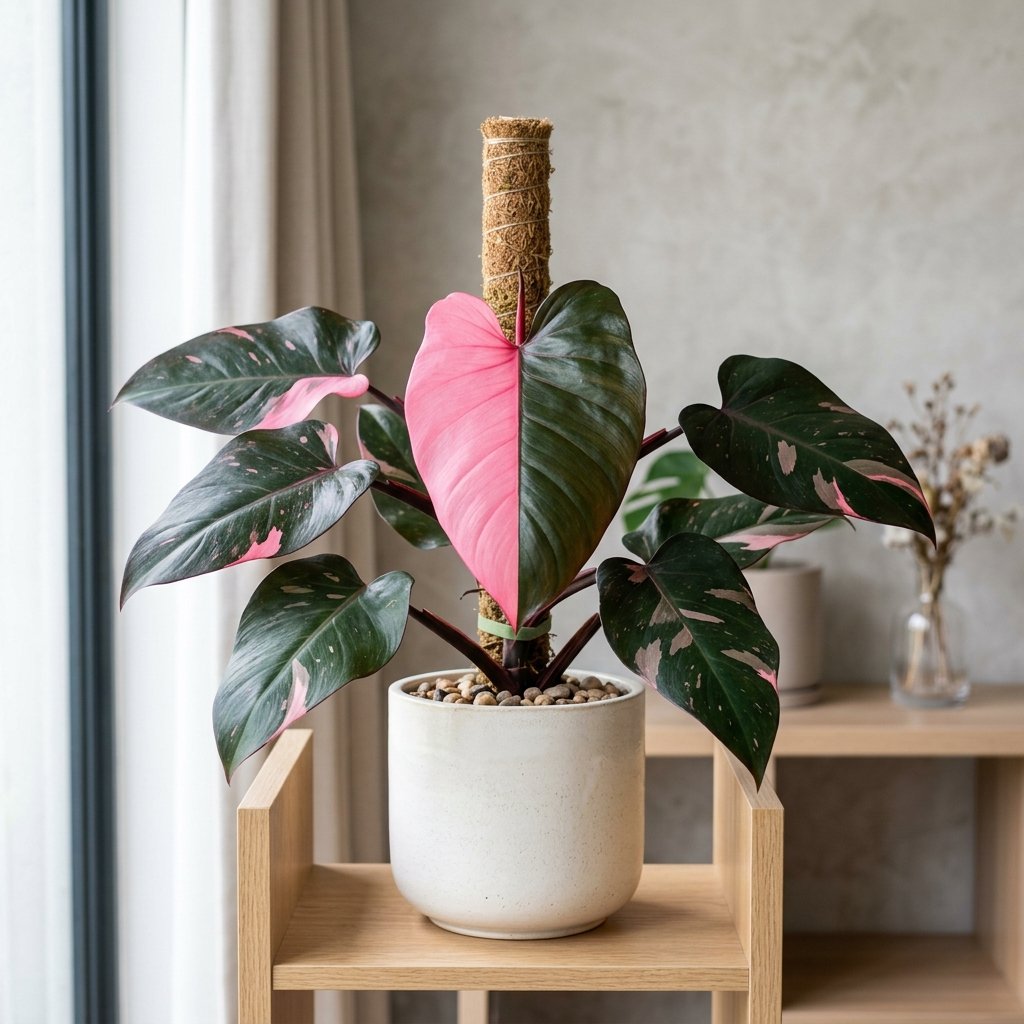

In 2021, if you wanted a Philodendron Pink Princess with a stunning half-moon pink leaf, you were paying $300 on Etsy for a partially rooted cutting. By 2026, you can buy a massive, bushy Pink Princess at the grocery store for $15. The great Pink Princess Crash is the defining economic event of the houseplant hobby, and it fundamentally changed how we value rare plants.
The Tissue Culture Revolution
The price crash was not an accident; it was a targeted operation. The Pink Princess is inherently difficult to propagate reliably via traditional stem cuttings because of its unstable chimeric mutation. Many cuttings revert to green or turn entirely pink (and die).
How Labs Flooded the Market
Laboratories in Thailand and the Netherlands cracked the tissue culture protocol for the Pink Princess. Instead of taking one stem cutting per month, a laboratory technician could take a microscopic cluster of cells from a perfectly variegated node and clone it into 10,000 genetically identical baby plants inside an agar flask. In under a year, millions of perfect Pink Princesses hit the global market simultaneously.
Is the Pink Princess Still “Special”?
Yes. While the monetary value has evaporated, the biological reality remains: the Pink Princess is one of the only plants capable of naturally producing neon-pink foliage. The crash is actually a massive victory for the hobby. Instead of being an elite status symbol hoarded by wealthy collectors, the Pink Princess is now accessible to every beginner trying to add color to their living room.
What’s Your Next Step?
The Pink Princess market collapse provides critical data. Your response to this data determines the future value and health of your entire plant collection. Consider your next action carefully.
- Can you identify the 3 genetic markers that signal your prized variegated plant is about to revert, losing 90% of its value overnight?
- Are you unknowingly creating a “death trap” for your tropicals? Discover which popular setup—the IKEA cabinet or the grow tent—fails 78% of the time for high-humidity species.
Frequently Asked Questions
What are the best conditions for this plant?
Most houseplants thrive in bright, indirect light with temperatures between 65-80F (18-27C). Ensure good drainage and water when the top inch of soil feels dry.
How often should I water?
Watering frequency depends on the plant species, pot size, and environment. A general rule is to check the soil moisture before watering. Overwatering is the most common cause of houseplant death.
What soil mix works best?
A well-draining mix of peat moss, perlite, and orchid bark works well for most tropical houseplants. Succulents prefer a grittier mix with more sand and perlite.
Quick Care Reference
| Factor | Requirement | Notes |
|---|---|---|
| Light | Bright indirect | Avoid direct afternoon sun |
| Water | When top inch dry | Reduce in winter |
| Humidity | 50-70% | Mist or use pebble tray |
| Temperature | 65-80F (18-27C) | Avoid cold drafts |
| Soil | Well-draining mix | Peat, perlite, bark |
| Fertilizer | Monthly (spring-summer) | Half-strength balanced |