
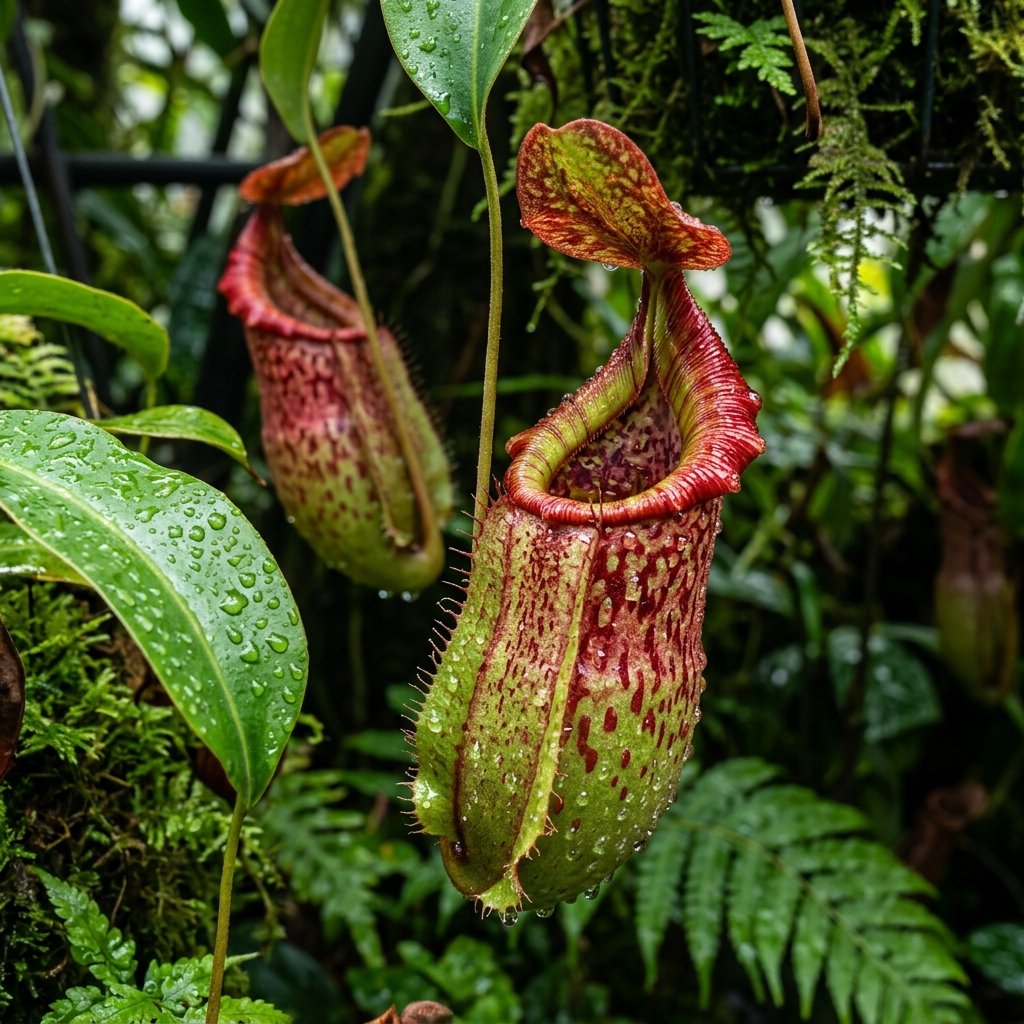

In a community obsessed with velvety leaves and white variegation, a new aesthetic is taking over: the macabre. The demand for Carnivorous Houseplants has exploded. From the dangling death-traps of tropical Nepenthes to the sticky, dewy tentacles of Drosera, growing your own pest-control squad is the latest trend.
Breaking the Carnivorous Myths
Most beginners kill their carnivorous plants within a month because they treat them like regular houseplants. Carnivorous plants evolved to eat bugs precisely because their native soil is completely devoid of nutrients. If you give a Venus Flytrap a hit of standard liquid fertilizer, you will burn its roots and kill it instantly.
The Golden Rules of Carnivory
- Rule 1: ZERO Minerals. You must only use Rainwater, Distilled water, or Reverse Osmosis (RO) water. Tap water contains minerals that are lethal.
- Rule 2: Bog Conditions. With the exception of Nepenthes, most carnivorous plants want to sit in a tray of water at all times. They do not understand “let the top inch dry out.”
- Rule 3: Pure Substrate. Never use standard potting soil. Use a 50/50 mix of pure, unfertilized peat moss and perlite, or pure long-fiber sphagnum moss.
Top 3 Carnivores for the Indoor Jungle
1. Nepenthes (Tropical Pitcher Plants)
These are the crown jewels of the indoor carnivorous world. They grow as vines, producing gorgeous, hanging “pitchers” filled with digestive enzymes. Unlike bog plants, they actually want exceptional drainage. Grow them in pure sphagnum moss, hand-water them like a pothos, and provide bright, dappled sunlight.
2. Drosera (Sundews)
If you have a fungus gnat problem, Sundews are your biological weapons. Their leaves are covered in tentacles that exude drops of sticky “dew.” Gnats land on the dew, get stuck, and the leaf slowly wraps around them to digest them. They require intense, direct sunlight and must sit in a tray of distilled water eternally.
3. Pinguicula (Butterworts)
Looking like innocent, neon-green succulents, Pinguicula leaves function exactly like living flypaper. They bloom gorgeous purple flowers and are unmatched at catching fruit flies and gnats. They require shallow rooting depth and bright windowsill light.
Do You Have to Feed Them?
Surprisingly, no. Carnivorous plants use bugs as a fertilizer supplement, not as primary calories. They still photosynthesize for baseline energy. However, dropping a dried bloodworm or a captured housefly into a pitcher once a month will trigger a massive explosion in growth.
What’s Your Next Step?
You have successfully assimilated the foundational data for carnivorous plant care. Your cognitive path now diverges. Choose your next optimization protocol:
- <a href
Frequently Asked Questions
What are the best conditions for this plant?
Most houseplants thrive in bright, indirect light with temperatures between 65-80F (18-27C). Ensure good drainage and water when the top inch of soil feels dry.
How often should I water?
Watering frequency depends on the plant species, pot size, and environment. A general rule is to check the soil moisture before watering. Overwatering is the most common cause of houseplant death.
What soil mix works best?
A well-draining mix of peat moss, perlite, and orchid bark works well for most tropical houseplants. Succulents prefer a grittier mix with more sand and perlite.
Quick Care Reference
Factor Requirement Notes Light Bright indirect Avoid direct afternoon sun Water When top inch dry Reduce in winter Humidity 50-70% Mist or use pebble tray Temperature 65-80F (18-27C) Avoid cold drafts Soil Well-draining mix Peat, perlite, bark Fertilizer Monthly (spring-summer) Half-strength balanced