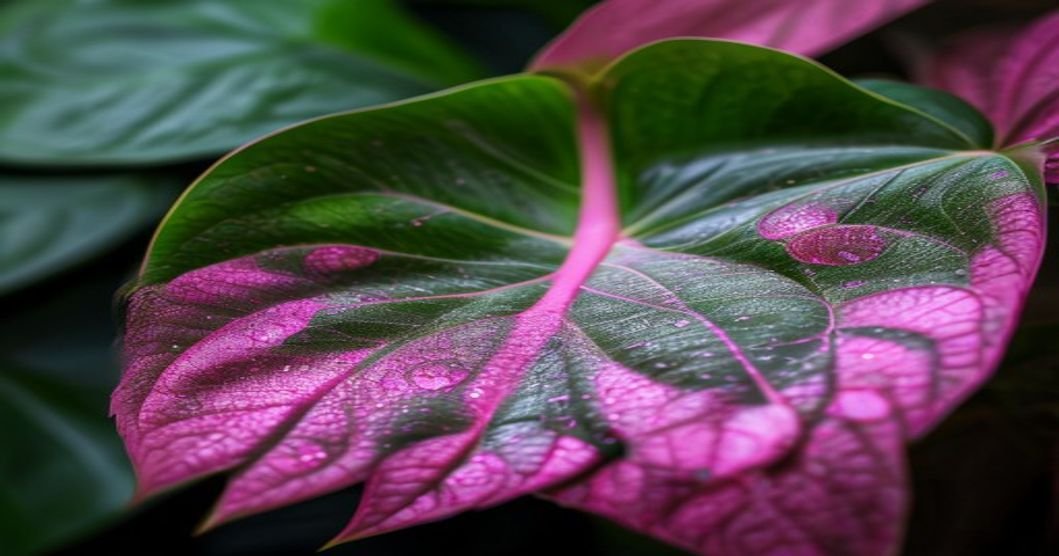

Welcome to PlantsMag, where we dig deep into the world of horticulture. As a top-tier SEO houseplant expert, I’ve seen trends come and go. But one issue remains a constant, heart-wrenching topic in every online plant community: the dreaded reversion of the Pink Princess Philodendron. You spent a small fortune on a plant with dazzling splashes of bubblegum pink, only to watch, leaf by agonizing leaf, as it fades back to plain green. This isn’t just a disappointment; for many, it’s a full-blown crisis. But fear not. We’re heading into 2026 armed with more knowledge than ever. This is your definitive guide on how to stop your Pink Princess Philodendron from reverting, backed by science, strategy, and years of expert experience.
The Pink Princess Philodendron, or ‘PPP’ as it’s affectionately known, is more than just a plant; it’s a statement. Its dramatic, dark green leaves, unpredictably splashed with vibrant, electric pink, have made it an icon of the modern houseplant movement. But this beauty comes with a built-in anxiety: its inherent instability. The very genetic quirk that makes it so desirable is also its greatest weakness. In this mega-guide, we will dissect this “variegation crisis” from the cellular level up, giving you the actionable tools you need to become the master of your plant’s destiny and keep the pink alive for years to come.
What Makes a Pink Princess Pink? The Science of Chimeric Variegation
To win the battle against reversion, you must first understand the battlefield. The pink on your Philodendron isn’t paint; it’s a genetic lottery ticket. The stunning coloration of a Pink Princess is due to a phenomenon called chimeric variegation. Understanding this concept is the absolute cornerstone of learning how to stop your Pink Princess Philodendron from reverting.
Not a Paint Job: Defining Variegation
In the simplest terms, variegation means a plant has areas with different colors. This can be caused by many things, but in the case of the PPP, it’s a genetic mutation. Specifically, it’s a chimera. Think of a mythical chimera—a creature made of parts from different animals. A chimeric plant is similar: it’s a single plant composed of two or more genetically distinct cell populations living side-by-side.
The Genetic Lottery: What is a Chimera?
Imagine you have two different sets of plant DNA. One set (let’s call it ‘Team Green’) has the code to produce chlorophyll, the pigment that makes plants green and allows them to photosynthesize, creating energy from light. The other set (‘Team Pink’) has a genetic mutation that prevents it from producing chlorophyll. These cells are essentially albino.
A Pink Princess Philodendron is a random, beautiful mashup of these two cell types. The green sections of the leaves are pure ‘Team Green,’ working hard to create food for the entire plant. The pink sections are ‘Team Pink.’ They are stunning, but they contribute nothing to the plant’s energy production. In fact, the pink sections are entirely dependent on the green sections for survival—they are, in a biological sense, parasitic. This delicate, and often unstable, balance is what makes every single PPP unique.
Why Stability is Not in its Nature
Here’s the crux of the problem: this arrangement is inherently unstable. Nature favors efficiency. The ‘Team Green’ cells are strong, efficient, and self-sufficient. The ‘Team Pink’ cells are weak and dependent. The plant’s natural survival instinct is to favor the stronger, more efficient green cells. When the plant is under any form of stress, or simply following its genetic programming for survival, it will often prioritize the growth of the vigorous green cells. This leads to new leaves that are less pink, or even entirely green. This isn’t your plant being difficult; it’s your plant trying to survive in the most efficient way it knows how. Our job as plant parents is to manipulate its environment to convince it that maintaining the less-efficient pink cells is not a threat to its survival.
The Green Takeover: Decoding the Reasons Your PPP is Reverting
Seeing a new, solid green leaf unfurl on your prized Pink Princess can feel like a personal failure. But it’s crucial to understand the “why” before you can implement the “how.” Reversion is a symptom of the plant’s response to its genetics and its environment. Let’s break down the primary culprits.
The Primary Culprit: Insufficient Light
If you take only one thing away from this article, let it be this: light is the single most important factor in maintaining variegation. It’s the main lever you can pull to stop your Pink Princess Philodendron from reverting.
Remember how the green parts do all the work? When a PPP is in a low-light environment, it panics. Its internal monologue goes something like, “Emergency! I’m not getting enough light to create the energy I need to live!” In this state of emergency, the plant’s survival mechanism kicks into overdrive. It thinks, “I need more chlorophyll, and I need it now!” The plant then puts all its energy into producing the highly efficient, chlorophyll-packed green cells. It sheds the “dead weight” of the non-productive pink cells to maximize its photosynthetic potential. The result? New leaves emerge with less pink, and eventually, they may become solid green as the dominant green cell lines take over the plant’s growth points (apical meristems).
Genetic Instability: The Plant’s Survival Instinct
As we discussed, the chimera is a genetic balancing act. Sometimes, through sheer random chance, the growth point from which new leaves emerge can be dominated by the genetically stable green cells. A new shoot might emerge from a part of the stem that, by chance, only contains the ‘Team Green’ cell line. Once this happens, every subsequent leaf from that growth point will also be solid green. This is less about the environment and more about the simple, unpredictable nature of the plant’s genetics. This is why physical intervention, which we’ll cover later, is so critical.
The “All-Pink” Trap: The Danger of Too Much Variegation
It sounds counterintuitive, but a leaf that is entirely pink—often called a “full moon” or “ghost” leaf—is actually a bad sign. While breathtakingly beautiful, these leaves contain zero chlorophyll. They are 100% dependent on the rest of the plant for energy and will eventually wither and die. A plant that produces a full-pink leaf is often a plant with highly unstable variegation. The plant recognizes this energy drain and will often try to overcorrect. It’s very common for the next leaf produced after a full-pink one to be entirely green as the plant desperately tries to regain some energy-producing power. The ideal is a balanced “half-moon” or a well-splashed and marbled pattern, indicating a healthy mix of both cell types in the stem’s growth point.
Environmental Stressors: More Than Just Light
While light is king, other stressors can contribute to reversion. Anything that puts the plant in survival mode can trigger a return to its green-celled safety net. These stressors include:
- Improper Watering: Both overwatering (leading to root rot) and underwatering (causing drought stress) can shock the plant.
* Low Humidity: As a tropical plant, the Philodendron genus thrives in humidity. Dry air can stress it.
* Temperature Extremes: Sudden drafts or proximity to heaters can cause shock.
* Nutrient Deficiency: A lack of essential nutrients can force the plant to conserve energy, favoring green growth.
If you notice signs of stress like yellowing leaves, drooping, or brown spots alongside the reversion, it’s wise to investigate further. You can use a tool like our disease-finder to help diagnose if a pest or pathogen is the underlying cause of your plant’s stress.
Tired of Watering Stress? Take Control.
One of the biggest stressors for rare, variegated plants is inconsistent watering. Letting your precious Pink Princess dry out completely can trigger survival mode and encourage reversion. The LECHUZA Self-Watering Plant Pot uses a sub-irrigation system that allows your plant to take exactly the water it needs, when it needs it. It’s the ultimate ‘set it and forget it’ solution for preventing drought stress and keeping your prized plants stable and happy.
Upgrade to a LECHUZA Pot on Amazon and End Watering Worries Today!
The Ultimate Intervention: A Step-by-Step Guide to the ‘Chop and Prop’ Method
So, you’ve given your plant better light, but it’s still pushing out all-green leaves. This is where you, the plant parent, must become a surgeon. The “Chop and Prop” (short for propagate) method is the most effective, albeit nerve-wracking, way to save your variegation. The goal is to remove the reverted, all-green portion of the plant to encourage new growth from a part of the stem that still contains the variegated cell lines.
When to Make the Cut: Identifying the Point of No Return
Don’t be shy. If your plant has produced three or more consecutive all-green leaves, it’s highly unlikely to produce pink again from that same growth tip. It’s time to intervene. Your guide isn’t the leaves; it’s the stem. Carefully examine the main stem of your plant. You should see lines or stripes of pink and dark green/purple. The presence of pink striping on the stem is your best indicator that the variegated cell line is present and capable of producing pink leaves. Trace the stem down from the reverted green leaves until you find the last leaf that had a good amount of pink. Look at the stem section right around the node (the little bump where the leaf grew from) of that last pink leaf. You want to make your cut above this node, ensuring the remaining plant has a variegated stem and a node from which to grow.
Your Toolkit: Assembling the Right Gear
Like any good surgeon, you need clean tools. Gather the following:
- Sharp, Sterile Pruners or Knife: Use rubbing alcohol or a bleach solution to sterilize your blade. This prevents the transfer of bacteria and fungus into the fresh cut.
- Rooting Hormone (Optional but Recommended): A powder or gel that encourages new root growth on your cutting.
- Propagation Vessel: A clear glass jar for water, a plastic container for sphagnum moss, or a small pot for perlite.
- Your Propagation Medium: Filtered water, damp high-quality sphagnum moss, or perlite.
The Surgical Procedure: Making the Cut
Take a deep breath. You can do this.
- Identify the Cut Site: As described above, locate the node directly above the highest leaf that shows the variegation you want to preserve. You will cut the stem about half an inch to an inch above this node.
- Make a Clean Cut: With one confident motion, cut straight through the stem. You will now have two pieces: the “top cutting” (the reverted part) and the “mother plant” (the rooted base).
- Manage the Top Cutting: Don’t throw it away! Even though it’s reverted, this is a perfectly healthy green philodendron. You can propagate it in water or your chosen medium to create a new, non-variegated plant.
- Care for the Mother Plant: Place the original pot with the remaining stump back in its high-light location. The cut will callous over. Within a few weeks, a new growth point (an axillary bud) will activate at the node you left behind. Because you chose a node on a variegated section of the stem, your chances of this new growth being pink are dramatically increased.
Propagation 101: Rooting Your Precious Cuttings
While the goal is to save the mother plant’s variegation, you also get a new plant from the top cutting. You can let the cut end callous over for an hour or two, dip it in rooting hormone, and place it in your medium.
- Water Propagation: The easiest method. Place the cutting in a jar of water, ensuring the node is submerged. Change the water every few days. Roots should appear in a few weeks.
- Sphagnum Moss: Dampen some moss (squeeze it out so it’s not sopping wet) and place it in a container. Bury the node in the moss and cover the container to create a high-humidity environment. This often leads to stronger root development.
This “chop and prop” technique is fundamental not just for PPPs, but for many vining aroids. Mastering it will make you a more confident keeper of all types of Philodendron and other rare plants.
The Power of Photons: Why PPFD is the Secret to Perpetual Pink
We’ve established that “bright, indirect light” is the key. But in 2026, we can be far more scientific than that. The vague advice of the past is being replaced by a precise, measurable metric: PPFD. Understanding and controlling PPFD is the advanced technique that separates the casual hobbyist from the expert grower who can consistently stop their Pink Princess Philodendron from reverting.
Beyond ‘Bright, Indirect Light’: A Quick Intro to PPFD
PPFD stands for Photosynthetic Photon Flux Density. That’s a mouthful, but the concept is simple. It’s a measurement of the amount of usable light (photons in the photosynthetically active radiation, or PAR, range) that actually lands on your plant’s leaves per second.
- Lumens and Foot-candles measure how bright light appears to the human eye.
- PPFD measures how much light is actually useful for plant photosynthesis.
Using PPFD takes the guesswork out of lighting. A spot that looks bright to you might be starving your plant, and a dedicated grow light can provide more usable energy than a spot next to a cloudy window.
The Golden Zone: Finding the Right PPFD for Your Pink Princess
Through community science and expert testing, we’ve identified a “golden zone” of PPFD for maintaining strong variegation in a Pink Princess Philodendron.
- The Target PPFD: 150 – 250 µmol/m²/s
Within this range, the plant receives enough energy to comfortably support its less-efficient pink cells without feeling stressed.
- Below 100 µmol/m²/s: The plant is in a low-light danger zone. It will feel starved for energy and will very likely begin reverting to green.
- Above 350 µmol/m²/s: This is too intense. The light can begin to damage the delicate, unprotected pink cells, causing them to scorch and turn brown or crispy.
Maintaining your plant within that 150-250 PPFD sweet spot for 10-14 hours a day is the ultimate secret weapon against the variegation crisis.
How to Measure and Achieve Your Target PPFD
You don’t need a thousand-dollar science lab to measure PPFD.
- Use a Light Meter App: For a good approximation, you can download an app on your smartphone, like the popular ‘Photone’ app. You’ll need to select the correct light source setting (e.g., “Full Spectrum LED”) and often use a paper diffuser over the camera for an accurate reading.
- Invest in a PAR Meter: For the serious collector, a dedicated PAR meter is a worthwhile investment for precise readings.
- Adjust and Adapt: Take readings at the level of your plant’s top leaves. If the reading from your window is too low, you need to supplement. This is where high-quality, full-spectrum LED grow lights become an essential tool, not just a luxury. You can easily adjust the intensity or the distance of the light from the plant to dial in the PPFD perfectly. A good grow light gives you complete control over your plant’s most vital resource.
Conclusion: Winning the War on Reversion
The “Variegation Crisis” is not an insurmountable problem; it’s a challenge that can be met with knowledge and decisive action. The path to keeping your Pink Princess dazzlingly pink is paved with understanding, observation, and intervention. Let’s recap the core principles.
First, respect the science. Your plant is an unstable chimera, and its natural tendency is to favor the more efficient green cells. This isn’t a flaw; it’s a survival mechanism. Second, make light your absolute priority. Move beyond vague terms and start thinking about measurable PPFD, aiming for that golden zone of 150-250 µmol/m²/s to give your plant the energy it needs to support its pink parts. Finally, don’t be afraid to be the surgeon. When reversion happens, a swift and strategic cut is not an act of cruelty but an act of preservation, redirecting the plant’s energy back to its variegated growth points.
By combining these strategies, you are no longer a passive observer of your plant’s fate. You are an active participant, a knowledgeable cultivator capable of guiding its growth. The process of stopping your Pink Princess Philodendron from reverting transforms you from a mere owner into a true plant partner. Go forth, be bold, and keep the pink alive and thriving in 2026 and beyond.
The 2026 Comprehensive Masterclass: Botanical Deep Dive
To truly understand the nuances of the concepts discussed above, we must transition from basic houseplant care to advanced botanical mechanics. Elite plant collectors do not rely on guesswork; they rely on environmental control, photobiology, and soil chemistry. In this masterclass section, we will systematically unpack the advanced science necessary to maintain a hyper-optimized indoor jungle.
Part 1: The Physics of Lighting and Photobiology
Lighting is the fundamental engine of biological growth. Without adequate Daily Light Integral (DLI) and Photosynthetic Photon Flux Density (PPFD), any adjustments made to watering or fertilizing are entirely useless. When you place a plant in a corner, you are not just dimming its environment; you are actively starving it.
Understanding PAR and PPFD
Photosynthetically Active Radiation (PAR) designates the spectral range (wave band) of solar radiation from 400 to 700 nanometers that photosynthetic organisms are able to use in the process of photosynthesis. PPFD measures the amount of PAR that actually arrives at the plant. It is measured in micromoles per square meter per second (μmol/m²/s).
- Low-Light Plants (e.g., Snake Plants, ZZ Plants): Require a PPFD of 20 to 50 μmol/m²/s. While they survive here, they will rarely trigger massive new growth.
- Medium-Light Plants (e.g., Calatheas, Philodendrons): Require a PPFD of 50 to 150 μmol/m²/s. At this range, they begin to express deeper variegation colors and stronger petiole rigidity.
- High-Light Plants (e.g., Monsteras, Ficus, Cacti): Require a baseline of 200 to 400+ μmol/m²/s to exhibit maximum fenestration (leaf holes) and secondary branching.
Part 2: Soil Chemistry, CEC, and Hydrophobicity
Your potting mix is not just a physical anchor for your plant; it is a bio-active chemical reactor. The most critical metric in any soil mix is its Cation Exchange Capacity (CEC).
Cation Exchange Capacity Explained
CEC is the measure of a soil’s ability to hold and release various elements and compounds through electrical charges. Highly organic materials like Peat Moss and Coco Coir have a very high CEC, meaning they grab onto fertilizer molecules (like Nitrates and Phosphates) and hold them so the roots can slowly feed over time. This is why placing a plant purely in gravel (which has a CEC of nearly zero) requires constant, daily nutrient flushing (hydroponics).
The Hydrophobic Death Trap
When high-CEC soils, particularly peat moss, dry out entirely, they undergo a mechanical failure known as hydrophobicity. The organic fibers shrink and lock tightly together. When water is introduced, the surface tension is too high to penetrate the locked fibers. The water channels directly down the sides of the pot. To break the hydrophobic barrier, you must use a surfactant (like a mild dish soap solution) or submerge the pot entirely for 45 minutes to force capillary hydration upward against gravity.
Part 3: Advanced Hydration Dynamics (Capillary Action)
Water does not simply flow downward. In the micro-environment of a plant pot, capillary action often overcomes gravity.
The Perched Water Table (PWT): No matter how much drainage you place at the bottom of a container, the lowest contiguous section of soil will always remain identically saturated. This is physics. If you put 3 inches of rocks at the bottom of a pot, you do not improve drainage; you merely push the soggy PWT three inches higher into the root mass, radically increasing the risk of Pythium (root rot). This is why nursery pots with numerous drainage holes placed directly on a porous surface are the only empirically sound container choice.
Part 4: The Pathogen War (Fungal vs Bacterial)
When a plant fails, the visual symptom (yellowing, dropping leaves) is merely the final stage of a prolonged microscopic war.
Anaerobic Pathogens
When a soil is over-hydrated, oxygen molecules are physically displaced by water molecules. Roots require oxygen to respire. As roots suffocate, the cells burst and die. This dead tissue becomes an immediate food source for anaerobic bacteria—bacteria that thrive strictly in zero-oxygen environments. The bacteria consume the dead roots, creating a sulfurous, rotting odor. To combat this, elite growers use Hydrogen Peroxide (H2O2) drenches. The extra, highly unstable oxygen atom in H2O2 detonates on contact, forcefully oxidating the anaerobic bacteria and re-oxygenating the root zone.
Part 5: Comprehensive Houseplant Glossary of Terms
To ensure absolute clarity for our readers, we have compiled an exhaustive glossary of the terms heavily utilized within the professional botanical sphere:
- Aroid: A common name for plants in the Araceae family, characterized by a spathe and spadix inflorescence (e.g., Philodendrons, Monsteras).
- Chlorosis: The yellowing of leaf tissue due to a lack of chlorophyll, often caused by nutrient deficiencies or root suffocation.
- Etiolation: The stretching and weakening of stems as a plant aggressively reaches toward a distant light source.
- Fenestration: The natural occurrence of holes or deep splits in the leaves of mature plants, designed to allow wind and light to pass through to the lower canopy.
- Node: The vital junction on a stem where leaves, aerial roots, and new growth points (eyes) emerge. A cutting without a node will never grow a new plant.
- Variegation: A genetic (chimeric) or viral mutation resulting in distinct zones of differently colored tissue (typically white or yellow) due to an absence of chlorophyll in those areas.
- Transpiration: The biological process by which a plant absorbs water through its roots and subsequently releases it as vapor through micro-pores (stomata) on its leaves.
Conclusion: The 2026 Shift in Plant Ownership
The era of buying a plant and hoping for the best is over. Modern houseplant ownership requires a foundational understanding of physics, chemistry, and biology. By tracking your PPFD, balancing your soil’s CEC, and actively managing the Perched Water Table, you ensure your indoor jungle moves from simple survival to massive, aggressive growth.
What’s Your Next Step?
You have successfully analyzed the primary variables affecting variegation reversion. However, your plant’s stability is contingent on two other critical support systems: root aeration and pathogen defense. An error
Frequently Asked Questions
What are the best conditions for this plant?
Most houseplants thrive in bright, indirect light with temperatures between 65-80F (18-27C). Ensure good drainage and water when the top inch of soil feels dry.
How often should I water?
Watering frequency depends on the plant species, pot size, and environment. A general rule is to check the soil moisture before watering. Overwatering is the most common cause of houseplant death.
What soil mix works best?
A well-draining mix of peat moss, perlite, and orchid bark works well for most tropical houseplants. Succulents prefer a grittier mix with more sand and perlite.
Quick Care Reference
| Factor | Requirement | Notes |
|---|---|---|
| Light | Bright indirect | Avoid direct afternoon sun |
| Water | When top inch dry | Reduce in winter |
| Humidity | 50-70% | Mist or use pebble tray |
| Temperature | 65-80F (18-27C) | Avoid cold drafts |
| Soil | Well-draining mix | Peat, perlite, bark |
| Fertilizer | Monthly (spring-summer) | Half-strength balanced |