
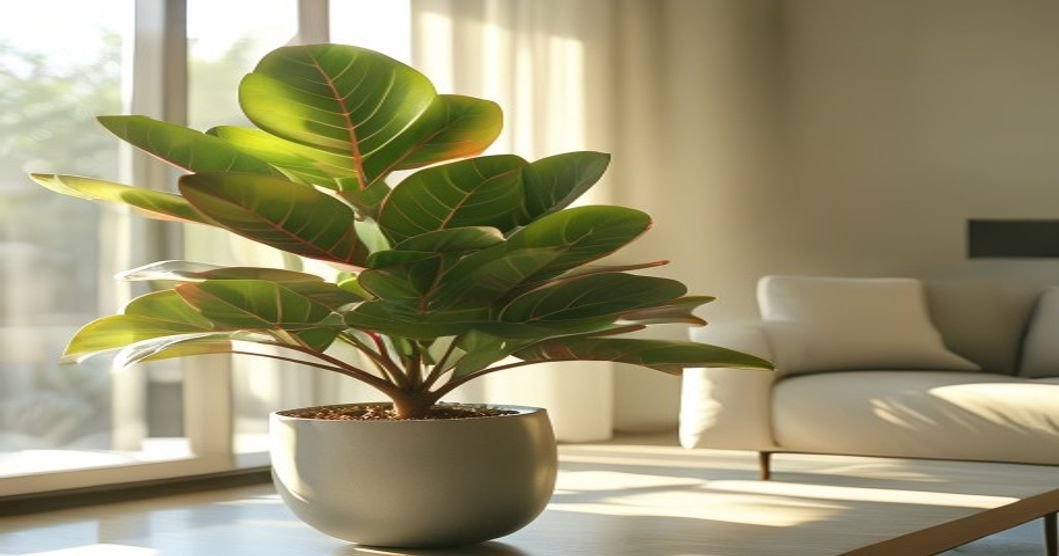

For the better part of a decade, one plant has reigned supreme in the world of interior design and social media feeds: the Fiddle Leaf Fig (*Ficus lyrata*). Its large, violin-shaped leaves and dramatic, tree-like stature made it the undisputed king of statement houseplants. It was the “it” plant, a symbol of sophisticated, plant-forward living. But as we look towards 2026, the winds of change are blowing through our urban jungles. A new contender has been quietly growing in popularity, ready to claim the throne. Meet *Ficus benghalensis*, more elegantly known as the Ficus Audrey.
The Ficus Audrey is everything we wanted the Fiddle Leaf Fig to be, but with a grace and resilience that its predecessor notoriously lacks. It offers the same impressive vertical presence and lush foliage, but with a significantly more forgiving personality. As plant parents evolve, moving from a desire for high-maintenance trophies to a craving for low-stress, life-enhancing green companions, the Audrey is perfectly poised to become the new icon. This is not just a shift in preference; it’s a paradigm shift in plant ownership. In this deep-dive, we’ll explore the decline of the Fiddle Leaf Fig’s reign, introduce you to the biology and charm of the Ficus Audrey, and provide an exhaustive guide to help you cultivate this stunning specimen, solidifying why 2026 is destined to be The Year of the Ficus Audrey.
The End of an Era: Why the Fiddle Leaf Fig is Fading
To understand the rise of the Audrey, we must first understand the fall of the Fiddle. The Fiddle Leaf Fig’s popularity exploded in the mid-2010s, fueled by Pinterest boards and design blogs. It was aspirational. Owning a thriving FLF was a status symbol, a testament to one’s horticultural prowess. However, the very thing that made it a challenge is now contributing to its decline.
The Finicky Factor: A Diva in Disguise
Ask any seasoned plant owner, and they’ll likely have a Fiddle Leaf Fig horror story. This plant is, to put it mildly, a diva. It demands perfect conditions and punishes the slightest misstep with dramatic flair. Its list of grievances is long:
- Watering Woes: The FLF exists in a perpetual state of “just right” when it comes to water. Too much, and you’re greeted with brown spots and root rot. Too little, and the leaves crisp and drop. This razor-thin margin for error is a constant source of anxiety for its owner.
- Aversion to Change: Simply moving a Fiddle Leaf Fig from one side of the room to the other can trigger a tantrum of epic proportions, resulting in a shower of dropped leaves. It despises drafts, temperature fluctuations, and any disruption to its routine.
- Light Demands: It craves bright, consistent, indirect light but will scorch if the sun is too direct. Finding this perfect spot in the average home can be a frustrating quest.
- The Dreaded Brown Spots: Edema, bacterial spots, fungal issues—the FLF is a magnet for unsightly brown blemishes that are notoriously difficult to diagnose and treat, leaving owners feeling defeated.
This high-maintenance nature is at odds with the modern plant parent’s desire for a relaxing, life-affirming hobby. People want plants that bring peace, not performance anxiety.
Market Saturation and the Search for “New”
Like any major trend, the Fiddle Leaf Fig has reached a saturation point. It’s in every furniture store catalog, every dentist’s office, and every influencer’s living room. While still beautiful, its ubiquity has diminished its “special” factor. The new generation of plant collectors and enthusiasts are explorers, seeking out plants that are less common and more personal. They want a plant that tells a different story, not the same one they’ve seen a thousand times on Instagram. The search for the “next big thing” is a natural cycle, and the Ficus Audrey, with its familiar genus but unique appeal, is the perfect candidate.
Meet the Heir Apparent: An Introduction to Ficus Audrey
Enter *Ficus benghalensis*. The Ficus Audrey is not just a “Fiddle Leaf Fig alternative”; it is a spectacular plant in its own right, with a rich history and a gentle, elegant aesthetic that feels both timeless and modern.
What is a Ficus Audrey? The Banyan Tree Connection
The Ficus Audrey is the juvenile, indoor-cultivated form of the Banyan Tree, the national tree of India. In its native habitat, it grows into one of the largest trees in the world, famous for its incredible canopy and aerial roots that can form new trunks. This heritage imbues the Ficus Audrey with an innate sense of strength and grandeur, even as a manageable houseplant.
Its visual appeal is subtly different from the FLF, and arguably more sophisticated. Instead of the Fiddle’s large, leathery, dark green leaves, the Audrey boasts smooth, velvety, emerald-green leaves with prominent, creamy-white veins. The leaves are slightly smaller and more oval-shaped, giving the plant a softer, more refined silhouette. Its trunk is often a pale, smooth gray or white, providing a beautiful contrast to the lush foliage. It feels less like a trendy accessory and more like a living sculpture.
The “Fiddle Leaf Fig, But Better” Argument
The primary reason for Audrey’s ascent is its personality. It offers all the benefits of the FLF with none of the drama. Here’s a direct comparison:
- Adaptability: Where the FLF drops leaves at the hint of a draft, the Audrey is far more stable and resilient. It adapts better to its environment and doesn’t protest every minor change.
- Watering Forgiveness: The Audrey is much more forgiving when it comes to watering. While it doesn’t want to sit in water, it’s less prone to immediately developing brown spots or dropping leaves if you’re a day early or a day late. It communicates its needs more gently.
- Light Tolerance: It thrives in the same bright, indirect light as the FLF but is less likely to scorch in slightly more direct sun and more tolerant of slightly lower light conditions. This flexibility makes it suitable for a wider range of homes.
- Aesthetic Grace: Its softer leaves and lighter trunk create a look that is airy and elegant, fitting seamlessly into various decor styles from minimalist to bohemian without overwhelming the space.
In essence, the Ficus Audrey is the sophisticated, low-drama evolution of the statement Ficus. It provides the same lush, tree-like impact but respects your time and peace of mind.
Mastering Ficus Audrey Care: A Comprehensive Guide
Caring for a Ficus Audrey is a joy, not a chore. By understanding its fundamental needs, you can ensure your plant not only survives but thrives, growing into a magnificent centerpiece for your home. Let’s break down every aspect of its care.
Let There Be Light: Cracking the Code of Illumination
Light is the most critical ingredient for a healthy Ficus. The simple advice is “bright, indirect light.” But as SEO houseplant experts, we can get more scientific and precise to guarantee success.
Think of light in two ways: duration and intensity. For this, we use two key metrics: Daily Light Integral (DLI) and Photosynthetic Photon Flux Density (PPFD).
- DLI (Daily Light Integral): This is the *total amount* of light a plant receives over a 24-hour period. It’s the most important metric for overall growth. For a Ficus Audrey, you should aim for a DLI of 10 to 15 mol/m²/day. This is typically achieved in a bright spot indoors.
- PPFD (Photosynthetic Photon Flux Density): This measures the *intensity* of light hitting the plant at any given moment. An ideal PPFD for an Audrey is between 200 and 500 µmol/m²/s for at least 6-8 hours a day.
What does this mean in practice? The perfect location is typically near an east-facing window, where it receives gentle, direct morning sun and bright, indirect light for the rest of the day. A spot a few feet back from a south or west-facing window also works well, as the distance will diffuse the harsh afternoon sun. Avoid low-light corners, as this will lead to slow growth and potential leaf drop. If your home lacks sufficient natural light, don’t despair. A high-quality grow light can easily supplement or replace sunlight. For more information on selecting the right one, check out our guide to the best grow lights for indoor plants.
The Art of Watering: Quenching Audrey’s Thirst
Overwatering is the number one cause of death for most houseplants, and Ficus are no exception. The key to success with your Ficus Audrey is to let the soil dry out partially between waterings. The “drench and drain” method is your best friend.
How to Water:
- Check the Soil: Do not water on a schedule. Instead, check the soil by inserting your finger 2-3 inches deep. If it feels dry at that depth, it’s time to water. If you feel any moisture, wait a few more days and check again.
- Drench Thoroughly: When it’s time to water, take the plant to a sink or bathtub. Water it slowly and evenly until water flows freely from the drainage holes at the bottom of the pot. This ensures the entire root ball is saturated.
- Drain Completely: This is the most crucial step. Allow the pot to drain completely for 10-15 minutes. Never let your Ficus Audrey sit in a saucer full of water, as this will suffocate the roots and lead to disaster.
The frequency of watering will change throughout the year. You’ll water more often in the spring and summer during active growth and less frequently in the fall and winter when the plant is dormant. For a deeper understanding of different techniques, explore our articles on mastering your houseplant watering routine.
The Foundation of Health: Soil, Potting, and Nutrition
The right soil mix is the foundation of a healthy root system. Ficus Audrey needs a soil that is chunky, airy, and well-draining, but that can also retain some moisture. A standard bag of potting mix is often too dense and will retain too much water.
For optimal results, you should create your own mix or use a high-quality aroid or Ficus blend. A great DIY recipe is:
- 1 part high-quality indoor potting soil
- 1 part perlite or pumice (for aeration)
- 1 part orchid bark (for chunkiness and aeration)
This mix provides excellent aeration, allowing oxygen to reach the roots, and has a moderate CEC (Cation Exchange Capacity). CEC is a soil’s ability to hold onto and release nutrient molecules for the roots to absorb. This mix ensures nutrients are available without the soil becoming waterlogged.
Repotting Strategy:
Repot your Ficus Audrey every 1-2 years, or when you see roots coming out of the drainage holes. The best time to repot is in the spring. Choose a new pot that is only 1-2 inches larger in diameter than the current one. Going too large can lead to the soil staying wet for too long. When you repot, gently loosen the old soil from the root ball and place the plant in the new pot with fresh soil, watering it thoroughly afterward.
Feeding:
During the growing season (spring and summer), feed your Ficus Audrey every 2-4 weeks with a balanced liquid fertilizer, diluted to half-strength. This provides the necessary nitrogen, phosphorus, and potassium for lush leaf growth and strong roots. Cease fertilizing in the fall and winter.
Creating the Perfect Environment: Humidity and Temperature
Ficus Audrey is native to a warm, humid climate, and it will be happiest if you can replicate that environment. It prefers temperatures between 65-85°F (18-29°C). Avoid placing it near cold drafts from windows or doors, or hot, dry air from heating vents.
While it can tolerate average household humidity, it will truly thrive with a bit of a boost. Aim for 50-60% humidity if possible. You can increase humidity by:
- Using a room humidifier.
- Placing the plant on a pebble tray filled with water.
- Grouping it with other plants, which creates a humid microclimate.
- Misting the leaves a few times a week (though this provides only a temporary boost).
Troubleshooting Common Ficus Audrey Problems
Even though the Ficus Audrey is resilient, no plant is entirely problem-proof. Here’s how to identify and tackle the most common issues before they become serious.
Pests to Watch For
The most common pests that afflict Ficus Audrey are sap-sucking insects. Inspect your plant regularly, especially the undersides of leaves and the nooks where leaves meet the stem.
- Spider Mites: These tiny arachnids are the most common Ficus pest. You’ll notice fine, silky webbing on the plant and tiny yellow or white stippling on the leaves where they have been feeding. They thrive in dry conditions. To treat them, wipe the leaves with a damp cloth and treat with a gentle insecticidal soap or neem oil spray.
- Mealybugs & Scale: Mealybugs look like small, white, cottony masses. Scale insects look like small, brown, immobile bumps on the stems and leaves. Both can be treated by dabbing them with a cotton swab dipped in rubbing alcohol or by applying neem oil.
🌱 Great Value Plant Gear
Need multiple pots for your growing collection? We recommend the QRRICA Self Watering Pots (Set of 5). Excellent value and reliable drainage.
Common Diseases and Issues
Most diseases are a direct result of improper care, particularly overwatering.
- Root Rot: This is the most serious threat to your Ficus Audrey. It’s a fungal disease caused by roots sitting in waterlogged soil. Symptoms include yellowing lower leaves that drop easily, a mushy base, and a foul smell from the soil. If you suspect it, you must act fast. For a complete guide on how to save your plant, visit our detailed article on treating houseplant root rot.
- Leaf Drop: While much less common than with the Fiddle Leaf Fig, a Ficus Audrey may drop a few lower leaves when first acclimating to a new home. This is normal. However, sudden, significant leaf drop can be a sign of shock from a sudden change in temperature, light, or from severe over or underwatering.
- Yellowing Leaves: A few yellowing lower leaves are normal as the plant ages. Widespread yellowing, however, is a distress signal. It’s most often caused by overwatering, but can also be due to underwatering or a nutrient deficiency. Always check the soil moisture first to diagnose the problem.
If you’re ever unsure about a strange spot, a wilting leaf, or any other mysterious symptom, technology can help. Our revolutionary AI Disease Finder tool allows you to upload a photo of your plant and get an instant diagnosis and treatment plan. It’s like having a plant expert in your pocket!
The Verdict: Why 2026 is the Year of the Audrey
The reign of the Fiddle Leaf Fig was iconic, but it was a reign defined by high demands and high anxiety. The future of houseplants lies not in trophies of horticultural skill, but in companions that enhance our living spaces and our well-being. The Ficus Audrey perfectly embodies this new ethos.
It delivers the bold, architectural statement of an indoor tree with an easygoing, resilient nature that fits the modern lifestyle. Its elegant, velvety foliage and graceful form offer a sophisticated beauty that is both calming and captivating. It is a plant that works with you, not against you, rewarding basic, intuitive care with stunning, vigorous growth. As we move into 2026, the collective desire for beauty without the burn-out will propel the Ficus Audrey from a rising star to the undisputed queen of the indoor jungle. It’s time to embrace the elegant, resilient future of houseplants. It’s time to welcome a Ficus Audrey into your home.
The 2026 Comprehensive Masterclass: Botanical Deep Dive
To truly understand the nuances of the concepts discussed above, we must transition from basic houseplant care to advanced botanical mechanics. Elite plant collectors do not rely on guesswork; they rely on environmental control, photobiology, and soil chemistry. In this masterclass section, we will systematically unpack the advanced science necessary to maintain a hyper-optimized indoor jungle.
Part 1: The Physics of Lighting and Photobiology
Lighting is the fundamental engine of biological growth. Without adequate Daily Light Integral (DLI) and Photosynthetic Photon Flux Density (PPFD), any adjustments made to watering or fertilizing are entirely useless. When you place a plant in a corner, you are not just dimming its environment; you are actively starving it.
Understanding PAR and PPFD
Photosynthetically Active Radiation (PAR) designates the spectral range (wave band) of solar radiation from 400 to 700 nanometers that photosynthetic organisms are able to use in the process of photosynthesis. PPFD measures the amount of PAR that actually arrives at the plant. It is measured in micromoles per square meter per second (μmol/m²/s).
- Low-Light Plants (e.g., Snake Plants, ZZ Plants): Require a PPFD of 20 to 50 μmol/m²/s. While they survive here, they will rarely trigger massive new growth.
- Medium-Light Plants (e.g., Calatheas, Philodendrons): Require a PPFD of 50 to 150 μmol/m²/s. At this range, they begin to express deeper variegation colors and stronger petiole rigidity.
- High-Light Plants (e.g., Monsteras, Ficus, Cacti): Require a baseline of 200 to 400+ μmol/m²/s to exhibit maximum fenestration (leaf holes) and secondary branching.
Part 2: Soil Chemistry, CEC, and Hydrophobicity
Your potting mix is not just a physical anchor for your plant; it is a bio-active chemical reactor. The most critical metric in any soil mix is its Cation Exchange Capacity (CEC).
Cation Exchange Capacity Explained
CEC is the measure of a soil’s ability to hold and release various elements and compounds through electrical charges. Highly organic materials like Peat Moss and Coco Coir have a very high CEC, meaning they grab onto fertilizer molecules (like Nitrates and Phosphates) and hold them so the roots can slowly feed over time. This is why placing a plant purely in gravel (which has a CEC of nearly zero) requires constant, daily nutrient flushing (hydroponics).
The Hydrophobic Death Trap
When high-CEC soils, particularly peat moss, dry out entirely, they undergo a mechanical failure known as hydrophobicity. The organic fibers shrink and lock tightly together. When water is introduced, the surface tension is too high to penetrate the locked fibers. The water channels directly down the sides of the pot. To break the hydrophobic barrier, you must use a surfactant (like a mild dish soap solution) or submerge the pot entirely for 45 minutes to force capillary hydration upward against gravity.
Part 3: Advanced Hydration Dynamics (Capillary Action)
Water does not simply flow downward. In the micro-environment of a plant pot, capillary action often overcomes gravity.
The Perched Water Table (PWT): No matter how much drainage you place at the bottom of a container, the lowest contiguous section of soil will always remain identically saturated. This is physics. If you put 3 inches of rocks at the bottom of a pot, you do not improve drainage; you merely push the soggy PWT three inches higher into the root mass, radically increasing the risk of Pythium (root rot). This is why nursery pots with numerous drainage holes placed directly on a porous surface are the only empirically sound container choice.
Part 4: The Pathogen War (Fungal vs Bacterial)
When a plant fails, the visual symptom (yellowing, dropping leaves) is merely the final stage of a prolonged microscopic war.
Anaerobic Pathogens
When a soil is over-hydrated, oxygen molecules are physically displaced by water molecules. Roots require oxygen to respire. As roots suffocate, the cells burst and die. This dead tissue becomes an immediate food source for anaerobic bacteria—bacteria that thrive strictly in zero-oxygen environments. The bacteria consume the dead roots, creating a sulfurous, rotting odor. To combat this, elite growers use Hydrogen Peroxide (H2O2) drenches. The extra, highly unstable oxygen atom in H2O2 detonates on contact, forcefully oxidating the anaerobic bacteria and re-oxygenating the root zone.
Part 5: Comprehensive Houseplant Glossary of Terms
To ensure absolute clarity for our readers, we have compiled an exhaustive glossary of the terms heavily utilized within the professional botanical sphere:
- Aroid: A common name for plants in the Araceae family, characterized by a spathe and spadix inflorescence (e.g., Philodendrons, Monsteras).
- Chlorosis: The yellowing of leaf tissue due to a lack of chlorophyll, often caused by nutrient deficiencies or root suffocation.
- Etiolation: The stretching and weakening of stems as a plant aggressively reaches toward a distant light source.
- Fenestration: The natural occurrence of holes or deep splits in the leaves of mature plants, designed to allow wind and light to pass through to the lower canopy.
- Node: The vital junction on a stem where leaves, aerial roots, and new growth points (eyes) emerge. A cutting without a node will never grow a new plant.
- Variegation: A genetic (chimeric) or viral mutation resulting in distinct zones of differently colored tissue (typically white or yellow) due to an absence of chlorophyll in those areas.
- Transpiration: The biological process by which a plant absorbs water through its roots and subsequently releases it as vapor through micro-pores (stomata) on its leaves.
Conclusion: The 2026 Shift in Plant Ownership
The era of buying a plant and hoping for the best is over. Modern houseplant ownership requires a foundational understanding of physics, chemistry, and biology. By tracking your PPFD, balancing your soil’s CEC, and actively managing the Perched Water Table, you ensure your indoor jungle moves from simple survival to massive, aggressive growth.
What’s Your Next Step?
Frequently Asked Questions
What are the best conditions for this plant?
Most houseplants thrive in bright, indirect light with temperatures between 65-80F (18-27C). Ensure good drainage and water when the top inch of soil feels dry.
How often should I water?
Watering frequency depends on the plant species, pot size, and environment. A general rule is to check the soil moisture before watering. Overwatering is the most common cause of houseplant death.
What soil mix works best?
A well-draining mix of peat moss, perlite, and orchid bark works well for most tropical houseplants. Succulents prefer a grittier mix with more sand and perlite.
Quick Care Reference
Factor Requirement Notes Light Bright indirect Avoid direct afternoon sun Water When top inch dry Reduce in winter Humidity 50-70% Mist or use pebble tray Temperature 65-80F (18-27C) Avoid cold drafts Soil Well-draining mix Peat, perlite, bark Fertilizer Monthly (spring-summer) Half-strength balanced