
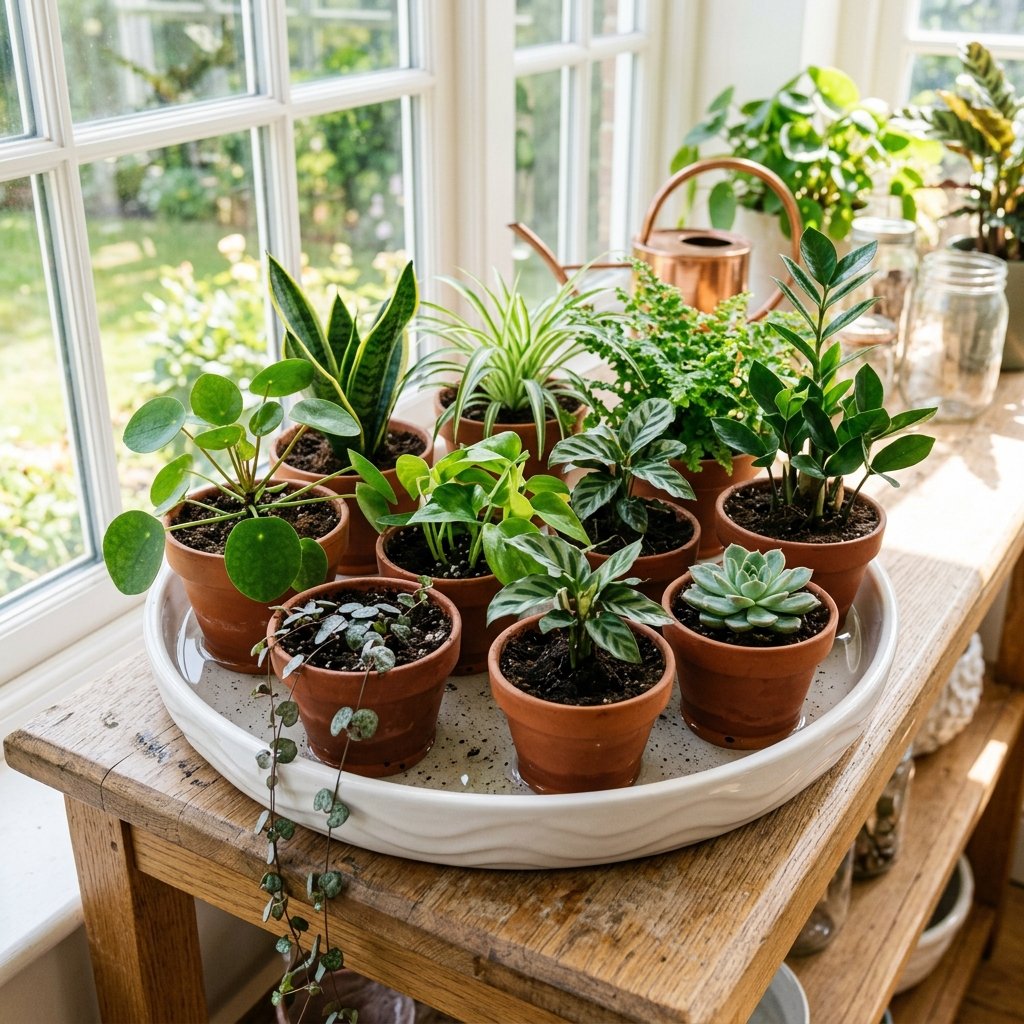

Open any plant forum and you will see two factions battling endlessly. One side swears that bottom watering is the only way to prevent fungus gnats, while the other side claims it leads to toxic salt buildup. So, who is right? The truth is, both methods are mandatory if you want a thriving indoor jungle.
The Magic of Bottom Watering
Bottom watering (or sub-irrigation) involves placing your nursery pot in a tray of water and letting capillary action pull the moisture UP into the soil like a sponge.
The Pros of Bottom Watering
- No Soil Compaction: Pouring water from the top flattens the soil and destroys air pockets over time. Bottom watering preserves the macro-structure of the soil.
- Hydrophobic Soil Fix: If you use peat moss and let it dry out completely, it repels water from the top. Bottom watering forces the peat to rehydrate perfectly.
- Gnat Prevention: By only pulling up enough water to moisten the root zone, the very top layer of soil stays bone dry—starving fungus gnats of their breeding ground.
The Dark Side of Bottom Watering
While bottom watering sounds perfect, doing it exclusively will eventually kill your plant due to Nutrient Salt Toxicity.
When you top-water, the water physically flushes unused fertilizer salts and municipal water chemicals out the drainage holes. When you exclusively bottom-water, the water evaporates from the top of the pot, leaving all those salts behind. Over 6 months, these salts crystallize into a toxic white crust that chemically burns the stems and roots of your plants.
The Ultimate Hybrid Strategy
The most advanced growers use a hybrid approach to maximize the benefits and eliminate the risks.
- Weeks 1 to 3 (Bottom Water): For three consecutive waterings, submerge the bottom quarter of your pots in water. Let them drink for 30 minutes, then drain.
- Week 4 (The Flush): For the fourth watering, take the plant to the sink. Top-water it aggressively. Pour pure distilled or RO water through the top of the soil until streams pour out the bottom for at least 30 seconds. This flushes all accumulated salts, resetting the soil chemistry to zero.
This hybrid technique guarantees perfect hydration while maintaining pristine soil chemistry indefinitely.
What’s Your Next Step?
Your watering protocol is now optimized. However, water is only one variable in a complex system. The following parameters are critical for asset protection and ecosystem integrity.
- Now that your watering
Frequently Asked Questions
What are the best conditions for this plant?
Most houseplants thrive in bright, indirect light with temperatures between 65-80F (18-27C). Ensure good drainage and water when the top inch of soil feels dry.
How often should I water?
Watering frequency depends on the plant species, pot size, and environment. A general rule is to check the soil moisture before watering. Overwatering is the most common cause of houseplant death.
What soil mix works best?
A well-draining mix of peat moss, perlite, and orchid bark works well for most tropical houseplants. Succulents prefer a grittier mix with more sand and perlite.
Quick Care Reference
Factor Requirement Notes Light Bright indirect Avoid direct afternoon sun Water When top inch dry Reduce in winter Humidity 50-70% Mist or use pebble tray Temperature 65-80F (18-27C) Avoid cold drafts Soil Well-draining mix Peat, perlite, bark Fertilizer Monthly (spring-summer) Half-strength balanced