
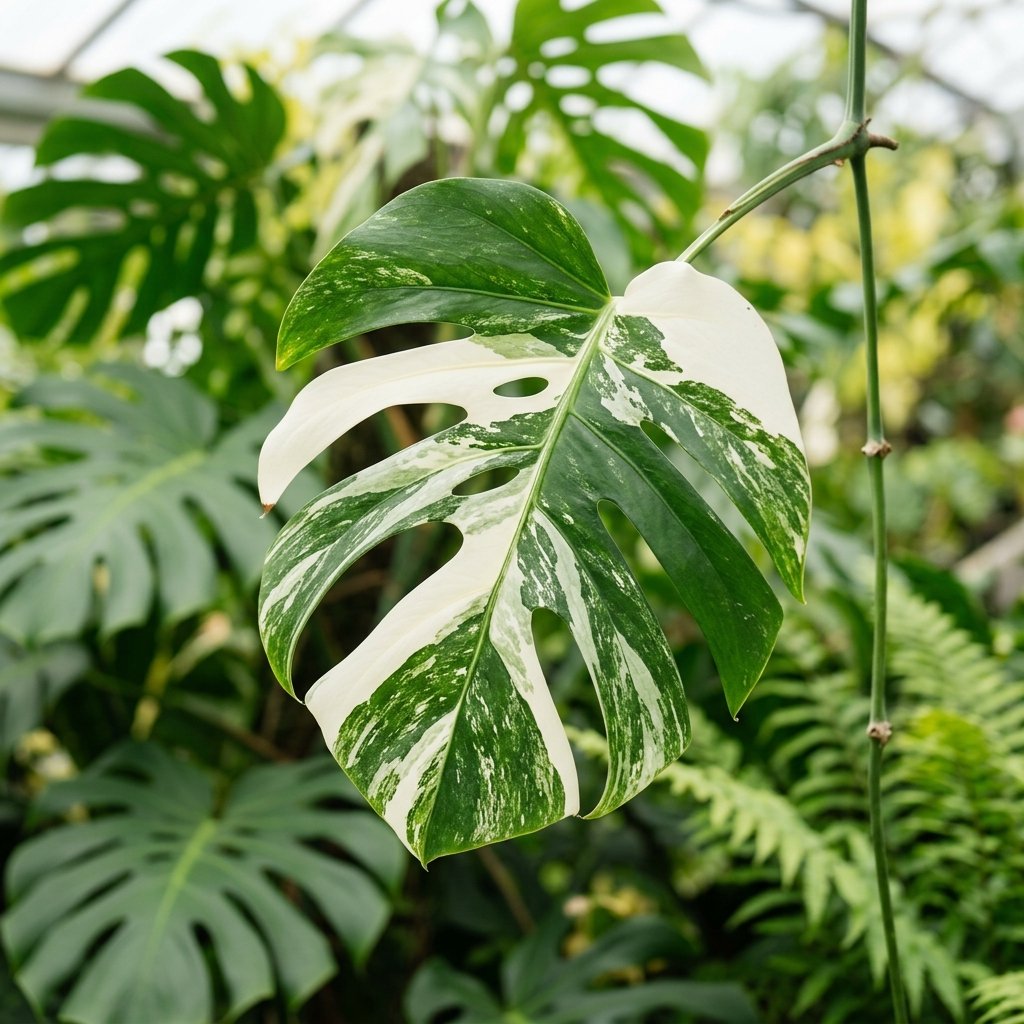

It’s a heart-sinking moment every rare plant collector dreads. You gaze upon your prized Monstera deliciosa ‘Albo Variegata’, a living work of art, only to spot it: a dry, brown, creeping edge on one of its magnificent white patches. That pristine white, once the pinnacle of plant perfection, is now marred by a crispy, dead margin. You’re not alone. This issue is one of the most common and frustrating challenges facing owners of this botanical superstar, and questions about it are flooding plant forums and social media feeds.
The Monstera Albo, with its dramatic splashes of pure white against deep green, is the undisputed queen of the houseplant world. But its ethereal beauty comes with a price—a delicate constitution that makes it far more sensitive than its all-green relatives. Those stunning white sections are its Achilles’ heel, the first to signal that something in its environment is amiss.
But don’t despair. That browning isn’t a death sentence. It’s a distress signal, a cry for help from your plant. And with the right knowledge, you can learn to interpret its signals and restore it to health. In this comprehensive guide, we’ll delve deep into the science behind your Albo’s sensitivity, diagnose the root causes of those browning margins, and provide a clear, actionable plan to stop the crisping in its tracks. Get ready to transform from a worried plant parent into a confident Monstera Albo whisperer.
The Science of Splendor: Understanding Monstera Albo Variegation
To solve the problem of browning margins, we first need to understand why they happen. The answer lies in the very nature of the Monstera Albo’s stunning variegation. It’s not just a pretty pattern; it’s a biological quirk with profound implications for the plant’s health and stability.
What is Variegation, Exactly?
The variegation in a Monstera Albo is known as chimeral variegation. A chimera is a single organism composed of cells with more than one distinct genotype. In simpler terms, your Monstera Albo is a single plant that contains two different sets of DNA—one that can produce chlorophyll (the green parts) and one that cannot (the white parts). This genetic mutation occurs randomly, which is why every leaf is unique and why propagating a highly variegated specimen is so challenging. The green and white cells grow alongside each other, creating those beautiful, unpredictable patterns of sectoral, marbled, or splashed variegation.
The Role of Chlorophyll (or Lack Thereof)
Chlorophyll is the green pigment found in plant cells. But it’s much more than just a color. Chlorophyll is the engine of a plant’s life, responsible for the process of photosynthesis. During photosynthesis, the plant uses sunlight, water, and carbon dioxide to create glucose—its food and energy. The green sections of your Monstera Albo are packed with chlorophyll and are hard at work, creating energy for the entire plant.
The white sections, however, are completely devoid of chlorophyll. They contain no pigment and cannot perform photosynthesis. From a purely biological standpoint, these white cells are freeloaders. They are beautiful, but they contribute nothing to the plant’s energy production. They are entirely dependent on the green parts of the plant to create and transport enough energy to keep them alive.
Why the White Sections Are So Vulnerable
This dependency is the core reason why your Monstera Albo’s browning margins are almost always concentrated on the white patches. Think of the green parts as the power stations and the white parts as remote outposts at the very end of the power line. Any disruption in the supply chain will cause a blackout at the outposts first.
- No Energy Production: Since they can’t create their own food, the white cells are weaker and less resilient to stress.
- Higher Transpiration Rate: The cells in the white sections are often thinner and more delicate. They lose water to the atmosphere through transpiration much faster than the sturdier green cells.
- Last in Line for Resources: When the plant is under stress—whether from underwatering, low humidity, or root issues—it will prioritize sending water and nutrients to its energy-producing green cells to ensure its survival. The non-productive white cells are the first to be sacrificed.
So, when you see a browning margin on a white leaf section, view it as an early warning system. The plant is telling you that its resource supply chain is compromised and it can no longer support its most delicate, high-maintenance tissues.
Diagnosing the Brown: The Great Debate – Humidity vs. Watering
When crisping occurs, the plant community’s debate immediately turns to two primary suspects: low humidity and improper watering. They are, by far, the most common culprits. The symptoms can look deceptively similar, but with careful observation, you can learn to distinguish between them and identify the true cause.
Symptom Analysis: Reading the Leaves
Your plant’s leaves are a storyboard, telling you exactly what’s wrong. Here’s how to read them:
- Crispy, Dry, Brown Edges: If the browning starts at the very tip or edge of a leaf (especially a white part), is dry and brittle to the touch, and has no associated yellowing on the green parts of the leaf, the primary suspect is low humidity. The air is literally sucking the moisture out of the leaf faster than the plant can replace it.
- Brown Spots with a Yellow Halo: If you see brown spots that are surrounded by a yellowish ring, and the leaf feels soft or limp rather than crispy, you are likely looking at an overwatering issue. The yellow halo is a classic sign of cellular decay caused by waterlogged roots.
- Browning Spreading from the Petiole (Leaf Stem): If the browning or blackening starts where the leaf connects to the stem and moves outwards, and the stem itself feels mushy, this is a severe sign of root rot, caused by chronic overwatering.
The Humidity Hypothesis: Is Your Air a Desert?
Monstera are native to the tropical rainforests of Central and South America, where humidity levels are consistently between 70% and 90%. In contrast, the average home, especially with central heating or air conditioning running, can have humidity levels as low as 20-40%. For a sensitive plant like a Monstera Albo, this is like trying to live in a desert.
As discussed, the delicate white tissues lose moisture rapidly. In a low-humidity environment, this process accelerates dramatically. The roots simply cannot pump water up to the leaves fast enough to compensate for the moisture being wicked away by the dry air. The cells at the furthest edges of the leaf are the first to dehydrate, die, and turn into those dreaded crispy brown margins.
Solutions for Low Humidity:
- Invest in a Humidifier: This is the single most effective solution. Place a humidifier near your Monstera Albo and aim for a consistent humidity level of 60-70%. A small digital hygrometer is an inexpensive tool to monitor the levels accurately.
- Group Your Plants: Plants naturally release moisture through transpiration. Grouping them together creates a small microclimate with higher ambient humidity.
- Use a Pebble Tray: Place a deep saucer or tray filled with pebbles and water underneath the plant’s pot. Make sure the bottom of the pot is sitting on the pebbles, not in the water. As the water evaporates, it will increase the humidity directly around the plant.
- Avoid Drafts: Keep your Albo away from heating/AC vents, drafty windows, and doors, as moving air rapidly decreases humidity.
The Watering Culprit: The Root of the Problem
While humidity affects the leaves directly, watering issues affect the entire system, starting with the roots. Both overwatering and underwatering can lead to browning leaves, but for very different reasons.
Overwatering and the Specter of Root Rot
This is the number one killer of houseplants, and variegated plants are particularly susceptible. When you water too frequently or your soil mix doesn’t drain well, the soil becomes saturated. This waterlogging pushes out all the air pockets, suffocating the roots. Without oxygen, the roots can no longer function. They stop absorbing water and nutrients and begin to die and decay—a condition known as root rot.
The tragic irony is that a plant with root rot will exhibit symptoms very similar to an underwatered plant. Its leaves will wilt, yellow, and brown at the edges because the damaged root system can no longer deliver water to them. Your instinct might be to water it more, which only accelerates the decay. If you suspect overwatering, you must act fast. Check the roots; they should be firm and white or light tan. If they are brown, black, and mushy, root rot has set in.
Underwatering
While less common, chronic underwatering can also cause browning. If you allow the soil to go bone-dry for extended periods, the plant simply won’t have enough water in its system to keep the delicate white leaf tissues hydrated. The result is desiccation and crisping, very similar in appearance to low humidity damage.
The Perfect Watering Technique
Mastering your watering routine is crucial. Ditch the rigid schedule (“I water every Saturday”) and learn to listen to your plant. For a comprehensive guide, check out our articles on proper watering techniques. The best method for a Monstera Albo is the “soak and dry” approach:
- Check the Soil: Insert your finger or a wooden chopstick 2-3 inches into the soil. If it comes out dry with little to no soil clinging to it, it’s time to water. If it’s still damp, wait.
- Water Thoroughly: When it’s time, water the plant slowly and evenly until water flows freely from the drainage holes. This ensures the entire root ball is saturated.
- Drain Completely: Allow the pot to drain completely for 15-20 minutes. Never let your Monstera sit in a saucer full of water.
- Use the Right Mix: Your Albo needs a very chunky, airy, well-draining potting mix. A standard potting soil will hold too much water. Amend it heavily with orchid bark, perlite, and coco coir to promote aeration.
The Light Equation: Fueling the Green, Protecting the White
Light is the fuel for your plant’s engine. For a variegated plant, getting the light right is a delicate balancing act. It’s a true Catch-22 that can easily lead to browning if not managed correctly.
The Dilemma of Lighting a Monstera Albo
On one hand, the green parts of the leaves need ample bright, indirect light to photosynthesize effectively. They have to produce enough energy to not only sustain themselves but also to support all the non-productive white tissue. In insufficient light, the green parts will struggle, the plant’s overall growth will slow, and it may even begin to revert (produce all-green leaves) in an attempt to survive. The plant won’t have the excess energy required to keep the delicate white parts healthy, leading to their gradual decline and browning.
On the other hand, the white sections have zero pigment to protect them from the sun’s harsh rays. Direct sunlight will scorch these defenseless tissues in a matter of hours, leaving behind large, papery, brown patches that will never recover. They get sunburned, just like human skin, but much faster.
Finding the Sweet Spot
Your goal is to provide the brightest possible light without any direct sunbeams touching the leaves. Ideal locations include:
- A few feet away from a south- or west-facing window, just out of the path of direct sun.
- Directly in an east-facing window, which receives gentle morning sun.
- Behind a sheer curtain, which diffuses the harsh rays of a stronger window.
Observe the light in your space throughout the day to find the perfect spot. Remember to rotate your plant every week or so to ensure all sides get even light exposure.
The Power of Supplemental Lighting
For many plant parents, especially those in homes with limited natural light or during the dark winter months, achieving this balance is nearly impossible. This is where supplemental lighting becomes a game-changer. High-quality, full-spectrum LED grow lights provide consistent, powerful, and cool illumination without the risk of sunburn. They allow you to place your Monstera Albo anywhere in your home and give it the perfect amount of “food” for 12-14 hours a day, dramatically improving its health and reducing stress-related browning.
Feeding Your Unicorn: Safe Fertilizer Practices for Sensitive Plants
Fertilizer is plant food, but for a sensitive Monstera Albo, it’s easy to overdo it. The same white tissues that are susceptible to sunburn and dehydration are also extremely prone to chemical burn from excess fertilizer salts, which is yet another cause of browning margins.
Why Fertilizing is Tricky with Albos
When you fertilize, you are adding mineral salts to the soil, which the roots absorb. If the concentration of these salts becomes too high, it can have a “reverse osmosis” effect, pulling moisture *out* of the roots and burning them. This damage prevents the roots from absorbing water, leading to dehydration symptoms in the leaves—especially the sensitive white tips. The excess salts can also be transported up to the leaves, where they accumulate in the tips and edges (the endpoints of the plant’s vascular system), causing direct chemical burn on the leaf tissue.
The “Weakly, Weekly” Method
The golden rule for fertilizing a Monstera Albo is: less is more. Never use a full-strength fertilizer. The best approach is to use a balanced liquid fertilizer (e.g., with a 20-20-20 or 10-10-10 NPK ratio) diluted to 1/4 or 1/2 of the recommended strength. Apply this diluted solution every other watering or “weakly, weekly” during the active growing season (spring and summer).
What to Look For and When to Stop
Choose a high-quality fertilizer that also contains micronutrients like calcium and magnesium, which are important for strong cell wall development. Periodically, you should flush the soil to prevent salt buildup. Do this every few months by watering the plant thoroughly with plain, unfertilized water, letting it drain completely, and then repeating the process 15 minutes later.
Crucially, you should never fertilize when the plant is dormant in the fall and winter, when it is stressed (e.g., showing signs of browning or pest damage), or for at least a month after repotting, as its roots are recovering.
Beyond the Basics: Other Potential Culprits for Browning Margins
If you’ve dialed in your humidity, watering, light, and fertilizer and are still seeing issues, it’s time to look at a few other potential stressors.
Pest Pressure
Sucking pests are the bane of a Monstera Albo owner’s existence. Tiny insects like spider mites, thrips, and mealybugs love to feast on the tender, succulent tissues of the plant, and they often show a preference for the more delicate white sections. Their feeding involves piercing the plant cells and sucking out the sap. This physical damage creates tiny dead spots, which can appear as stippling, discoloration, or silvery patches. Over time, a heavy infestation will cause entire leaf sections to decline, turn yellow or brown, and become crispy.
Inspect your plant regularly, especially the undersides of leaves and the crevices where leaves meet stems. If you see signs of pests, act immediately to prevent the population from exploding.
Our Recommended Pest Control Arsenal
For sensitive plants like the Monstera Albo, we recommend starting with the gentlest effective treatments. Always test any spray on a small part of a leaf first.
- Insecticidal Soap: An excellent first line of defense against soft-bodied insects like spider mites and aphids. We recommend Captain Jack’s Insecticidal Super Soap. It’s gentle and effective.
- Systemic Granules: For persistent pests like thrips or mealybugs, a systemic insecticide can be a lifesaver. Bonide Systemic Houseplant Insect Control granules are added to the soil and absorbed by the plant, protecting it from the inside out for up to 8 weeks. Use with caution and follow all label directions.
- Neem Oil: A good preventative measure and treatment for light infestations. A diluted neem oil solution can be sprayed on the leaves to deter pests.
Water Quality Concerns
The water you use can also have an impact. Tap water in many municipalities is treated with chlorine and fluoride and can be high in dissolved minerals (hard water). Over time, these chemicals and minerals can accumulate in the soil and build up to toxic levels for a sensitive plant, causing chemical burn on the roots and leaves that manifests as—you guessed it—brown, crispy tips. If you have very hard water or live in an area with heavily treated water, consider switching to filtered, distilled, or rainwater for your prized Albo.
Your Action Plan: A Step-by-Step Troubleshooting Guide
Feeling overwhelmed? Let’s simplify it. Here is a clear, step-by-step checklist to diagnose and fix your Monstera Albo’s browning margins.
- Step 1: Isolate and Inspect. The first step is always a thorough pest inspection. Use a magnifying glass if you have one. Look under every leaf and in every nook and cranny. If you find pests, treat them immediately before proceeding.
- Step 2: Assess Your Environment. Get a digital hygrometer. What is the humidity level right next to your plant? If it’s below 55%, take immediate steps to increase it using a humidifier or pebble tray. Next, evaluate the light. Is it getting any direct sun? Is it too far from a window? Adjust its position or add a grow light.
- Step 3: Check the Roots. If you suspect overwatering, don’t be afraid to gently slide the plant out of its pot and examine the roots. Are they healthy and white, or dark and mushy? If you find rot, you’ll need to trim away all the dead parts with sterile scissors and repot into fresh, chunky soil. If you’re unsure what you’re seeing, our AI Disease Finder tool can help you diagnose the issue from a photo.
- Step 4: Review Your Routine. Be honest with yourself. How are you deciding when to water? Are you checking the soil first? When did you last fertilize, and at what strength? Your routine is the foundation of your plant’s health.
- Step 5: Make One Change at a Time. Don’t repot, move, fertilize, and start spraying for pests all in the same day. You will shock the plant. Start with the most likely culprit (usually humidity or watering). Make one adjustment, and then wait for a week or two. Observe the plant and see if the browning has stopped spreading on new growth. Patience is key.
To Trim or Not to Trim?
What about the existing brown edges? Should you cut them off? This is purely an aesthetic choice; it will not harm or help the plant’s overall health. The brown parts are dead tissue and will not turn green again. If you choose to trim, follow these tips: Use a pair of sharp, sterile scissors or shears. To avoid creating a new wound on healthy tissue, leave a very thin sliver of the brown edge behind. This creates a buffer and prevents the fresh cut from immediately browning again.
Conclusion: Embracing the Imperfect Beauty of the Monstera Albo
Caring for a Monstera Albo is a journey. It teaches us to be more observant, more patient, and more in tune with the subtle needs of the living things in our care. While the information in this guide will empower you to drastically reduce and prevent browning margins, it’s also important to manage expectations. A small amount of crisping on the most delicate white sections, especially on older leaves, is almost inevitable. These plants are beautiful but imperfect genetic anomalies.
Don’t let a tiny brown edge ruin your enjoyment of this magnificent plant. The goal is not pristine, photoshopped perfection, but a thriving, healthy plant that continues to push out stunning new growth. By understanding the unique biology of its variegation and diligently providing for its needs—high humidity, proper watering, appropriate light, and gentle feeding—you can stop widespread browning and ensure your Monstera Albo remains a breathtaking centerpiece in your home for years to come.
The 2026 Comprehensive Masterclass: Botanical Deep Dive
To truly understand the nuances of the concepts discussed above, we must transition from basic houseplant care to advanced botanical mechanics. Elite plant collectors do not rely on guesswork; they rely on environmental control, photobiology, and soil chemistry. In this masterclass section, we will systematically unpack the advanced science necessary to maintain a hyper-optimized indoor jungle.
Part 1: The Physics of Lighting and Photobiology
Lighting is the fundamental engine of biological growth. Without adequate Daily Light Integral (DLI) and Photosynthetic Photon Flux Density (PPFD), any adjustments made to watering or fertilizing are entirely useless. When you place a plant in a corner, you are not just dimming its environment; you are actively starving it.
Understanding PAR and PPFD
Photosynthetically Active Radiation (PAR) designates the spectral range (wave band) of solar radiation from 400 to 700 nanometers that photosynthetic organisms are able to use in the process of photosynthesis. PPFD measures the amount of PAR that actually arrives at the plant. It is measured in micromoles per square meter per second (μmol/m²/s).
- Low-Light Plants (e.g., Snake Plants, ZZ Plants): Require a PPFD of 20 to 50 μmol/m²/s. While they survive here, they will rarely trigger massive new growth.
- Medium-Light Plants (e.g., Calatheas, Philodendrons): Require a PPFD of 50 to 150 μmol/m²/s. At this range, they begin to express deeper variegation colors and stronger petiole rigidity.
- High-Light Plants (e.g., Monsteras, Ficus, Cacti): Require a baseline of 200 to 400+ μmol/m²/s to exhibit maximum fenestration (leaf holes) and secondary branching.
Part 2: Soil Chemistry, CEC, and Hydrophobicity
Your potting mix is not just a physical anchor for your plant; it is a bio-active chemical reactor. The most critical metric in any soil mix is its Cation Exchange Capacity (CEC).
Cation Exchange Capacity Explained
CEC is the measure of a soil’s ability to hold and release various elements and compounds through electrical charges. Highly organic materials like Peat Moss and Coco Coir have a very high CEC, meaning they grab onto fertilizer molecules (like Nitrates and Phosphates) and hold them so the roots can slowly feed over time. This is why placing a plant purely in gravel (which has a CEC of nearly zero) requires constant, daily nutrient flushing (hydroponics).
The Hydrophobic Death Trap
When high-CEC soils, particularly peat moss, dry out entirely, they undergo a mechanical failure known as hydrophobicity. The organic fibers shrink and lock tightly together. When water is introduced, the surface tension is too high to penetrate the locked fibers. The water channels directly down the sides of the pot. To break the hydrophobic barrier, you must use a surfactant (like a mild dish soap solution) or submerge the pot entirely for 45 minutes to force capillary hydration upward against gravity.
Part 3: Advanced Hydration Dynamics (Capillary Action)
Water does not simply flow downward. In the micro-environment of a plant pot, capillary action often overcomes gravity.
The Perched Water Table (PWT): No matter how much drainage you place at the bottom of a container, the lowest contiguous section of soil will always remain identically saturated. This is physics. If you put 3 inches of rocks at the bottom of a pot, you do not improve drainage; you merely push the soggy PWT three inches higher into the root mass, radically increasing the risk of Pythium (root rot). This is why nursery pots with numerous drainage holes placed directly on a porous surface are the only empirically sound container choice.
Part 4: The Pathogen War (Fungal vs Bacterial)
When a plant fails, the visual symptom (yellowing, dropping leaves) is merely the final stage of a prolonged microscopic war.
Anaerobic Pathogens
When a soil is over-hydrated, oxygen molecules are physically displaced by water molecules. Roots require oxygen to respire. As roots suffocate, the cells burst and die. This dead tissue becomes an immediate food source for anaerobic bacteria—bacteria that thrive strictly in zero-oxygen environments. The bacteria consume the dead roots, creating a sulfurous, rotting odor. To combat this, elite growers use Hydrogen Peroxide (H2O2) drenches. The extra, highly unstable oxygen atom in H2O2 detonates on contact, forcefully oxidating the anaerobic bacteria and re-oxygenating the root zone.
Part 5: Comprehensive Houseplant Glossary of Terms
To ensure absolute clarity for our readers, we have compiled an exhaustive glossary of the terms heavily utilized within the professional botanical sphere:
- Aroid: A common name for plants in the Araceae family, characterized by a spathe and spadix inflorescence (e.g., Philodendrons, Monsteras).
- Chlorosis: The yellowing of leaf tissue due to a lack of chlorophyll, often caused by nutrient deficiencies or root suffocation.
- Etiolation: The stretching and weakening of stems as a plant aggressively reaches toward a distant light source.
- Fenestration: The natural occurrence of holes or deep splits in the leaves of mature plants, designed to allow wind and light to pass through to the lower canopy.
- Node: The vital junction on a stem where leaves, aerial roots, and new growth points (eyes) emerge. A cutting without a node will never grow a new plant.
- Variegation: A genetic (chimeric) or viral mutation resulting in distinct zones of differently colored tissue (typically white or yellow) due to an absence of chlorophyll in those areas.
- Transpiration: The biological process by which a plant absorbs water through its roots and subsequently releases it as vapor through micro-pores (stomata) on its leaves.
Conclusion: The 2026 Shift in Plant Ownership
The era of buying a plant and hoping for the best is over. Modern houseplant ownership requires a foundational understanding of physics, chemistry, and biology. By tracking your PPFD, balancing your soil’s CEC, and actively managing the Perched Water Table, you ensure your indoor jungle moves from simple survival to massive, aggressive growth.
What’s Your Next Step?
You have now analyzed the primary causes of browning margins on your Monstera Albo. However, preventing future damage requires optimizing your entire care system. Your next decision point is critical.
- Could the #1 “hands-off” watering tool you trust actually be creating the inconsistent moisture that is destroying your Albo’s white sections? We analyzed the data.
- Is your potting mix built on an outdated ingredient that top growers have abandoned? The global
Frequently Asked Questions
What are the best conditions for this plant?
Most houseplants thrive in bright, indirect light with temperatures between 65-80F (18-27C). Ensure good drainage and water when the top inch of soil feels dry.
How often should I water?
Watering frequency depends on the plant species, pot size, and environment. A general rule is to check the soil moisture before watering. Overwatering is the most common cause of houseplant death.
What soil mix works best?
A well-draining mix of peat moss, perlite, and orchid bark works well for most tropical houseplants. Succulents prefer a grittier mix with more sand and perlite.
Quick Care Reference
Factor Requirement Notes Light Bright indirect Avoid direct afternoon sun Water When top inch dry Reduce in winter Humidity 50-70% Mist or use pebble tray Temperature 65-80F (18-27C) Avoid cold drafts Soil Well-draining mix Peat, perlite, bark Fertilizer Monthly (spring-summer) Half-strength balanced