
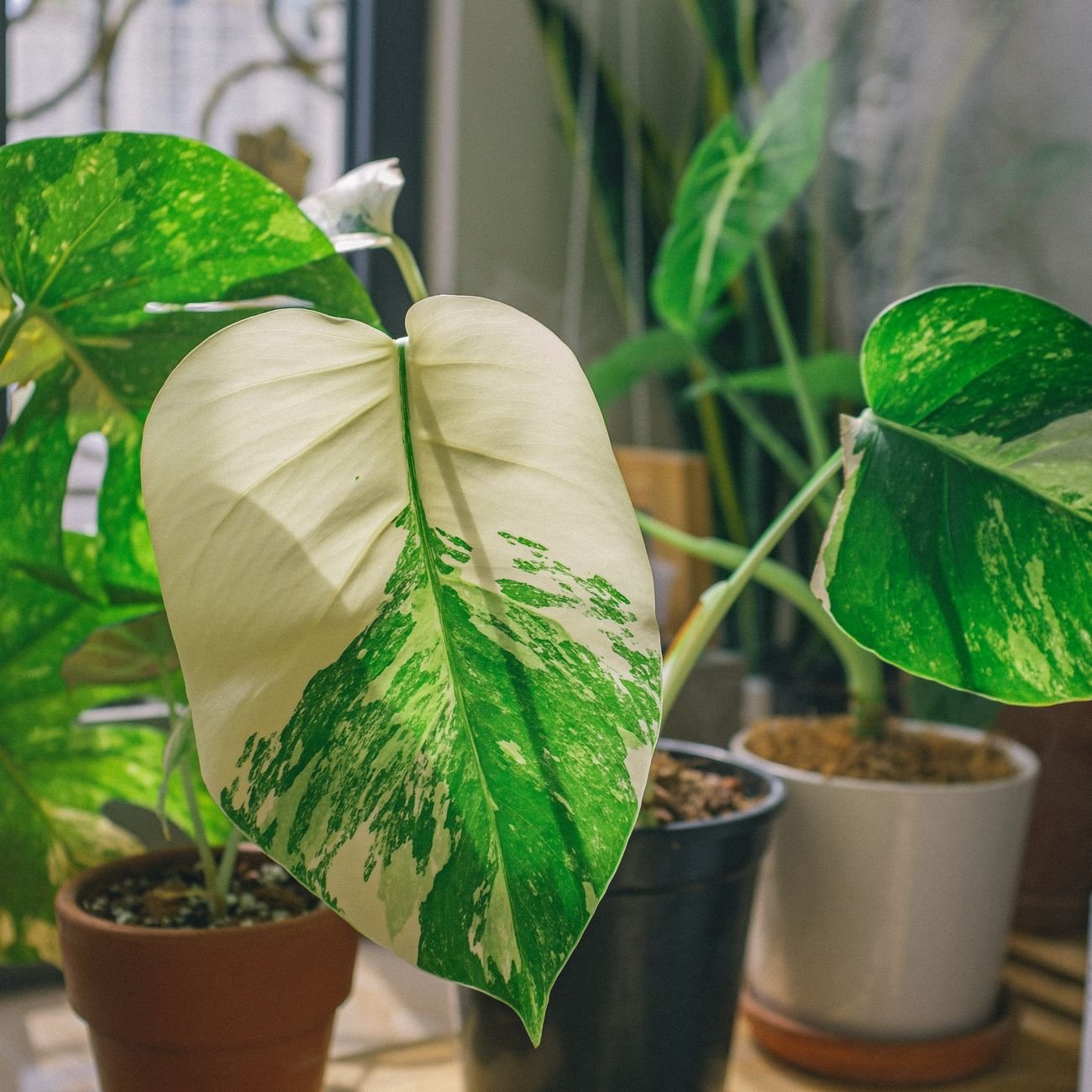

The allure of rare Monstera varieties is undeniable. For serious plant collectors, these botanical gems represent more than just houseplants; they are living works of art, investments, and a testament to horticultural passion. Two of the most sought-after varieties are the Monstera deliciosa ‘Thai Constellation’ and the Monstera deliciosa ‘Albo Variegata’. This comprehensive guide provides an in-depth look at these stunning plants, offering expert advice on identification, care, propagation, and the crucial question: which one is the better investment?
Understanding the Appeal: Why Rare Monsteras Command High Prices
The exorbitant prices of rare Monstera varieties are driven by several factors:
- Rarity: Naturally occurring variegation is a mutation, making variegated plants less common than their all-green counterparts.
- Demand: The popularity of Monsteras, coupled with the limited supply of variegated forms, creates a high-demand market.
- Propagation Challenges: Variegation can make propagation more difficult, further limiting the availability of new plants.
- Aesthetics: The unique and striking patterns of variegation are highly prized by collectors.
- Investment Potential: Rare plants can appreciate in value over time, making them attractive to investors.
Monstera Deliciosa ‘Thai Constellation’: The Stellar Performer
The ‘Thai Constellation’ is a stable variegated cultivar developed in Thailand. It features creamy, speckled variegation that resembles a starry night sky. Unlike the Albo, the variegation in Thai Constellation is genetically stable, meaning it will consistently produce the same pattern in new growth. This stability is a major selling point for collectors.
Key Characteristics of Thai Constellation:
- Variegation Pattern: Small, evenly distributed creamy-yellow speckles and sectoral variegation across the leaves.
- Stability: Genetically stable variegation that doesn’t revert to all-green.
- Growth Rate: Relatively fast growth rate compared to Albo.
- Leaf Texture: Typically thicker and more robust than Albo.
- Price Point: Generally lower than Albo, making it a more accessible entry point for rare Monstera collectors.
Caring for Your Thai Constellation: A Step-by-Step Guide
- Light: Provide bright, indirect light. Avoid direct sunlight, which can scorch the leaves. Aim for 10,000-20,000 lux. Consider investing in a professional grow light system like the SANlight EVO 4-80 or the Gavita Pro 1700e LED. These systems, priced between $300-$600, offer optimal light spectrum and intensity for healthy growth and variegation.
- Watering: Water thoroughly when the top inch or two of soil is dry. Allow excess water to drain away. Overwatering can lead to root rot.
- Humidity: Maintain a humidity level of 60-80%. Use a humidifier, especially during dry winter months. Consider a Levoit Classic 300S Smart Humidifier (approx. $80).
- Soil: Use a well-draining aroid mix. A premium blend like Repotme Aroid Mix (approx. $30 per bag) is highly recommended. This mix typically contains ingredients like coco coir, perlite, orchid bark, and horticultural charcoal to provide excellent drainage and aeration.
- Fertilizing: Feed regularly during the growing season (spring and summer) with a balanced liquid fertilizer diluted to half strength. Dyna-Gro Foliage Pro is a popular choice among collectors.
- Support: Provide a moss pole or trellis for support as the plant grows. This encourages larger leaf size and fenestrations.
Monstera Deliciosa ‘Albo Variegata’: The High-Contrast Beauty
The ‘Albo Variegata’ is a naturally occurring variegated form of Monstera deliciosa. It is characterized by striking white or cream-colored sectors and splashes on its leaves. Unlike the Thai Constellation, the variegation in Albo is unstable, meaning it can revert to all-green or produce entirely white leaves. This unpredictability adds to its allure but also presents challenges for growers.
Key Characteristics of Albo Variegata:
- Variegation Pattern: Large, irregular sectors of white or cream-colored variegation.
- Stability: Unstable variegation that can revert to all-green or produce entirely white leaves.
- Growth Rate: Typically slower growth rate compared to Thai Constellation.
- Leaf Texture: Can be more delicate than Thai Constellation, especially in areas with high variegation.
- Price Point: Generally higher than Thai Constellation, reflecting its rarity and desirability.
Caring for Your Albo Variegata: A Demanding Companion
- Light: Provide bright, indirect light. Albo requires more light than Thai Constellation to maintain its variegation. Aim for 20,000-30,000 lux. A professional grow light is almost essential for optimal growth, especially in areas with limited natural light. Consider the Spider Farmer SF-2000 (approx. $250) for a more budget-friendly option.
- Watering: Water carefully, allowing the soil to dry out slightly between waterings. Overwatering is a major concern, especially for plants with high variegation.
- Humidity: Maintain a high humidity level (70-85%). Consistent humidity is crucial for preventing brown tips and promoting healthy growth. Consider a humidity monitoring system like the Govee Smart Hygrometer (approx. $20) to ensure optimal conditions.
- Soil: Use a well-draining aroid mix amended with extra perlite. The increased perlite will improve drainage and aeration, reducing the risk of root rot.
- Fertilizing: Fertilize sparingly with a balanced liquid fertilizer. Avoid over-fertilizing, which can lead to leaf burn.
- Monitoring Variegation: Regularly monitor the plant for reversion (loss of variegation) or entirely white leaves. Prune back any all-green growth to encourage variegation. Entirely white leaves lack chlorophyll and cannot photosynthesize, so they will eventually die off.
Thai Constellation vs. Albo: A Head-to-Head Comparison
Choosing between a Thai Constellation and an Albo depends on your experience level, budget, and desired aesthetic.
| Feature | Thai Constellation | Albo Variegata |
|---|---|---|
| Variegation Pattern | Speckled and sectoral | Large sectors and splashes |
| Variegation Stability | Stable | Unstable |
| Growth Rate | Faster | Slower |
| Care Difficulty | Easier | More Difficult |
| Price Point (Small Plant) | $50 – $150 | $200 – $500+ |
Propagation: Multiplying Your Investment
Both Thai Constellation and Albo can be propagated through stem cuttings. However, the success rate can vary depending on the variegation and the grower’s experience.
Propagation Steps (Stem Cutting Method):
- Select a Healthy Stem: Choose a stem with at least one node (the point where a leaf emerges) and some aerial roots.
- Make the Cut: Using a sterile knife or pruning shears, cut the stem just below the node.
- Rooting Medium: You can root the cutting in water, sphagnum moss, or perlite. Water propagation is generally the easiest method for beginners.
- Rooting Hormone: Applying rooting hormone to the cut end can help stimulate root growth.
- Provide Warmth and Humidity: Place the cutting in a warm, humid environment. A propagation box or humidity dome can be helpful.
- Patience is Key: Rooting can take several weeks or even months, depending on the conditions.
- Potting Up: Once the roots are well-developed (at least 2-3 inches long), pot the cutting in a well-draining aroid mix.
Important Note for Albo Propagation: When propagating Albo, ensure that the cutting has some green on it. An entirely white stem will not be able to photosynthesize and will likely fail to root.
Investment Potential and ROI
The investment potential of rare Monsteras is significant, but it’s important to approach it with realistic expectations. Plant prices can fluctuate based on trends and availability. However, well-cared-for, healthy plants with desirable variegation patterns tend to hold their value or even appreciate over time.
Example ROI Calculation:
Let’s say you purchase a small Albo cutting for $300. After a year of careful cultivation, the plant has grown significantly and developed beautiful variegation. Similar-sized plants with comparable variegation are now selling for $800. You have effectively increased the value of your investment by $500 (before considering the cost of supplies and care).
However, it’s crucial to factor in the costs associated with plant care. A high-quality grow light ($250), premium soil mix ($50), and humidifier ($80) represent a significant upfront investment. Ongoing costs include fertilizer, pest control, and other supplies.
Cost-Benefit Analysis:
- Benefits: Appreciation in plant value, enjoyment of owning a rare and beautiful plant, potential for propagation and sale of cuttings.
- Costs: Initial plant purchase price, equipment costs (grow lights, humidifier), ongoing supply costs (soil, fertilizer, pest control), time and effort spent on plant care.
Ultimately, the ROI on rare Monsteras depends on your ability to provide optimal care and propagate successfully. It’s also essential to stay informed about market trends and adjust your expectations accordingly.
Pest and Disease Management
Rare Monsteras are susceptible to the same pests and diseases as other houseplants. Common pests include spider mites, mealybugs, and thrips. Regular inspection and prompt treatment are essential for preventing infestations from spiraling out of control.
Recommended Pest Control Products:
- Neem Oil: A natural insecticide and fungicide that is effective against a wide range of pests.
- Insecticidal Soap: A safe and effective option for controlling soft-bodied pests like aphids and mealybugs.
- Systemic Insecticides: For severe infestations, consider using a systemic insecticide, but use with caution and follow the instructions carefully.
Root rot is a common disease that affects Monsteras, especially when overwatered. Prevention is key. Ensure that your plant is potted in a well-draining mix and avoid overwatering.
Conclusion: Which Monstera is Right for You?
Both the Thai Constellation and the Albo Variegata are stunning additions to any plant collection. The Thai Constellation offers a more accessible entry point, with its stable variegation and relatively easier care requirements. The Albo Variegata, on the other hand, presents a greater challenge but rewards the dedicated grower with its striking, high-contrast variegation. Ultimately, the choice depends on your individual preferences, experience level, and budget.
Frequently Asked Questions (FAQ)
-
What is the ideal humidity level for a Thai Constellation?
The ideal humidity level for a Thai Constellation is between 60-80%. Consistent humidity is crucial for preventing brown tips and promoting healthy growth. A humidifier is highly recommended, especially during dry winter months.
-
How often should I fertilize my Albo Variegata?
Fertilize your Albo Variegata sparingly with a balanced liquid fertilizer during the growing season (spring and summer). Dilute the fertilizer to half strength to avoid over-fertilizing, which can lead to leaf burn. Reduce or eliminate fertilizing during the dormant season (fall and winter).
-
Why is my Albo Variegata reverting to all-green?
Reversion (loss of variegation) in Albo Variegata can be caused by several factors, including insufficient light, improper fertilization, and stress. Ensure that your plant is receiving adequate bright, indirect light. Prune back any all-green growth to encourage variegation in new growth.
-
What are the signs of root rot in Monsteras?
Signs of root rot in Monsteras include yellowing leaves, wilting despite adequate watering, a foul odor coming from the soil, and mushy, brown roots. If you suspect root rot, carefully remove the plant from its pot and inspect the roots. Trim away any affected roots and repot the plant in fresh, well-draining soil.
-
Can I grow a rare Monstera outdoors?
In most US climates, rare Monsteras are best grown indoors. They are sensitive to cold temperatures and direct sunlight. However, in warmer climates (USDA zones 10-11), they can be grown outdoors in a sheltered location with bright, indirect light.