
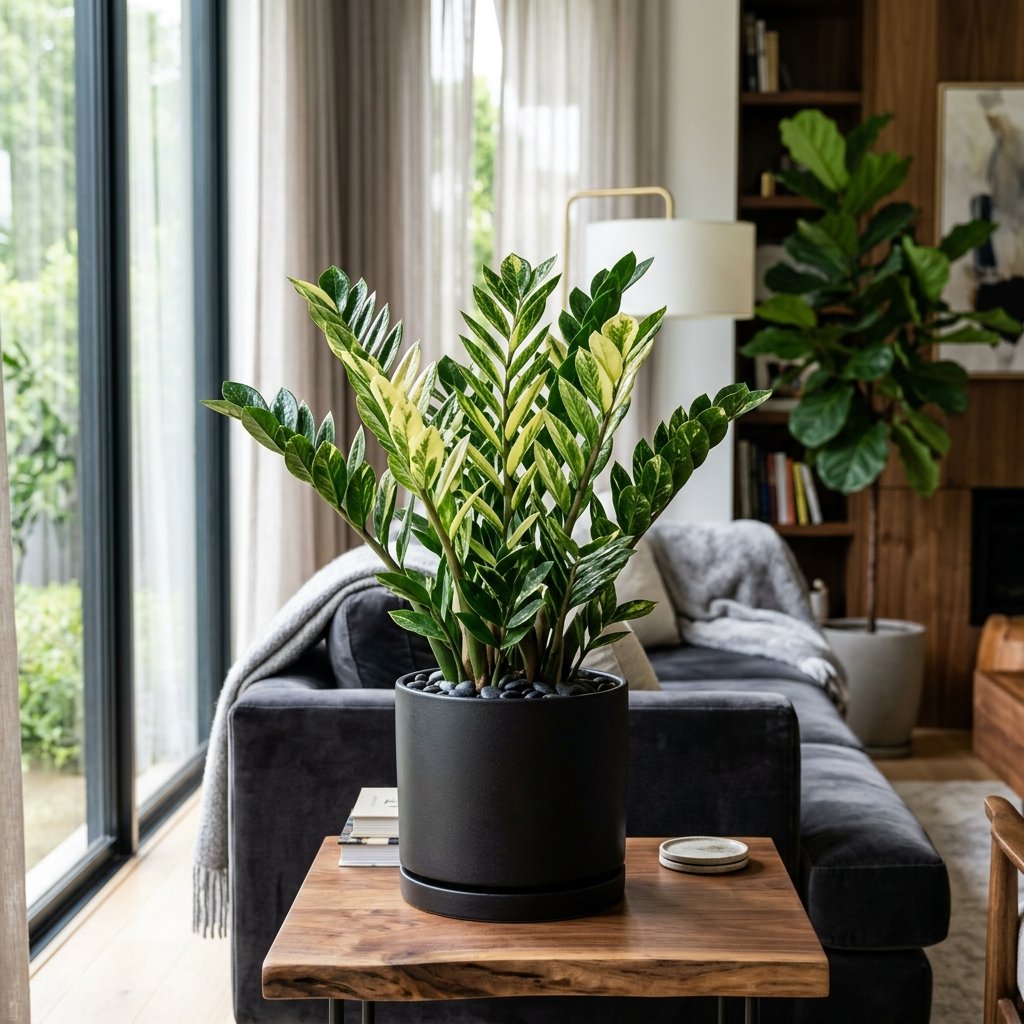

The ZZ Plant (Zamioculcas zamiifolia) has an unfair reputation as the “boring office plant.” It survives in windowless cubicles and tolerates months of neglect. But deep within the high-end collector circuits of Thailand, Japan, and Indonesia, a terrifyingly expensive obsession has emerged: the Variegated ZZ Plant.
Why is a ZZ Plant Costing $500?
Unlike Monsteras or Philodendrons which grow relatively fast, ZZ plants are notoriously slow growers. Propagating a ZZ plant from a leaf cutting or rhizome division can take over a year just to produce a single new stem. When you add a rare genetic mutation for variegation to a plant that grows at a glacial pace, supply is crushed, and demand explodes.
The Elite Variegated Cultivars
- ZZ Akebono: A breathtaking Japanese mutation where the leaves emerge bright, creamy yellow and slowly harden to gradient greens. Total instability, exceptionally rare.
- ZZ Chameleon: A more stable variation that displays splashy, mottled yellow and green variegation on completely unfurled leaves.
- White Variegated ZZ: A localized chimeric mutation featuring stark, pure white bands across the dark green leaflets. Highly susceptible to burning.
Care Differences from the Standard ZZ
The standard ZZ Raven or Green ZZ is virtually indestructible. A variegated ZZ, however, requires careful calibration.
1. The Light Requirements Paradox
A normal ZZ thrives in low light. A Variegated ZZ will quickly lose its stunning colors if shoved in a dark corner. Because the yellow/white sections lack chlorophyll, the plant requires bright, filtered light to sustain itself. However, placing it in direct sunlight will instantly toast the delicate unpigmented tissue. Finding this exact balance is the hardest part of ownership.
2. Watering Danger
Variegated ZZ plants grow even slower than their green counterparts. This means their massive underground potato-like rhizomes consume water at a drastically reduced rate. Overwatering a normal ZZ might take weeks to kill it. Overwatering a highly variegated ZZ will result in catastrophic rhizome rot in days. You must use a dangerously chunky, cactus-grade soil mix and wait until the pot is bone dry.
Is it the Next Bubble?
As tissue culture labs continue to pump out rare Philodendrons, the Variegated ZZ has remained relatively shielded from the price crashes due to how incredibly difficult it is to micropropagate in a stable way. It remains a true status symbol in the world of indoor horticulture.
What’s Your Next Step?
You have acquired the knowledge to navigate the high-end variegated ZZ market. Your next action determines the health and value of your entire collection. Consider your strategy:
- Are you prepared to protect your high-value plant investment from the 7 most common soil pests using a microscopic army, or will you risk discovering the damage when it’s too late?
- <a href="https://plantsmag.
Frequently Asked Questions
What are the best conditions for this plant?
Most houseplants thrive in bright, indirect light with temperatures between 65-80F (18-27C). Ensure good drainage and water when the top inch of soil feels dry.
How often should I water?
Watering frequency depends on the plant species, pot size, and environment. A general rule is to check the soil moisture before watering. Overwatering is the most common cause of houseplant death.
What soil mix works best?
A well-draining mix of peat moss, perlite, and orchid bark works well for most tropical houseplants. Succulents prefer a grittier mix with more sand and perlite.
Quick Care Reference
Factor Requirement Notes Light Bright indirect Avoid direct afternoon sun Water When top inch dry Reduce in winter Humidity 50-70% Mist or use pebble tray Temperature 65-80F (18-27C) Avoid cold drafts Soil Well-draining mix Peat, perlite, bark Fertilizer Monthly (spring-summer) Half-strength balanced