
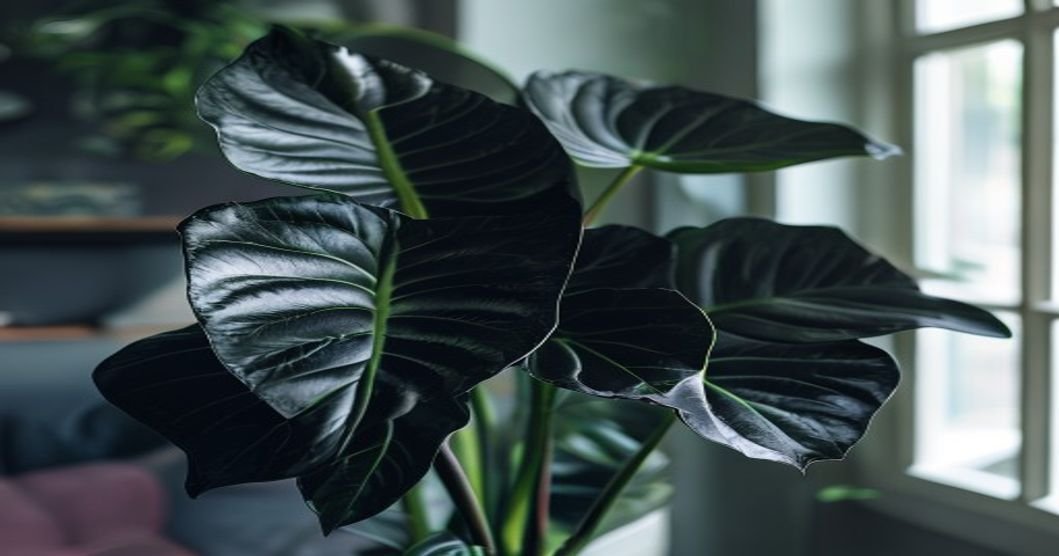

Step aside, fiddle-leaf fig. Take a seat, Monstera deliciosa. While the lush, green, jungle-in-your-living-room aesthetic has dominated the US houseplant scene for the better part of a decade, a new, more sophisticated trend is quietly unfurling in the shadows. We’re talking about the rise of dark foliage—the moody, mysterious, and utterly captivating world of ‘goth houseplants’. And at the forefront of this movement, we predict, will be the undisputed queen of darkness for 2026: the Alocasia reginula, better known as the Alocasia Black Velvet.
For years, the goal was to bring the untamed vibrancy of the outdoors in. We filled our homes with every shade of green imaginable, creating personal oases that screamed ‘life’ and ‘growth’. But as our collective taste evolves, so does our botanical palette. The new wave isn’t about recreating a wild jungle; it’s about curating a living art gallery. It’s about drama, contrast, and a touch of the sublime. These near-black plants are not just decorative items; they are statements. They are the horticultural equivalent of a velvet armchair in a minimalist room—an anchor of luxury and intrigue.
In this deep-dive, we’ll explore the cultural and psychological shift driving this trend, provide an expert-level care guide for the two poster children of the movement—the finicky-but-fabulous Alocasia Black Velvet and the indestructible ZZ Raven—and demystify the advanced science of light and soil that will turn you from a plant owner into a plant master. Get ready to embrace the dark side; your interior will thank you for it.
The Allure of the Abyss: Why We’re Craving Dark Foliage in 2026
The pivot towards dark foliage isn’t happening in a vacuum. It’s a reflection of broader shifts in interior design, a response to our psychological needs in a post-pandemic world, and a deeper appreciation for the sheer diversity of the botanical kingdom. It’s less about a fleeting fad and more about a fundamental maturation of the houseplant hobby.
A Psychological Shift: From Jungle Frenzy to Moody Sanctuaries
The ‘urban jungle’ trend was born from a desire to connect with nature, to create a buffer against the concrete and steel of city life. It was energetic, vibrant, and a little chaotic. Now, as many of us continue to spend more time at home, the desire has shifted from creating an energetic escape to cultivating a serene sanctuary. Dark plants, with their deep, light-absorbing hues, evoke a sense of calm, quiet, and introspection. They don’t shout for attention; they draw you in with a mysterious whisper.
There’s a grounding quality to these plants. In a world of digital overstimulation and bright screens, the velvety, near-black leaves of an Alocasia Black Velvet offer a visual respite. They encourage a slower, more deliberate form of observation. You don’t just glance at a goth houseplant; you study it. You appreciate the subtle play of light on its textured surface and the striking contrast of its veining. This mindful interaction is a form of therapy, turning plant care into a meditative practice.
The Interior Designer’s New Secret Weapon
From a design perspective, dark foliage is a game-changer. While a sea of green can sometimes blend together, a plant with black or deep purple leaves acts as a powerful visual anchor. Here’s how designers are leveraging this burgeoning US trend:
- Unmatched Contrast: Placed against a light or neutral-colored wall, a goth houseplant creates a dramatic, high-contrast focal point that feels intentional and curated. It’s living sculpture.
- Depth and Luxury: In rooms with darker, moody wall colors (like navy, charcoal, or forest green), these plants don’t disappear. Instead, they add layers of texture and depth, creating a rich, monochromatic, and incredibly luxurious atmosphere.
- Making Colors Pop: A dark plant has the unique ability to make adjacent colors appear more vibrant. A nearby terracotta pot seems warmer, a brass accent gleams brighter, and the green of other plants looks even more electric. They are the ultimate supporting actor, making everyone else on stage look better.
The sophistication of dark foliage aligns perfectly with the move towards more personalized, artful interiors. It’s a signal that the owner is a connoisseur, someone who has moved beyond the starter plants and is now exploring the more avant-garde corners of horticulture.
The Science of Darkness: What Makes a Plant ‘Goth’?
What gives these plants their stunning dark coloration? It’s not a lack of chlorophyll, the green pigment responsible for photosynthesis. In fact, these plants are packed with it. The secret lies in an overabundance of other pigments called anthocyanins.
Anthocyanins are the same pigments that give blueberries, blackcurrants, and purple cabbage their color. In plants like the Alocasia Black Velvet or Philodendron ‘Black Cardinal’, the concentration of these red, purple, and blue pigments is so high that it effectively masks the green of the chlorophyll beneath. This is often an evolutionary adaptation to protect the leaves from sun damage in their native habitat, acting as a natural sunscreen. For us, it’s the key to their breathtaking beauty.
Spotlight on the Trendsetter: Alocasia ‘Black Velvet’ (Alocasia reginula)
If there is one plant poised to define the 2026 goth houseplant trend, it is the Alocasia reginula, or ‘Black Velvet’. Its name, ‘reginula’, means ‘little queen’, and it’s a fitting title. This compact jewel Alocasia is the epitome of botanical elegance, but like any royal, it has specific demands that must be met.
An Introduction to the ‘Little Queen’
The Black Velvet is a masterpiece of texture and contrast. Its leaves are thick and succulent-like, with a deep, matte, black-green surface that feels exactly like crushed velvet. This dark canvas is electrified by stark, silvery-white veins that branch out like a lightning strike. The undersides of the leaves often have a purplish hue, adding another layer of complexity. Unlike its larger Alocasia cousins, the Black Velvet remains relatively small, making it perfect for desktops and shelves where its beauty can be admired up close.
Mastering Alocasia Black Velvet Care: A Royal Decree
This is not a beginner’s plant, but its care is far from impossible. Success hinges on consistency and understanding its specific needs, which mimic its native environment in the rainforests of Borneo.
Light: The Right Kind of Brightness
Despite its dark color, the Alocasia Black Velvet needs bright, indirect light to thrive. Direct sunlight will scorch its velvety leaves, causing irreversible damage. An east-facing window that provides gentle morning sun is ideal. In a south- or west-facing room, place it several feet back from the window or behind a sheer curtain. Insufficient light will lead to leggy growth and a loss of vibrancy. Many collectors find success by supplementing with artificial light, especially in darker homes. For more information on this, check out our guide on using grow lights effectively.
Watering: The Fine Art of Moisture Management
This is where most new owners falter. Alocasias are highly susceptible to overwatering and the dreaded root rot. They prefer their soil to be consistently moist, but never waterlogged or soggy. The best strategy is to wait until the top 1-2 inches of the soil are dry to the touch, then water thoroughly until it drains from the bottom. Never let the pot sit in a saucer of water. During winter, when the plant’s growth slows, you’ll need to reduce watering frequency significantly. Mastering this balance is key, and our comprehensive guide on plant watering techniques can help you perfect your routine.
Humidity & Temperature: Recreating the Rainforest
The Black Velvet craves high humidity—we’re talking 60% or more. Standard household humidity is often too low. To keep your queen happy, consider grouping it with other plants, placing it on a pebble tray with water, or—the gold standard—running a humidifier nearby. Keep it away from drafts, vents, and sudden temperature fluctuations. It prefers warm conditions, ideally between 65-80°F (18-27°C).
Fertilizing: A Light Feast
During the spring and summer growing season, feed your Alocasia Black Velvet with a balanced liquid fertilizer diluted to half-strength every 2-4 weeks. Avoid fertilizing in the fall and winter when the plant is dormant. Over-fertilizing can lead to chemical burn on the roots and leaves.
The Unkillable Goth: Zamioculcas zamiifolia ‘Raven’ (ZZ Raven)
If the Alocasia Black Velvet’s demanding nature seems intimidating, fear not. The goth houseplant trend has a hero for beginners and busy plant parents alike: the ZZ Raven. This plant offers all the moody drama with a fraction of the work.
The Dark Horse of Easy Care
The ZZ Raven is a cultivated variety of the classic ZZ Plant. Its most magical quality is its transformation. New growth emerges in a vibrant, lime green color, providing a stunning contrast against the older foliage. Over several weeks, these new leaves and stems slowly morph, deepening in color until they become a rich, glossy, purple-black. A healthy plant will often display this entire color gradient at once, from bright green to pure black, making it a dynamic and fascinating specimen.
ZZ Raven Care: Simplicity in the Shadows
The care for a ZZ Raven is refreshingly simple, making the dark foliage trend accessible to everyone.
- Light: Highly adaptable. While it prefers bright, indirect light to grow faster and maintain its deepest color, it is famously tolerant of low-light conditions. This makes it one of the few plants that can genuinely thrive in a dim corner, though its growth will be much slower. Avoid direct sun, which can scorch its leaves.
- Watering: This is a drought-tolerant plant. It grows from large, water-storing rhizomes under the soil, which act like camel humps. It is far more likely to die from overwatering than underwatering. Allow the soil to dry out completely between waterings. In a lower-light spot, this could mean watering as infrequently as once a month.
- Soil & Fertilizer: It requires a very well-draining soil mix. A cactus or succulent mix with added perlite is an excellent choice. It has minimal fertilizer needs; a half-strength balanced fertilizer once or twice during the growing season is more than enough.
The Technical Deep Dive: Unlocking Success with Dark Foliage Plants
To truly elevate your plant care and ensure these stunning specimens thrive, it helps to understand the science behind their environmental needs. Moving beyond generic advice and into the specifics of light and soil will make all the difference.
Decoding Light: Beyond ‘Bright Indirect’ with DLI and PPFD
The term ‘bright, indirect light’ is frustratingly vague. Let’s quantify it with two key metrics professional growers use: PPFD and DLI.
- PPFD (Photosynthetic Photon Flux Density): This measures the intensity of light hitting a surface at any given moment. Think of it as how ‘bright’ the light is right now. For an Alocasia Black Velvet, an ideal PPFD is around 100-200 µmol/m²/s.
- DLI (Daily Light Integral): This measures the total amount of light a plant receives over a 24-hour period. Think of it as the total ‘food’ the plant gets from light in a day. The target DLI for a Black Velvet is around 4-6 mol/m²/day.
You don’t need a thousand-dollar PAR meter to measure this anymore. Smartphone apps like ‘Photone’ can give you surprisingly accurate PPFD readings. By taking a few measurements around your home, you can find the perfect spot that meets these targets, or determine how long you need to run a grow light to supplement natural light and hit your DLI goal. This data-driven approach removes the guesswork and is essential for growing more advanced plants like Alocasias.
🌱 Great Value Plant Gear
Need multiple pots for your growing collection? We recommend the QRRICA Self Watering Pots (Set of 5). Excellent value and reliable drainage.
The Foundation of Health: Advanced Soil Strategies
For plants like Alocasia, soil isn’t just dirt; it’s a complex life support system. Two concepts are crucial for creating the perfect substrate: aeration and CEC.
Aeration: This refers to the air pockets within the soil. Roots need oxygen to function. In dense, waterlogged soil, these air pockets fill with water, leading to suffocation and creating an anaerobic environment perfect for the pathogens that cause root rot. That’s why a ‘chunky’ mix is essential. Ingredients like orchid bark, perlite, pumice, and horticultural charcoal create large air gaps, allowing roots to breathe even after watering.
CEC (Cation Exchange Capacity): This is a measure of the soil’s ability to hold onto and release essential positively charged nutrients (cations) like calcium, potassium, and magnesium. Organic components like peat moss or coco coir have a high CEC, acting like a nutrient reservoir for your plant. Inorganic components like perlite have a very low CEC. A good mix balances high-CEC components for nutrient retention with low-CEC components for aeration. Understanding CEC helps you create a soil that not only drains well but also effectively delivers nutrients to your plant.
The Arch-Nemesis: Preventing and Treating Common Diseases
The most significant threat to your dark-leafed beauties, particularly Alocasia, is undoubtedly root rot. This disease is not caused by water itself, but by fungal and bacterial pathogens that flourish in overly wet, low-oxygen soil conditions. Prevention is a thousand times better than a cure.
Prevention Steps:
- Use a pot with ample drainage holes. No exceptions.
- Use a chunky, well-aerating soil mix as described above.
- Allow the top portion of the soil to dry out before watering again.
- Reduce watering frequency dramatically in the winter.
If you suspect root rot (symptoms include yellowing leaves, a foul smell from the soil, and a mushy stem base), you must act fast. Unpot the plant, wash away all the old soil, and trim any brown, mushy roots with sterilized scissors. Repot in fresh, dry, appropriate soil. If you’re unsure what’s ailing your plant, don’t guess. You can get a fast and accurate diagnosis by using our AI Disease Finder tool, which can help you identify the problem from a single photo.
Another common pest, especially for Alocasias, is spider mites. These tiny arachnids thrive in the dry conditions that the plant dislikes. Regularly inspecting the undersides of leaves and maintaining high humidity are the best preventative measures.
Building Your Goth Garden: Other Dark Plants to Covet
Once you’ve been bitten by the dark foliage bug, you’ll want to expand your collection. The Alocasia Black Velvet and ZZ Raven are just the beginning. Here are a few other stunning goth houseplants to look for:
- Philodendron ‘Black Cardinal’: Offers glossy, deep burgundy leaves that appear almost black. It’s a self-heading variety, making it bushier and more compact than vining philodendrons.
- Colocasia ‘Black Magic’: A true statement plant. This ‘Elephant Ear’ boasts massive, dusty-black leaves and loves water, making it a great patio or pond-side plant in warmer months.
- Ficus elastica ‘Black Prince’ or ‘Burgundy’: A darker take on the classic rubber tree, with deep red-black leaves that bring vertical drama to any space.
- Peperomia ‘Burgundy Ripple’: A small, charming plant with deeply corrugated, dark reddish-purple leaves, perfect for small spaces.
Conclusion: The Future is Dark and Beautiful
The rise of goth houseplants is more than just a fleeting trend; it’s a testament to our growing sophistication as plant keepers and interior stylists. It’s a move towards a more curated, personal, and emotionally resonant approach to bringing nature indoors. The deep, velvety leaves of the Alocasia Black Velvet and the glossy, near-black foliage of the ZZ Raven offer a new kind of beauty—one that is quiet, contemplative, and profoundly chic.
As we look towards 2026, we see a future where our homes are not just jungles, but carefully composed galleries of living art. The drama, contrast, and elegance of dark foliage plants are set to take center stage in the US houseplant scene. By understanding their unique allure and mastering their specific care needs, you can be at the forefront of this exciting movement. It’s time to embrace the shadows and discover the captivating world of goth gardening.
The 2026 Comprehensive Masterclass: Botanical Deep Dive
To truly understand the nuances of the concepts discussed above, we must transition from basic houseplant care to advanced botanical mechanics. Elite plant collectors do not rely on guesswork; they rely on environmental control, photobiology, and soil chemistry. In this masterclass section, we will systematically unpack the advanced science necessary to maintain a hyper-optimized indoor jungle.
Part 1: The Physics of Lighting and Photobiology
Lighting is the fundamental engine of biological growth. Without adequate Daily Light Integral (DLI) and Photosynthetic Photon Flux Density (PPFD), any adjustments made to watering or fertilizing are entirely useless. When you place a plant in a corner, you are not just dimming its environment; you are actively starving it.
Understanding PAR and PPFD
Photosynthetically Active Radiation (PAR) designates the spectral range (wave band) of solar radiation from 400 to 700 nanometers that photosynthetic organisms are able to use in the process of photosynthesis. PPFD measures the amount of PAR that actually arrives at the plant. It is measured in micromoles per square meter per second (μmol/m²/s).
- Low-Light Plants (e.g., Snake Plants, ZZ Plants): Require a PPFD of 20 to 50 μmol/m²/s. While they survive here, they will rarely trigger massive new growth.
- Medium-Light Plants (e.g., Calatheas, Philodendrons): Require a PPFD of 50 to 150 μmol/m²/s. At this range, they begin to express deeper variegation colors and stronger petiole rigidity.
- High-Light Plants (e.g., Monsteras, Ficus, Cacti): Require a baseline of 200 to 400+ μmol/m²/s to exhibit maximum fenestration (leaf holes) and secondary branching.
Part 2: Soil Chemistry, CEC, and Hydrophobicity
Your potting mix is not just a physical anchor for your plant; it is a bio-active chemical reactor. The most critical metric in any soil mix is its Cation Exchange Capacity (CEC).
Cation Exchange Capacity Explained
CEC is the measure of a soil’s ability to hold and release various elements and compounds through electrical charges. Highly organic materials like Peat Moss and Coco Coir have a very high CEC, meaning they grab onto fertilizer molecules (like Nitrates and Phosphates) and hold them so the roots can slowly feed over time. This is why placing a plant purely in gravel (which has a CEC of nearly zero) requires constant, daily nutrient flushing (hydroponics).
The Hydrophobic Death Trap
When high-CEC soils, particularly peat moss, dry out entirely, they undergo a mechanical failure known as hydrophobicity. The organic fibers shrink and lock tightly together. When water is introduced, the surface tension is too high to penetrate the locked fibers. The water channels directly down the sides of the pot. To break the hydrophobic barrier, you must use a surfactant (like a mild dish soap solution) or submerge the pot entirely for 45 minutes to force capillary hydration upward against gravity.
Part 3: Advanced Hydration Dynamics (Capillary Action)
Water does not simply flow downward. In the micro-environment of a plant pot, capillary action often overcomes gravity.
The Perched Water Table (PWT): No matter how much drainage you place at the bottom of a container, the lowest contiguous section of soil will always remain identically saturated. This is physics. If you put 3 inches of rocks at the bottom of a pot, you do not improve drainage; you merely push the soggy PWT three inches higher into the root mass, radically increasing the risk of Pythium (root rot). This is why nursery pots with numerous drainage holes placed directly on a porous surface are the only empirically sound container choice.
Part 4: The Pathogen War (Fungal vs Bacterial)
When a plant fails, the visual symptom (yellowing, dropping leaves) is merely the final stage of a prolonged microscopic war.
Anaerobic Pathogens
When a soil is over-hydrated, oxygen molecules are physically displaced by water molecules. Roots require oxygen to respire. As roots suffocate, the cells burst and die. This dead tissue becomes an immediate food source for anaerobic bacteria—bacteria that thrive strictly in zero-oxygen environments. The bacteria consume the dead roots, creating a sulfurous, rotting odor. To combat this, elite growers use Hydrogen Peroxide (H2O2) drenches. The extra, highly unstable oxygen atom in H2O2 detonates on contact, forcefully oxidating the anaerobic bacteria and re-oxygenating the root zone.
Part 5: Comprehensive Houseplant Glossary of Terms
To ensure absolute clarity for our readers, we have compiled an exhaustive glossary of the terms heavily utilized within the professional botanical sphere:
- Aroid: A common name for plants in the Araceae family, characterized by a spathe and spadix inflorescence (e.g., Philodendrons, Monsteras).
- Chlorosis: The yellowing of leaf tissue due to a lack of chlorophyll, often caused by nutrient deficiencies or root suffocation.
- Etiolation: The stretching and weakening of stems as a plant aggressively reaches toward a distant light source.
- Fenestration: The natural occurrence of holes or deep splits in the leaves of mature plants, designed to allow wind and light to pass through to the lower canopy.
- Node: The vital junction on a stem where leaves, aerial roots, and new growth points (eyes) emerge. A cutting without a node will never grow a new plant.
- Variegation: A genetic (chimeric) or viral mutation resulting in distinct zones of differently colored tissue (typically white or yellow) due to an absence of chlorophyll in those areas.
- Transpiration: The biological process by which a plant absorbs water through its roots and subsequently releases it as vapor through micro-pores (stomata) on its leaves.
Conclusion: The 2026 Shift in Plant Ownership
The era of buying a plant and hoping for the best is over. Modern houseplant ownership requires a foundational understanding of physics, chemistry, and biology. By tracking your PPFD, balancing your soil’s CEC, and actively managing the Perched Water Table, you ensure your indoor jungle moves from simple survival to massive, aggressive growth.
What’s Your Next Step?
You have successfully analyzed the dark foliage trend. The next logical step is to optimize your collection and environment for maximum growth and value. Consider the following data points:
Frequently Asked Questions
What are the best conditions for this plant?
Most houseplants thrive in bright, indirect light with temperatures between 65-80F (18-27C). Ensure good drainage and water when the top inch of soil feels dry.
How often should I water?
Watering frequency depends on the plant species, pot size, and environment. A general rule is to check the soil moisture before watering. Overwatering is the most common cause of houseplant death.
What soil mix works best?
A well-draining mix of peat moss, perlite, and orchid bark works well for most tropical houseplants. Succulents prefer a grittier mix with more sand and perlite.
Quick Care Reference
| Factor | Requirement | Notes |
|---|---|---|
| Light | Bright indirect | Avoid direct afternoon sun |
| Water | When top inch dry | Reduce in winter |
| Humidity | 50-70% | Mist or use pebble tray |
| Temperature | 65-80F (18-27C) | Avoid cold drafts |
| Soil | Well-draining mix | Peat, perlite, bark |
| Fertilizer | Monthly (spring-summer) | Half-strength balanced |